Dimethyl Sulfoxide → (3-Cyclopropoxyphenyl)boronic acid
Reaction equation

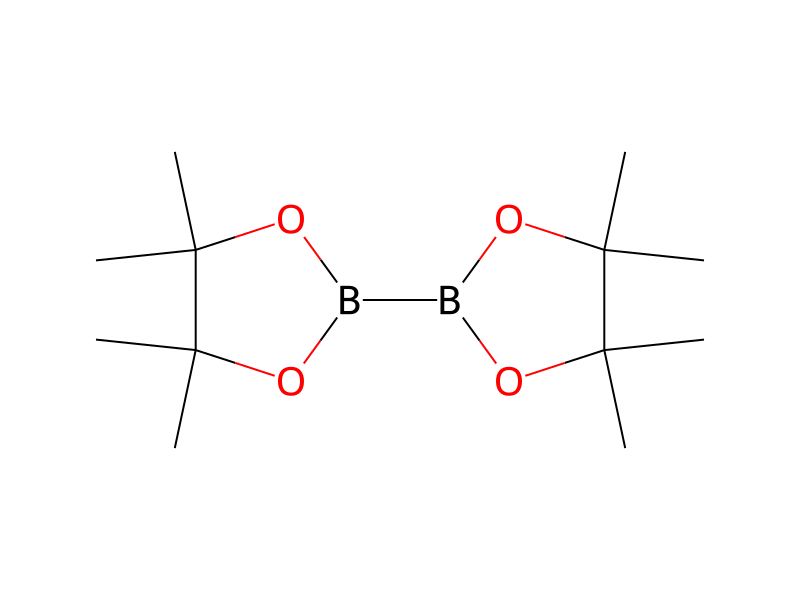
Br[C:2]1[CH:7]=[CH:6][CH:5]=[C:4]([O:8][CH:9]2[CH2:11][CH2:10]2)[CH:3]=1.CC1(C)C(C)(C)[O:16][B:15](B2OC(C)(C)C(C)(C)O2)[O:14]1.C(Cl)Cl.CS(C)=O>C(OCC)(=O)C>[CH:9]1([O:8][C:4]2[CH:3]=[C:2]([B:15]([OH:16])[OH:14])[CH:7]=[CH:6][CH:5]=2)[CH2:11][CH2:10]1Participants
6





Procedure
A mixture of 1-bromo-3-cyclopropoxybenzene (1.36 mmol, 0.289 g), 4,4,4′,4′,5,5,5′,5′-octamethyl-2,2′-bi(1,3,2-dioxaborolane) (2.11 mmol, 0.321 mmol), PdCl2dppf.DCM (0.14 mmol, 0.112 g), KAcO (6.11 mmol, 0.600 g) in a DMSO (3 ml) was heated at 130° C. for 45 minutes, under argon atmosphere in a microwave oven. Ethyl acetate was added and filtered through celite. The organic phase was washed with water and evaporated. The crude mixture was purified by reverse phase using a water/AcN/MeOH system gradient affording 0.090 g (yield 23%) of the expected product.
Workup
- filtrationfiltered through celite
- washThe organic phase was washed with water
- customevaporated
- customThe crude mixture was purified by reverse phase
Sources & evidence
- ORD record
- ord-94d740c927e444fe9813916260d9a07a
- Source dataset
- uspto-grants-2013_09
- Patent number
- US08536165B2
Reaction notes
Loading…