Acetic Acid → 2-Chloro-5-phenyl-1,3-thiazole
Reaction equation

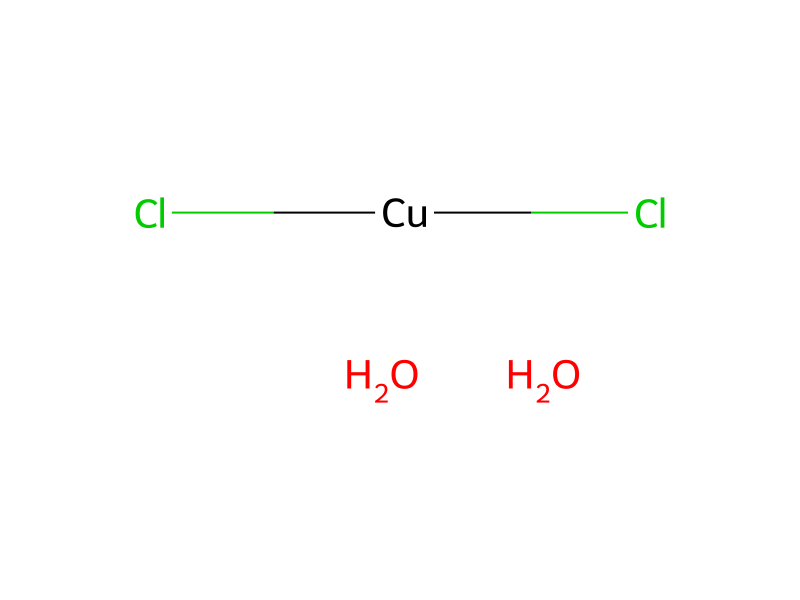
N[C:2]1[S:3][C:4]([C:7]2[CH:12]=[CH:11][CH:10]=[CH:9][CH:8]=2)=[CH:5][N:6]=1.[ClH:13].C(O)(=O)C.N([O-])=O.[Na+]>O.O.[Cu](Cl)Cl.C(Cl)(Cl)Cl.O>[Cl:13][C:2]1[S:3][C:4]([C:7]2[CH:12]=[CH:11][CH:10]=[CH:9][CH:8]=2)=[CH:5][N:6]=1Participants
8







Conditions
- Temperature
- 40 °C
Procedure
To a mixture of 2-amino-5-phenylthiazole described in Journal of Medicinal Chemistry, 1983, Vol. 26 (8), 1158-1163, (1.00 g; 5.67 mmol), copper (II) chloride dihydrate (1.94 g; 11.3 mmol), concentrated hydrochloric acid (8 ml) and acetic acid (8 ml) was added sodium nitrite (0.47 g; 6.80 mmol) under ice-cooling. The mixture was stirred at 40° C. for 1 hour. After returning the reaction solution to room temperature, water and chloroform were added and extracted. The organic layer was washed with brine, dried over anhydrous sodium sulphate, and evaporated under reduced pressure. The residue was purified by column chromatograph on silica gel (methylene chloride) to give 2-chloro-5-phenylthiazole as pale yellow crystal (0.68 g; 62%).
Workup
- temperaturecooling
- customto room temperature
- extractionextracted
- washThe organic layer was washed with brine
- dry with materialdried over anhydrous sodium sulphate
- customevaporated under reduced pressure
- customThe residue was purified by column chromatograph on silica gel (methylene chloride)
Sources & evidence
- ORD record
- ord-cd1d8a8bf6ed4261b678782bee45a637
- Source dataset
- uspto-grants-2012_01
- Patent number
- US08097610B2
Reaction notes
Loading…