Diethyl isopropylmalonate → Rac-2-[(4-fluoro-benzylamino)-methyl]-3-methyl-butyric acid ethyl ester
Reaction equation

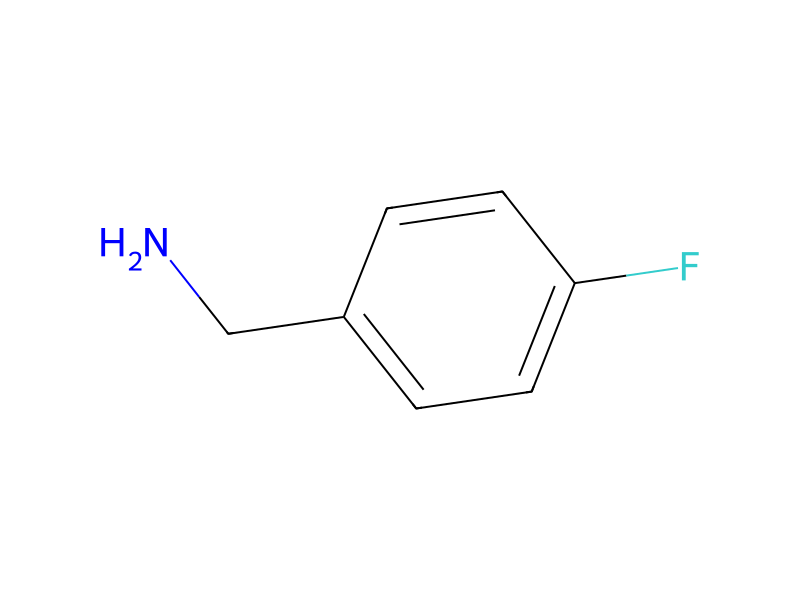
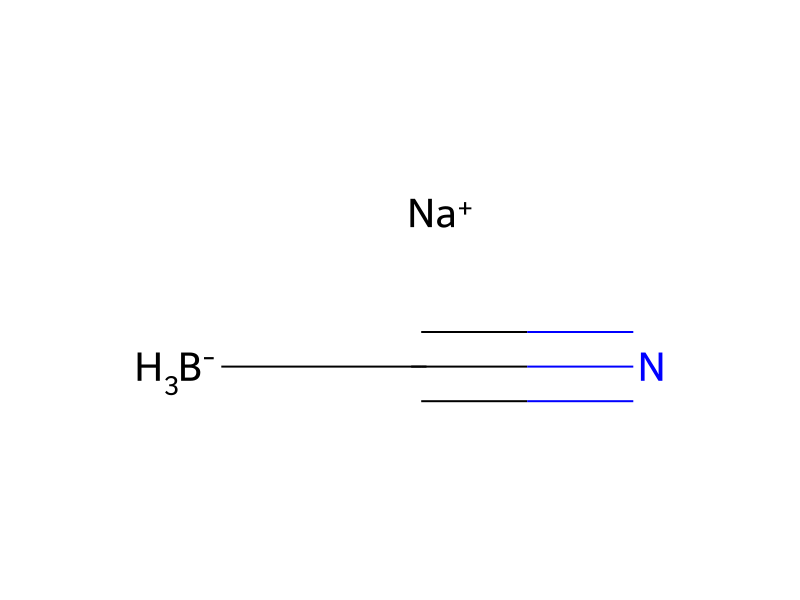
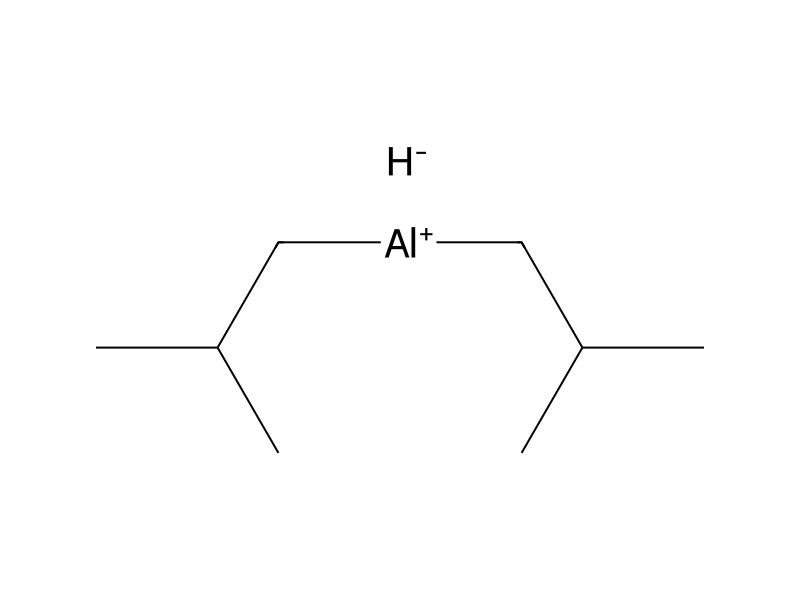
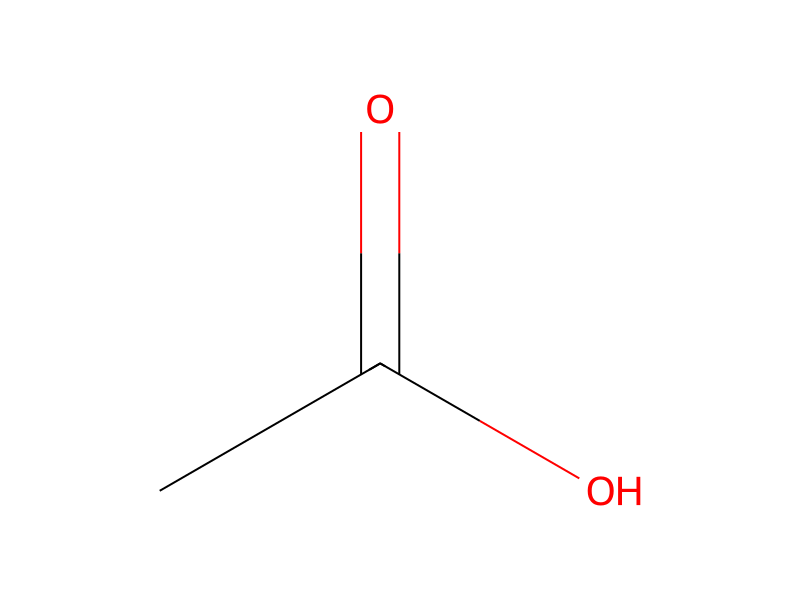
[H-].C([Al+]CC(C)C)C(C)C.C(O[C:14](=O)[CH:15]([CH:21]([CH3:23])[CH3:22])[C:16]([O:18][CH2:19][CH3:20])=[O:17])C.[F:25][C:26]1[CH:33]=[CH:32][C:29]([CH2:30][NH2:31])=[CH:28][CH:27]=1.C([BH3-])#N.[Na+]>C1(C)C=CC=CC=1.ClCCl.C(O)C.C(O)(=O)C>[CH2:19]([O:18][C:16](=[O:17])[CH:15]([CH2:14][NH:31][CH2:30][C:29]1[CH:32]=[CH:33][C:26]([F:25])=[CH:27][CH:28]=1)[CH:21]([CH3:22])[CH3:23])[CH3:20]Participants
Reactant 4

Product 1

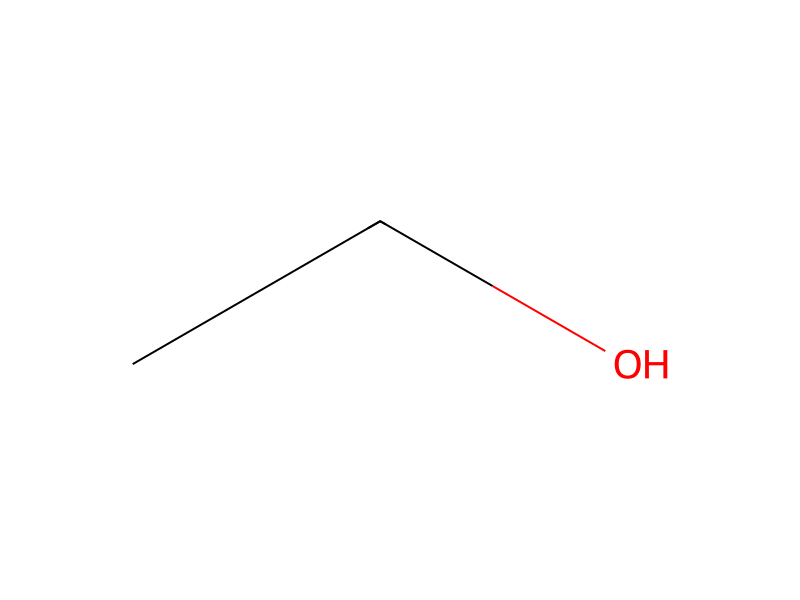
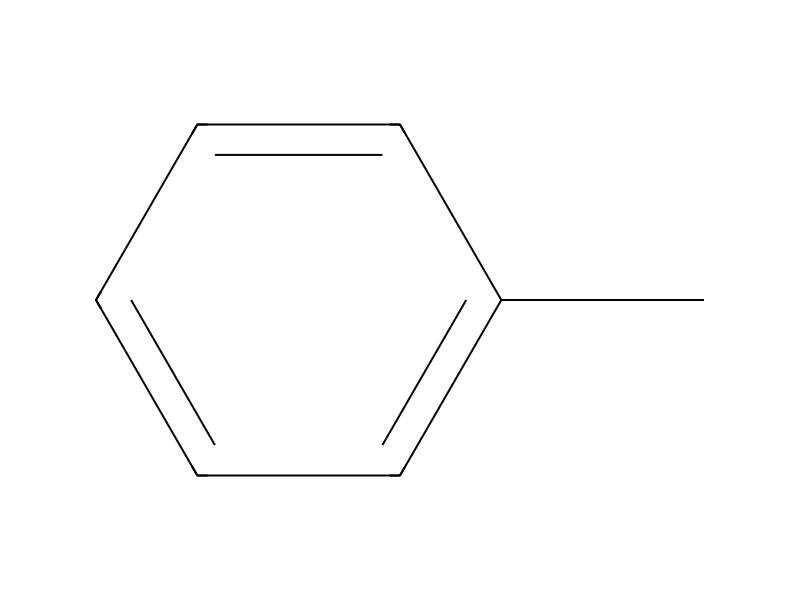
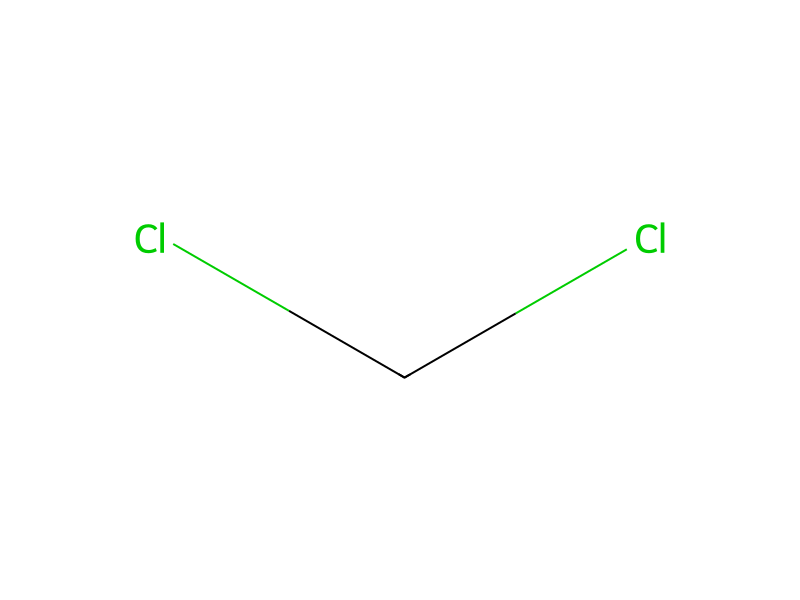
Reagents, catalysts & solvents 4
Conditions
- Temperature
- 25 °C
Procedure
Diisobutylaluminum hydride (38 mL of a 1.0 M solution in toluene, 38 mmol) was added over 5 min to a solution of 2-isopropyl-malonic acid diethyl ester (3.84 g, 19.0 mmol) in dichloromethane (33 mL) at −78° C. The reaction mixture was stirred at that temperature for 3.5 h, and then was quenched with saturated aqueous ammonium chloride (33 mL). The cold bath was removed, 1.0 M aqueous hydrochloric acid solution (90 mL) and DL-tartaric acid (4.25 g) were added sequentially, and the mixture was allowed to warm to 25° C. over 1.5 h with vigorous stirring. The biphasic mixture was then partitioned between 1.0 M aqueous hydrochloric acid solution (350 mL) and dichloromethane (350 mL). The organic layer was dried over sodium sulfate and was concentrated in vacuo to afford crude product (1.92 g, 12.14 mmol, 64%). This material was dissolved in ethanol (40 mL) at 25° C. and 4-fluorobenzylamine (1.39 mL, 12.2 mmol), glacial acetic acid (1.5 mL), and sodium cyanoborohydride (1.52 g, 24.2 mmol) were added sequentially. The mixture was stirred at 25° C. for 17 h, and then was concentrated in vacuo. The residue was partitioned between half-saturated aqueous sodium bicarbonate solution (150 mL) and ethyl acetate (2×150 mL). The combined organic layers were dried over sodium sulfate and were concentrated in vacuo. The residue was purified by flash column chromatography (Teledyne Isco RediSep column; 10-80% ethyl acetate in hexanes) to afford rac-2-[(4-fluoro-benzylamino)-methyl]-3-methyl-butyric acid ethyl ester (1.36 g, 5.09 mmol, 42%) as a pale yellow oil. 1H NMR (400 MHz, CDCl3) δ: 0.93 (6H, d, J=7.2 Hz), 1.27 (3H, t, J=7.0 Hz), 1.92-2.01 (1H, m), 2.35-2.46 (1H, m), 2.73 (1H, dd, J=3.8 Hz, J2=11.6 Hz), 2.90 (1H, dd, J=10.2 Hz, J2=11.7 Hz), 3.74 (1H, d, J=13.2 Hz), 3.82 (1H, d, J=13.5 Hz), 4.15-4.21 (2H, m), 6.97-7.01 (2H, m), 7.26-7.30 (2H, m).
Workup
- customwas quenched with saturated aqueous ammonium chloride (33 mL)
- customThe cold bath was removed
- addition1.0 M aqueous hydrochloric acid solution (90 mL) and DL-tartaric acid (4.25 g) were added sequentially
- customThe biphasic mixture was then partitioned between 1.0 M aqueous hydrochloric acid solution (350 mL) and dichloromethane (350 mL)
- dry with materialThe organic layer was dried over sodium sulfate
- concentrationwas concentrated in vacuo
- customto afford crude product (1.92 g, 12.14 mmol, 64%)
- stirringThe mixture was stirred at 25° C. for 17 h
- concentrationwas concentrated in vacuo
- customThe residue was partitioned between half-saturated aqueous sodium bicarbonate solution (150 mL) and ethyl acetate (2×150 mL)
- dry with materialThe combined organic layers were dried over sodium sulfate
- concentrationwere concentrated in vacuo
- customThe residue was purified by flash column chromatography (Teledyne Isco RediSep column; 10-80% ethyl acetate in hexanes)
Sources & evidence
- ORD record
- ord-8313646af8bd4c588a23edfea815d2df
- Source dataset
- uspto-grants-2012_01
- Patent number
- US08097613B2
Reaction notes
Loading…