Hydrochloric Acid → HCID 16661435, compound
Reaction equation

[Br:1][C:2]1[CH:3]=[C:4]([C:9](=O)[CH2:10][C:11]([C:13]2[CH:18]=[CH:17][CH:16]=[CH:15][CH:14]=2)=O)[CH:5]=[CH:6][C:7]=1[F:8].[NH2:20][C:21]([NH2:23])=[O:22].Cl.ClCCl.CO>O1CCOCC1.C(O)C>[Br:1][C:2]1[CH:3]=[C:4]([C:9]2[CH:10]=[C:11]([C:13]3[CH:18]=[CH:17][CH:16]=[CH:15][CH:14]=3)[NH:23][C:21](=[O:22])[N:20]=2)[CH:5]=[CH:6][C:7]=1[F:8]Participants


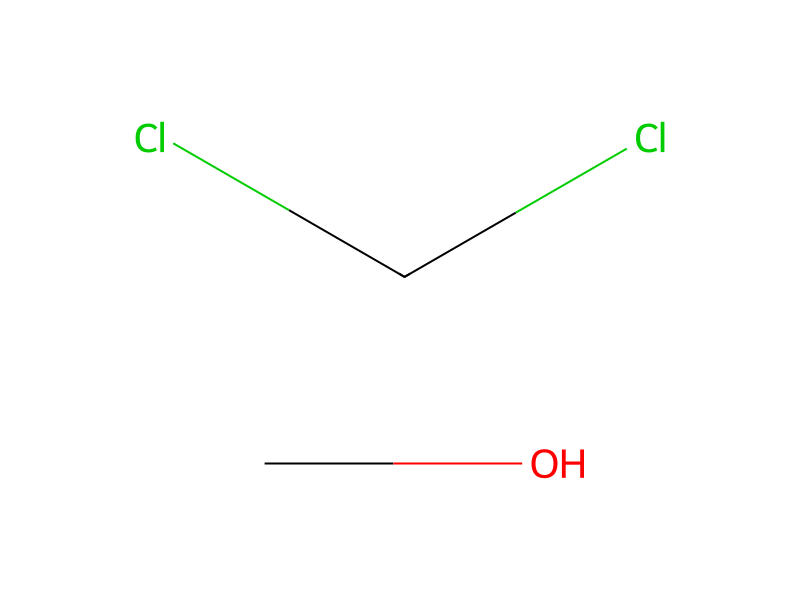




Conditions
- Temperature
- 110 °C
Procedure
A solution of 1-(3-bromo-4-fluorophenyl)-3-phenylpropane-1,3-dione (1.08 g, 3.37 mmol), urea (2.03 g, 33.7 mmol) and 4.0 M hydrogen chloride in dioxane (8.4 mL) in ethanol (11 mL) was heated for 48 hours at 110° C. The mixture was then concentrated and taken back into 10 mL 4.0M hydrogen chloride in dioxane. An additional 2.0 g (33 mmol) of urea was added and the solution was again heated for 12 hours at 110° C. The resultant solution was partitioned between 10:1 ethyl acetate/methanol, and saturated sodium bicarbonate (aqueous). The layers were separated and the basic aqueous layer was extracted (2×100 mL ethyl acetate). The combined organic layers were dried (sodium sulfate), filtered and concentrated in vacuo. Column chromatography (silica gel, 95:5 dichloromethane/methanol) gave 0.66 g (57% yield) of 4-(3-bromo-4-fluorophenyl)-6-phenylpyrimidin-2(1H)-one. 1H NMR (400 MHz, DMSO): 8.61 (dd, 1 h), 8.31 (m, 1H), 8.18 (d, 2H), 7.76 (m, 1H), 7.59 (m, 5H).
Workup
- concentrationThe mixture was then concentrated
- customThe resultant solution was partitioned between 10:1 ethyl acetate/methanol, and saturated sodium bicarbonate (aqueous)
- customThe layers were separated
- extractionthe basic aqueous layer was extracted (2×100 mL ethyl acetate)
- dry with materialThe combined organic layers were dried (sodium sulfate)
- filtrationfiltered
- concentrationconcentrated in vacuo
Sources & evidence
- ORD record
- ord-49642872cdd546ecb81058eb12781510
- Source dataset
- uspto-grants-2012_01
- Patent number
- US08101625B2
Reaction notes
Loading…