Sodium Carbonate → Biphenyl
Reaction equation

I[C:2]1[CH:7]=[CH:6][CH:5]=[CH:4][CH:3]=1.[C:8]1(B(O)O)[CH:13]=[CH:12][CH:11]=[CH:10][CH:9]=1.C([O-])([O-])=O.[Na+].[Na+]>O>[C:2]1([C:8]2[CH:13]=[CH:12][CH:11]=[CH:10][CH:9]=2)[CH:7]=[CH:6][CH:5]=[CH:4][CH:3]=1Participants
Reactant 3

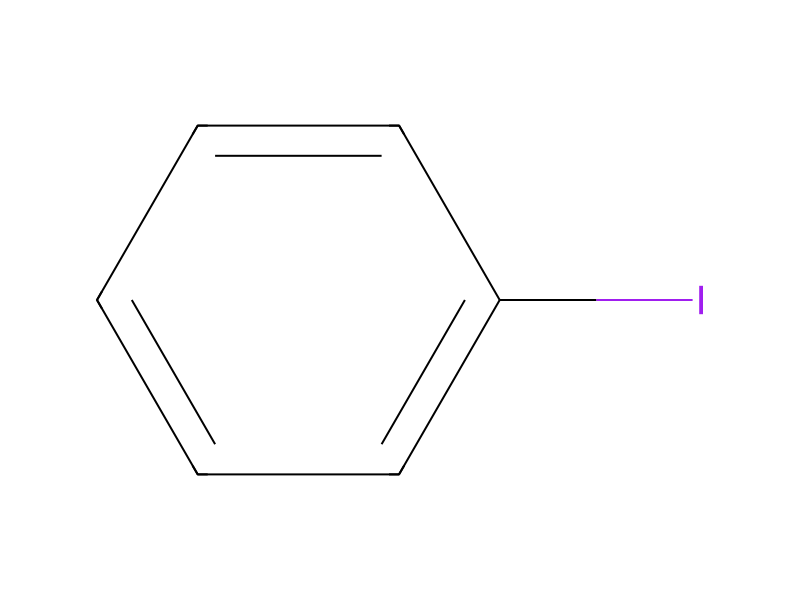

Product 1

Reagents, catalysts & solvents 1

Conditions
- Temperature
- 110 °C
Procedure
Complexes 7a, 7b, 7c are used for Suzuki coupling reaction of iodobenzene and benzeneboronic acid, as shown in scheme 2, above. Iodobenzene (2.5 mmol, 1 equiv.), benzeneboronic acid (2.75 mmol, 1.1 equiv.), Na2CO3 (560 mg, 5.28 mmol, 2.1 equiv.), palladium complex (0.03 mmol) and water (2.5 ml) are mixed with [C4mim][BF4] (5 ml). The mixture is heated to 110° C. with vigorous stirring for 12 hours, then cooled and extracted with diethyl ether (3×15 ml). The combined organic phase is dried over MgSO4 and filtered. The product, biphenyl, is obtained in 100% yield. If a nitrile ionic liquid, [C3CNmim][BF4], is used in place of the [C4mim][BF4], a similar yield is obtained. Significantly, using [C3CNmim][BF4] the yields can be maintained at above 90% even after six runs of catalysis, while yields decrease rapidly for [C4mim][BF4]. Dissolving PdCl2 in the [C3CNmim][BF4] gives the same result as using complexes 6 and 7.
Workup
- temperaturecooled
- extractionextracted with diethyl ether (3×15 ml)
- dry with materialThe combined organic phase is dried over MgSO4
- filtrationfiltered
Sources & evidence
- ORD record
- ord-f9a097d805be41599464ab7595b0c881
- Source dataset
- uspto-grants-2012_01
- Patent number
- US08101777B2
Reaction notes
Loading…