Hydrochloric Acid → (s)-2-Bromo-1-(4-bromophenyl)ethanol
Reaction equation

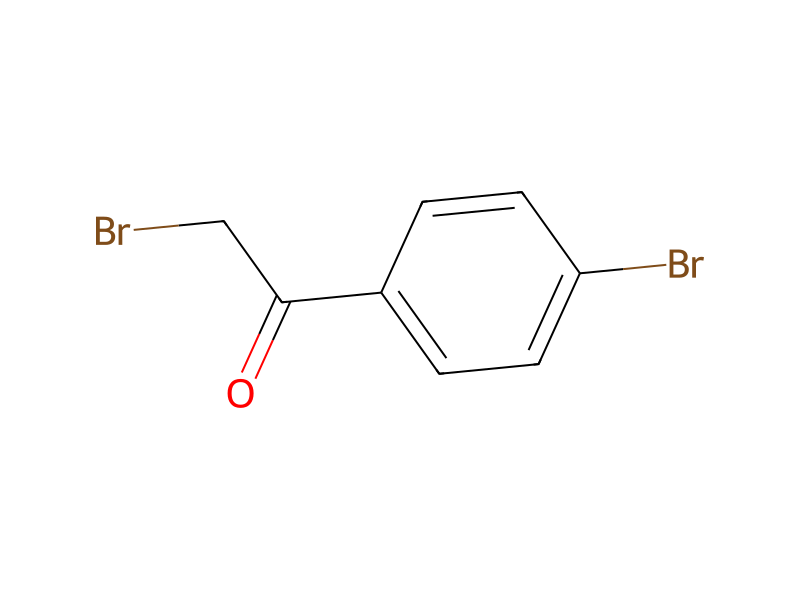
B.O1CCCC1.B1(C)OC(C2C=CC=CC=2)(C2C=CC=CC=2)[C@H]2N1CCC2.[Br:28][C:29]1[CH:38]=[CH:37][C:32]([C:33](=[O:36])[CH2:34][Br:35])=[CH:31][CH:30]=1.Cl>C1(C)C=CC=CC=1.ClCCl.CO>[Br:35][CH2:34][C@H:33]([C:32]1[CH:37]=[CH:38][C:29]([Br:28])=[CH:30][CH:31]=1)[OH:36]Participants
Reactant 4



Product 1

Reagents, catalysts & solvents 3



Procedure
A borane-tetrahydrofuran complex (1.0 M solution in tetrahydrofuran, 270 ml, 270 mmol) was added to the solution of (S)-CBS ((S)-2-Methyl-CBS-oxazaborolidine, 50 ml, 1.0M solution in toluene) at −30° C. over 15 min and the solution was stirred for 15 minutes. 4-Bromophenacyl bromide (75.0 g, 270 mmol) in dichloromethane (350 ml) was dropped over 70 minutes keeping the temperature −32 to −28° C. After one hour stirring, solution was warmed to room temperature, and methanol (10 ml) was added slowly and then 0.5 M hydrochloric acid (300 ml) was dropped over 10 minutes. The solution was filtered after 40 minutes stirring and filtrate was extracted by dichloromethane. The combined organic layer was washed with 0.5 M hydrochloric acid, 0.1M aqueous sodium hydroxide and brine and dried over anhydrous sodium sulfate. Concentration of the organic layer yielded 2-bromo-(1S)-1-(4-bromophenyl)ethanol (77 g) as a pale brown oil.
Workup
- customthe temperature −32 to −28° C
- stirringAfter one hour stirring
- filtrationThe solution was filtered after 40 minutes
- stirringstirring
- extractionfiltrate was extracted by dichloromethane
- washThe combined organic layer was washed with 0.5 M hydrochloric acid, 0.1M aqueous sodium hydroxide and brine
- dry with materialdried over anhydrous sodium sulfate
Sources & evidence
- ORD record
- ord-0b395a5fa6ba4b21bc4e99663fe7fca3
- Source dataset
- uspto-grants-2012_01
- Patent number
- US08106045B2
Reaction notes
Loading…