Trifluoroacetic acid → 3-(5-Fluoro-2-hydroxyphenyl)-1-pentylindolin-2-one
Reaction equation

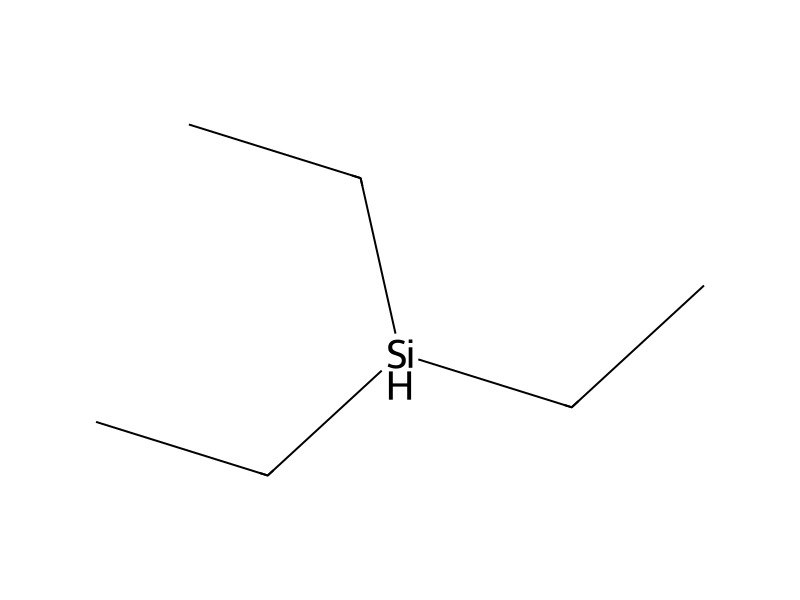
[F:1][C:2]1[CH:3]=[CH:4][C:5]([OH:24])=[C:6]([C:8]2(O)[C:16]3[C:11](=[CH:12][CH:13]=[CH:14][CH:15]=3)[N:10]([CH2:17][CH2:18][CH2:19][CH2:20][CH3:21])[C:9]2=[O:22])[CH:7]=1.FC(F)(F)C(O)=O.C([SiH](CC)CC)C>ClCCl>[F:1][C:2]1[CH:3]=[CH:4][C:5]([OH:24])=[C:6]([CH:8]2[C:16]3[C:11](=[CH:12][CH:13]=[CH:14][CH:15]=3)[N:10]([CH2:17][CH2:18][CH2:19][CH2:20][CH3:21])[C:9]2=[O:22])[CH:7]=1Participants
5




Conditions
- Temperature
- 40 °C
Procedure
To a solution of 3-(5-fluoro-2-hydroxyphenyl)-3-hydroxy-1-pentyl-1,3-dihydro-2H-indol-2-one (2.42 g, 7.35 mmol) in dichloromethane (10.0 mL) were added trifluoroacetic acid (1.00 mL) and triethylsilane (1.00 mL) at ambient temperature. The reaction mixture was stirred at 40° C. for 15 hrs and concentrated in vacuo to dryness. The residue was triturated with ether to give the title compound (2.10 g, 91%) as a solid: MS (ES+) m/z 314 (M+1).
Workup
- concentrationconcentrated in vacuo to dryness
- customThe residue was triturated with ether
Sources & evidence
- ORD record
- ord-0862668e245547ddbd475cc8799a9208
- Source dataset
- uspto-grants-2012_01
- Patent number
- US08106087B2
Reaction notes
Loading…