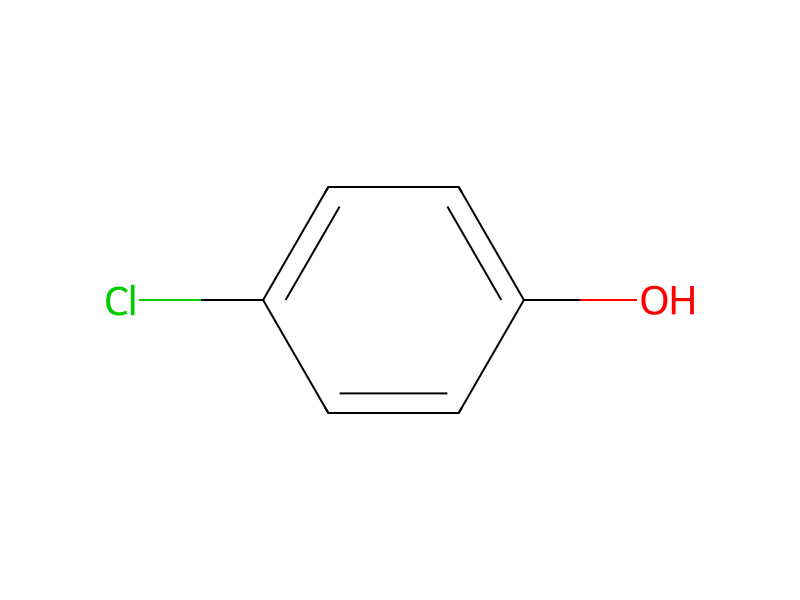
4-Chlorophenol → HCID 13022458, compound
Reaction equation

[Na].[Cl:2][C:3]1[CH:8]=[CH:7][C:6]([OH:9])=[CH:5][CH:4]=1.Br[CH2:11][C:12]1[CH:25]=[CH:24][C:15]([O:16][CH:17]([CH3:23])[C:18]([O:20][CH2:21][CH3:22])=[O:19])=[CH:14][CH:13]=1>C(O)C>[Cl:2][C:3]1[CH:8]=[CH:7][C:6]([O:9][CH2:11][C:12]2[CH:25]=[CH:24][C:15]([O:16][CH:17]([CH3:23])[C:18]([O:20][CH2:21][CH3:22])=[O:19])=[CH:14][CH:13]=2)=[CH:5][CH:4]=1Participants
Reactant 3


Product 1

Reagents, catalysts & solvents 1

Procedure
A solution of 2.3 gm (0.1 mol) of sodium in 100 ml of ethanol was admixed at room temperature with 12.8 gm (0.1 mol) of 4-chloro-phenol, and the resulting solution was heated to its boiling point for a short time and then allowed to cool to room temperature. A solution of 28.7 gm (0.1 mol) of ethyl 2-(4-bromomethyl-phenoxy)-propionate in 20 ml of ethanol was now added while thoroughly stirring, and the mixture was boiled for a few hours, then cooled to room temperature and suction-filtered through diatomaceous earth. The filtrate was evaporated, the viscous residue was suspended in 100 ml of isopropyl ether, the suspension was suction-filtered through diatomaceous earth, and the filtrate was evaporated. The oily residue was fractionally distilled in an oil pump vacuum, yielding 71% of theory of ethyl 2-[4-(4-chlorophenoxy-methyl)-phenoxy]-propionate, b.p. 185°-190° C. at 0.1 mm Hg.
Workup
- temperaturethe resulting solution was heated to its boiling point for a short time
- waitthe mixture was boiled for a few hours
- temperaturecooled to room temperature
- filtrationsuction-filtered through diatomaceous earth
- customThe filtrate was evaporated
- filtrationthe suspension was suction-filtered through diatomaceous earth
- customthe filtrate was evaporated
- distillationThe oily residue was fractionally distilled in an oil pump vacuum
Sources & evidence
- ORD record
- ord-904dc3a6d2854cafb35f4ab426731734
- Source dataset
- uspto-grants-1979_10
- Patent number
- US04169720
Reaction notes
Loading…