1-(4-Pyridyl)piperazine → HCID 9228479, compound
Reaction equation

[N:1]1[CH:6]=[CH:5][C:4]([N:7]2[CH2:12][CH2:11][NH:10][CH2:9][CH2:8]2)=[CH:3][CH:2]=1.[C:13]([C:15]1[CH:23]=[CH:22][C:18]([C:19](Cl)=[O:20])=[CH:17][CH:16]=1)#[N:14]>ClCCl.C(N(CC)CC)C>[N:1]1[CH:6]=[CH:5][C:4]([N:7]2[CH2:8][CH2:9][N:10]([C:19](=[O:20])[C:18]3[CH:22]=[CH:23][C:15]([C:13]#[N:14])=[CH:16][CH:17]=3)[CH2:11][CH2:12]2)=[CH:3][CH:2]=1Participants
Reactant 2

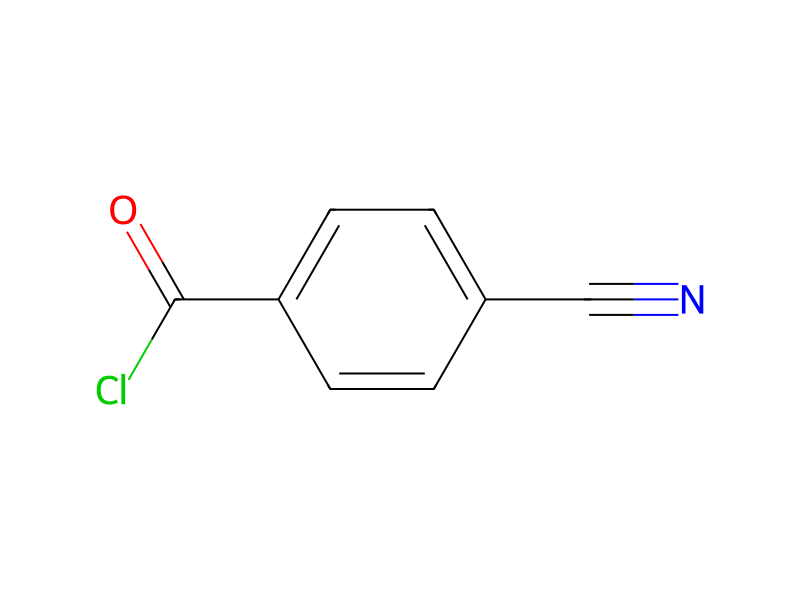
Product 1

Reagents, catalysts & solvents 2


Procedure
A solution of 1-(4-pyridyl)piperazine (0.49 g) in dry dichloromethane (20 ml) and triethylamine (0.7 ml) was treated slowly with a solution of 4-cyanobenzoyl chloride (0.50 g) in dry dichloromethane (30ml). The reaction mixture was then stirred under argon for 2 hours. The dichloromethane solvent was removed by evaporation and the residue dissolved in ethyl acetate. The organic extracts were then washed with aqueous sodium hydrogen carbonate solution, water, brine, dried (Na2SO4) and evaporated to give a colourless oil which was crystallised from ethyl acetate/isohexane to afford 1-(4-pyridyl)4-(4-cyanobenzoyl)piperazine (0.25 g) as a solid, m.p. 164-165° C.; microanalysis, found: C, 69.7; H, 5.6; N, 18.5%; C17H16N4O requires: C, 69.8; H, 5.52; N, 19.2%; NMR: (CDCl3) 3.38(bs,4H), 3.75(bs,4H), 6.67(dd,2H), 7.56(dd,2H), 7.76(dd,2H), 8.32(dd,2H): MS: m/z 293 (MH)+.
Workup
- customThe dichloromethane solvent was removed by evaporation
- dissolutionthe residue dissolved in ethyl acetate
- washThe organic extracts were then washed with aqueous sodium hydrogen carbonate solution, water, brine
- dry with materialdried (Na2SO4)
- customevaporated
- customto give a colourless oil which
- customwas crystallised from ethyl acetate/isohexane
Sources & evidence
- ORD record
- ord-df74573bf3ff4ebabe2d15c60d5fa9ed
- Source dataset
- uspto-grants-2001_11
- Patent number
- US06313127B1
Reaction notes
Loading…