Water → p-Hydroxystyrene p-tetrahydropyranyloxystyrene
Reaction equation

[O:1]1[CH:6]=[CH:5][CH2:4][CH2:3][CH2:2]1.[C:7]1([CH3:17])[CH:12]=[CH:11][C:10](S([O-])(=O)=O)=[CH:9][CH:8]=1.[NH+]1C=CC=C[CH:19]=1.[OH2:24]>O1CCOCC1>[OH:1][C:6]1[CH:5]=[CH:4][C:3]([CH:7]=[CH2:8])=[CH:2][CH:19]=1.[O:24]1[CH2:2][CH2:3][CH2:4][CH2:5][CH:6]1[O:1][C:10]1[CH:11]=[CH:12][C:7]([CH:17]=[CH2:19])=[CH:8][CH:9]=1Participants
5
Reactant 3


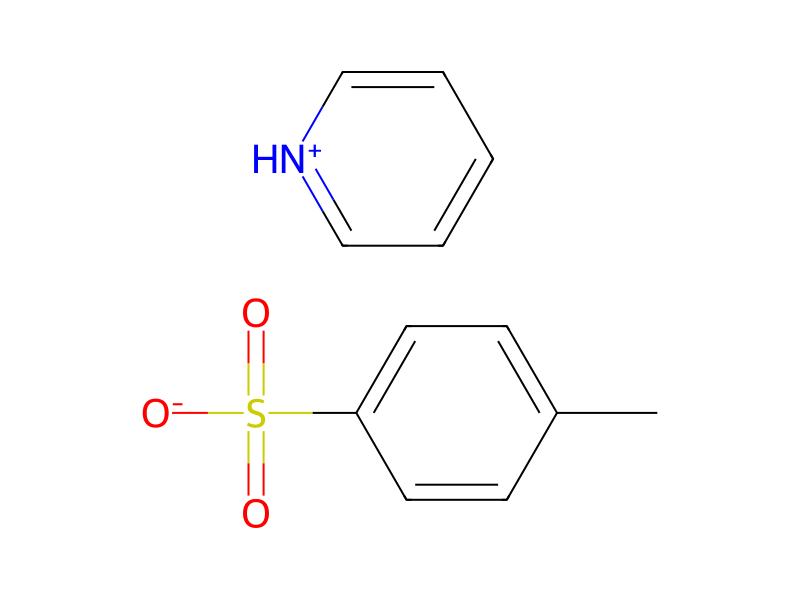
Product 1

Reagents, catalysts & solvents 1

Procedure
10.8 Grams of poly(p-hydroxystyrene) obtained in above (2) was dissolved in 72 ml of 1,4-dioxane, and 2.5 g of 3,4-dihydro-2H-pyrane and 0.05 g of pyridinium p-toluenesulfonate were added thereto, followed by conducting a reaction at 25 to 30° C. for 15 hours with stirring. The reaction solution is poured into 1000 ml of water to precipitate out. The precipitated polymer was filtered, washed with water and dried under reduced pressure to give 10.0 g of poly(p-hydroxystyrene/p-tetrahydropyranyloxystyrene) as white powders. A ratio of p-hydroxystyrene unit and p-tetrahydropyranyloxystyrene unit was about 90:10 by 1HNMR. Mw: about 15500, Mw/Mn: 1.18 (GPC method: polystyrene as standard).
Workup
- customa reaction at 25 to 30° C. for 15 hours
- customto precipitate out
- filtrationThe precipitated polymer was filtered
- washwashed with water
- customdried under reduced pressure
Sources & evidence
- ORD record
- ord-8211969ecfe94fe4ac6a79659cf5c4e6
- Source dataset
- uspto-grants-2003_12
- Patent number
- US06656660B1
Reaction notes
Loading…