Pyrrole → Diisopropylamine
Reaction equation

[NH:1]1[CH:5]=[CH:4][CH:3]=[CH:2]1.C1C=C[C:9]2N(O)N=[N:12][C:10]=2[CH:11]=1>CN(C=O)C>[CH:3]([NH:12][CH:10]([CH3:9])[CH3:11])([CH3:4])[CH3:2].[NH:1]1[CH:5]=[CH:4][CH:3]=[CH:2]1Participants
5
Reactant 2
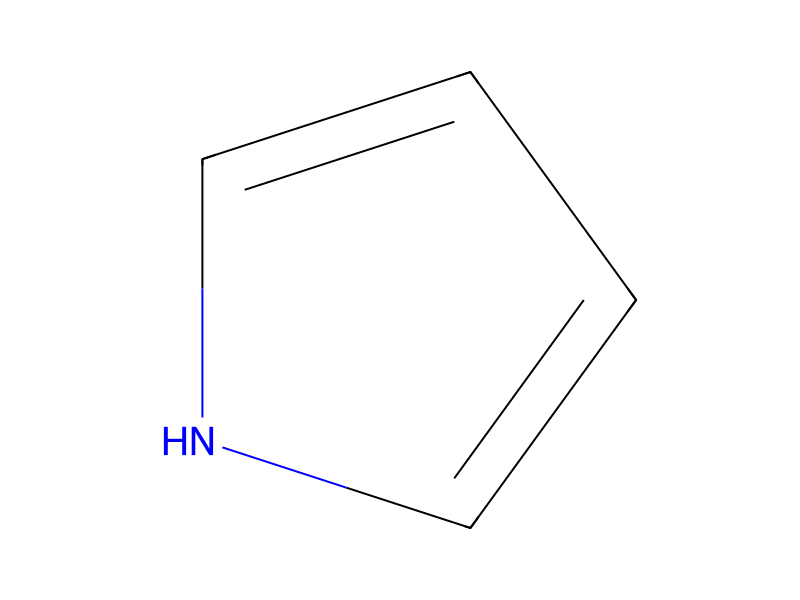

Product 2

Reagents, catalysts & solvents 1

Procedure
Chloropyrrolotriazine (1) (compound 3 of Scheme 9) can be reacted with an aniline (1a) (e.g., compound 1 of Scheme 11) in anhydrous DMF at rt to afford compound (2). Reaction of compound (2) with an aq. base such as NaOH with heating affords compound (3). Compound (3) can be reacted with an amine R2NH2 in the presence of a coupling reagent, such as HOBt, with or without a base such as diisopropylamine, in an organic solvent, such as DMF to afford compound (4). Compound (4) can be reacted with hydrogen in the presence of a catalyst, such as Pd/C, in an organic solvent, such as MeOH to afford compound (5). Reaction of compound (5) with an isocyanate in an organic solvent, such as DCE affords compound (6).
Sources & evidence
- ORD record
- ord-27b334296a8f480ea0080572d8fb7155
- Source dataset
- uspto-grants-2003_12
- Patent number
- US06670357B2
Reaction notes
Loading…