Diethyl Ether → Farnesyl bromide
Reaction equation

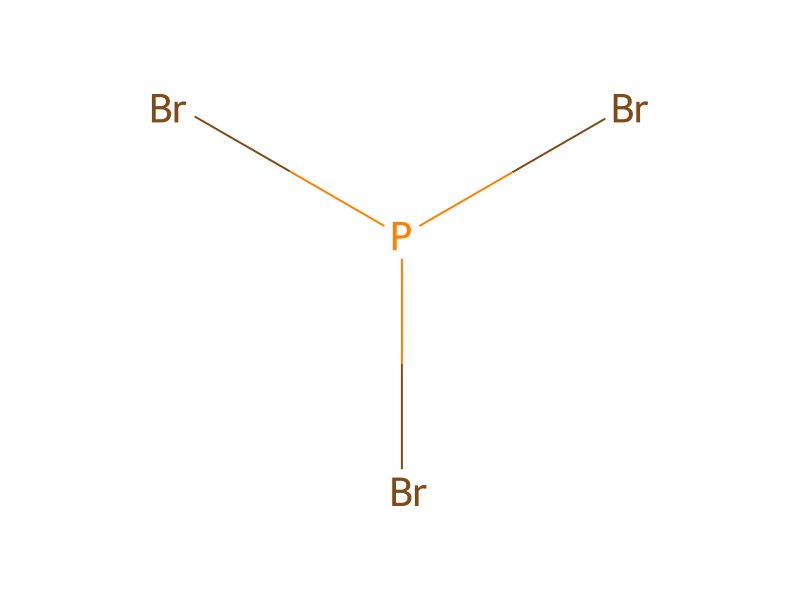
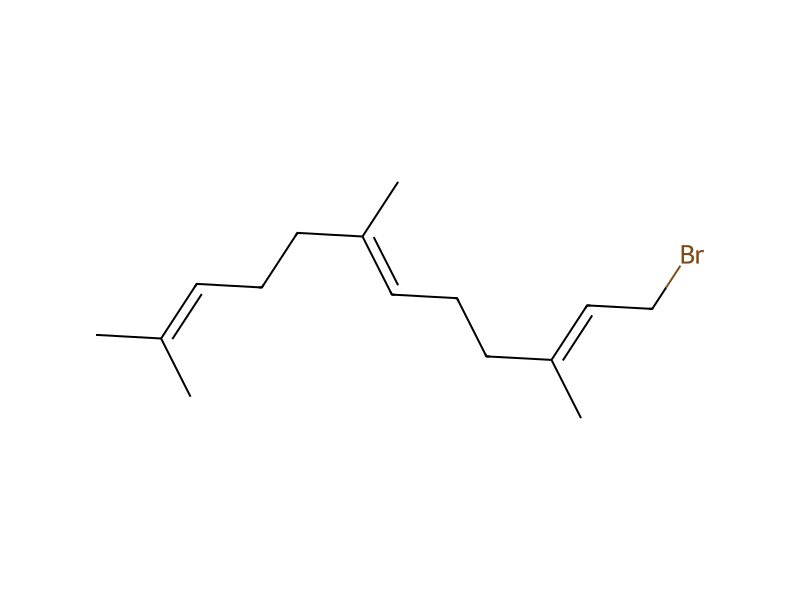
O[C:2]([CH2:6][CH2:7][CH:8]=[C:9]([CH2:11][CH2:12][CH:13]=[C:14]([CH3:16])[CH3:15])[CH3:10])([CH:4]=[CH2:5])[CH3:3].C(OCC)C.P(Br)(Br)[Br:23].C(=O)(O)[O-].[Na+]>O.N1C=CC=CC=1>[CH2:5]([Br:23])[CH:4]=[C:2]([CH2:6][CH2:7][CH:8]=[C:9]([CH2:11][CH2:12][CH:13]=[C:14]([CH3:16])[CH3:15])[CH3:10])[CH3:3]Participants





Procedure
Following the procedure reported by G. Pala et al. in Helv. Chim. Acta., 53, 1827- 1832 (1970), a mixture of 666 g of nerolidol (cis:trans= 40:60 ), 2,000 ml of diethyl ether and 20 ml of pyridine was cooled at -5° - -10° C. Thereto, 300 g of phosphorus tribromide was added dropwise slowly at the same temperature. Thereafter, the reaction was completed by further stirring of the mixture for 12 hours at the same temperature. The reaction mixture was poured into water and neutralized with sodium bicarbonate. The ether layer was washed with water and dried over anhydrous sodium sulfate. The solvent was distilled off in vacuo at room temperature to give 760 g of farnesyl bromide which showed orange color and irritating odor. As this substance was relatively unstable, it was brought to the following reaction without further purification or kept in a cold place.
Workup
- temperaturewas cooled at -5° - -10° C
- washThe ether layer was washed with water
- dry with materialdried over anhydrous sodium sulfate
- distillationThe solvent was distilled off in vacuo at room temperature
Sources & evidence
- ORD record
- ord-24fefd016c6349dcaee4eb128f9df65b
- Source dataset
- uspto-grants-1977_06
- Patent number
- US04028385
Reaction notes
Loading…