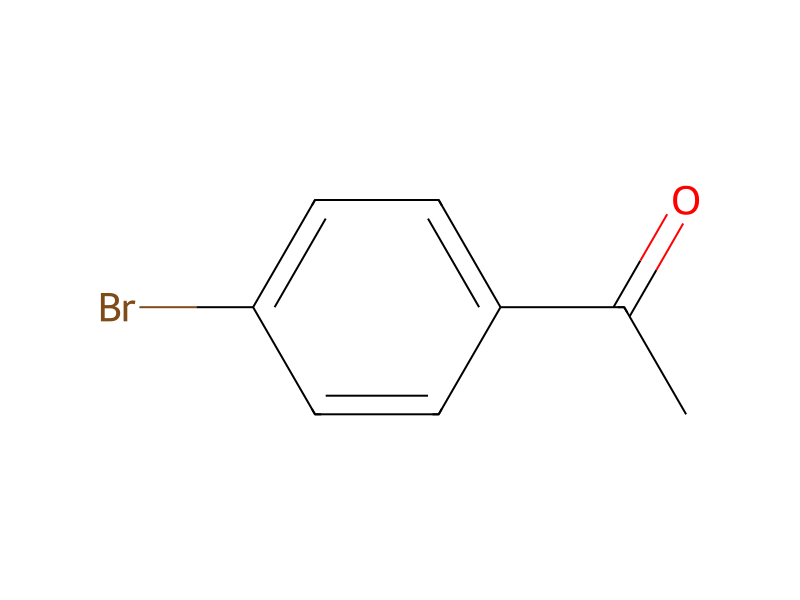
p-Bromoacetophenone → HCID 22758569, compound
Reaction equation

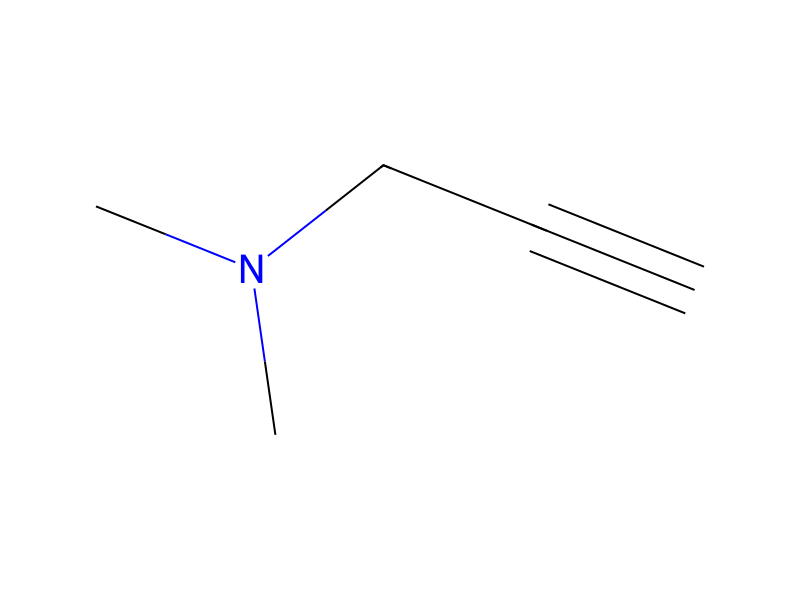
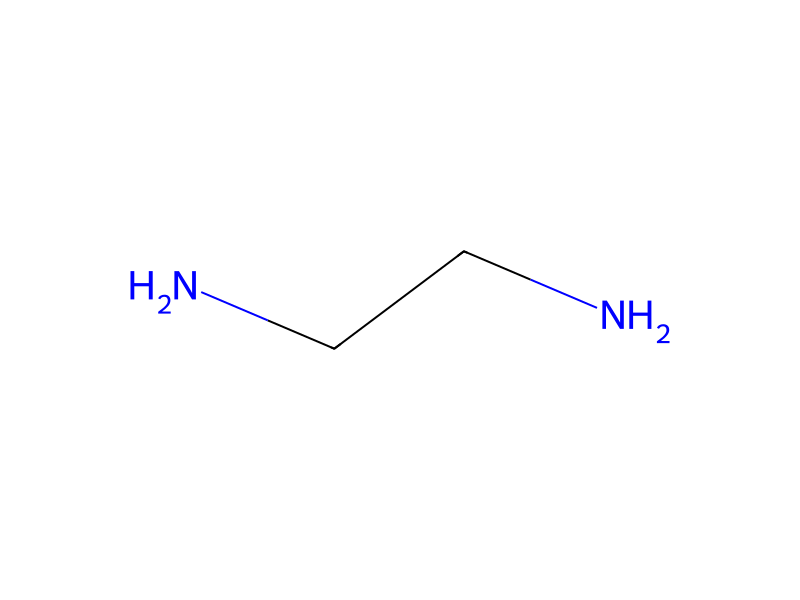
[Li].[CH3:2][N:3]([CH3:7])[CH2:4][C:5]#[CH:6].[Br:8][C:9]1[CH:14]=[CH:13][C:12]([C:15](=[O:17])[CH3:16])=[CH:11][CH:10]=1>C(N)CN.O1CCCC1>[Br:8][C:9]1[CH:14]=[CH:13][C:12]([C:15]([OH:17])([C:6]#[C:5][CH2:4][N:3]([CH3:7])[CH3:2])[CH3:16])=[CH:11][CH:10]=1Participants
Reactant 3
Product 1

Reagents, catalysts & solvents 2

Procedure
In 500 ml of ethylene diamine there is dissolved 13.88 g of lithium wire. After the disappearance of the blue color, the grey suspension obtained is dropwise treated, at 5° C., with 166.3 g of 3-dimethylamino-1-propyne. After 1 hour at room temperature, a solution of 50 g of p-bromoacetophenone in 250 ml of tetrahydrofuran is added. After 2 hours at room temperature, the mixture is poured onto ice and extracted with chloroform to give 62.9 g of crude, 2-(p-bromophenyl)-5-dimethylamino-3-pentyn-2-ol which is dissolved in 500 ml of acetone and treated with 18 ml of methyl iodide. After 18 hours at 5°, the solution is evaporated to dryness and the residue triturated with chloroform-ether to give 68 g of pure 2-(p-bromophenyl)-5-dimethylamino-3-pentyn-2-ol methiodide, mp 185°-190°.
Workup
- customAfter the disappearance of the blue color, the grey suspension obtained
- waitAfter 2 hours at room temperature
- additionthe mixture is poured onto ice
- extractionextracted with chloroform
Sources & evidence
- ORD record
- ord-8606286874b54640a2fe96c2f9049763
- Source dataset
- uspto-grants-1977_06
- Patent number
- US04032580
Reaction notes
Loading…