Ethanol → 1,2-Diamino-3,4,5,6-tetrachlorobenzene
Reaction equation

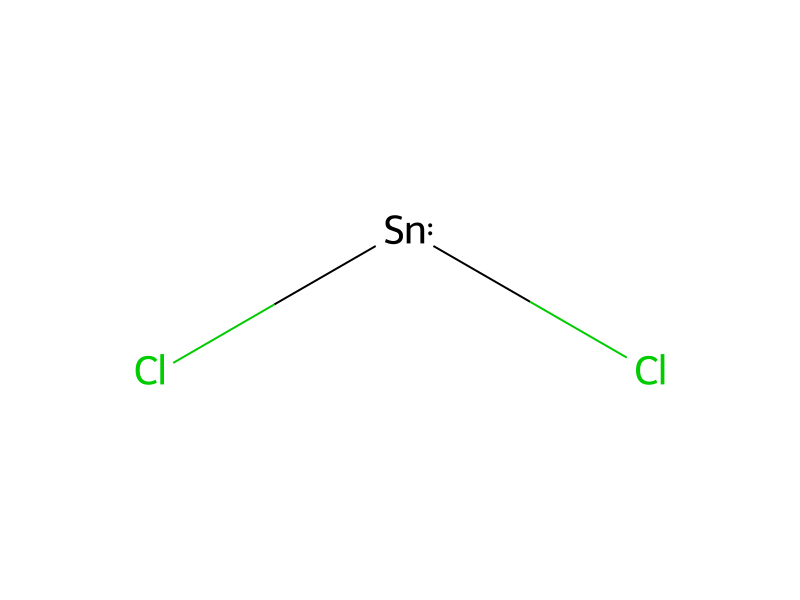
[N+:1]([C:4]1[C:9]([Cl:10])=[C:8]([Cl:11])[C:7]([Cl:12])=[C:6]([Cl:13])[C:5]=1[N+:14]([O-])=O)([O-])=O.Cl[Sn]Cl.C(O)C.C([O-])(O)=O.[Na+]>C(OCC)(=O)C>[NH2:14][C:5]1[C:6]([Cl:13])=[C:7]([Cl:12])[C:8]([Cl:11])=[C:9]([Cl:10])[C:4]=1[NH2:1]Participants
Reactant 4



Product 1

Reagents, catalysts & solvents 1

Procedure
1,2-Diamino-3,4,5,6-tetrachlorobenzene was prepared using an adaptation of the method of Bellamy et al. (Bellamy, F. D. et al., Tetrahedron Lett. 25:839 (1984)). A mixture of 1,2-dinitro-3,4,5,6-tetrachlorobenzene (1.00 g, 3.27 mmol) and SnCl2 ·2H2O (3.69 g, 16.4 mmol) dissolved in 10 mL ethyl acetate and 5 mL absolute ethanol under N2 was heated at 80° C. for 1 h. The reaction was allowed to cool to room temperature and poured into 20 mL crushed ice. Sufficient sat'd NaHCO3 solution was adding (foaming ) to bring the pH to 6. The thick white emulsion was extracted with 3×25 mL ethyl acetate and the combined organic extracts washed with sat'd NaCl solution. The organic phase was dried (MgSO4), vacuum filtered and the solvent rotary evaporated to yield a brown solid 569 mg (71%). 1H NMR (CDCl3) δ3.96 (br s, 2(NH2)). 13C NMR (CDCl3) δ118.2, 127.0, 132.0.
Workup
- additionpoured into 20 mL
- customcrushed ice
- additionwas adding (foaming )
- extractionThe thick white emulsion was extracted with 3×25 mL ethyl acetate
- washthe combined organic extracts washed with sat'd NaCl solution
- dry with materialThe organic phase was dried (MgSO4), vacuum
- filtrationfiltered
- customthe solvent rotary evaporated
Sources & evidence
- ORD record
- ord-7f4d7761cecd4d5ea006632060df17b7
- Source dataset
- uspto-grants-1996_05
- Patent number
- US05514680
Reaction notes
Loading…