Piperazine → 2-(Piperazin-1-yl)-1,3-benzoxazole
Reaction equation

[NH:1]1[CH2:6][CH2:5][NH:4][CH2:3][CH2:2]1.Cl[C:8]1[O:9][C:10]2[CH:16]=[CH:15][CH:14]=[CH:13][C:11]=2[N:12]=1.C(=O)([O-])[O-].[K+].[K+].[I-].[K+]>C(#N)C>[O:9]1[C:10]2[CH:16]=[CH:15][CH:14]=[CH:13][C:11]=2[N:12]=[C:8]1[N:1]1[CH2:6][CH2:5][NH:4][CH2:3][CH2:2]1Participants
6
Reactant 4



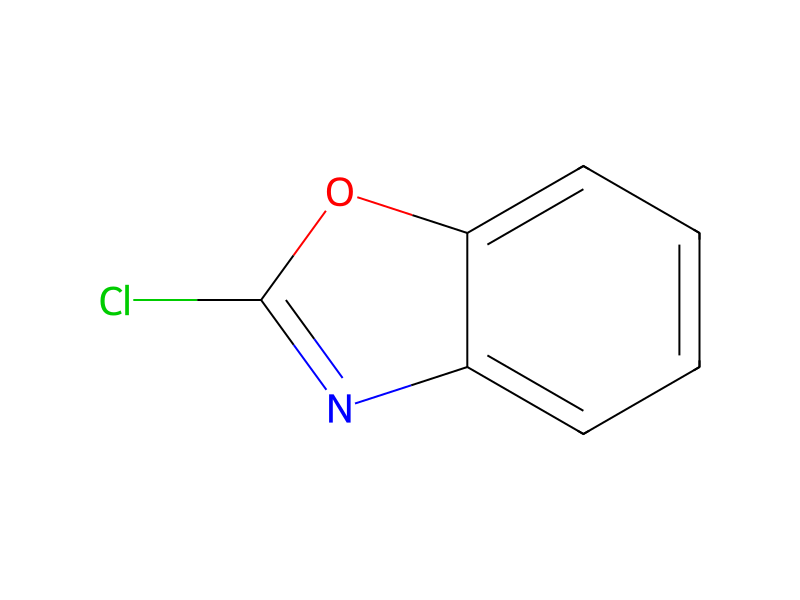
Product 1

Reagents, catalysts & solvents 1

Procedure
In 200 ml of acetonitrile were dissolved 33.6 g (0.39 mole) of piperazine and 10.0 g (0.065 mole) of 2-chlorobenzoxazole, and 9.0 g (0.065 mole) of potassium carbonate and a catalytic amount of potassium iodide were added thereto. The mixture was refluxed by heating for 11 hours under stirring. The mixture was cooled to room temperature and then filtered. The filtrate was concentrated under reduced pressure, and the residue was applied to silica gel column chromatography (the eluent used was a mixture of chloroform : methanol = 9 : 1) to obtain 7.54 g of 1-(2-benzoxazolyl)piperazine as white crystals.
Workup
- temperatureThe mixture was refluxed
- temperatureby heating for 11 hours
- filtrationfiltered
- concentrationThe filtrate was concentrated under reduced pressure
- additiona mixture of chloroform
Sources & evidence
- ORD record
- ord-721d03863f784a5a993efaec3c9c6757
- Source dataset
- uspto-grants-1996_05
- Patent number
- US05519016
Reaction notes
Loading…