Hydrogen Bromide → HCID 22406811, compound
Reaction equation
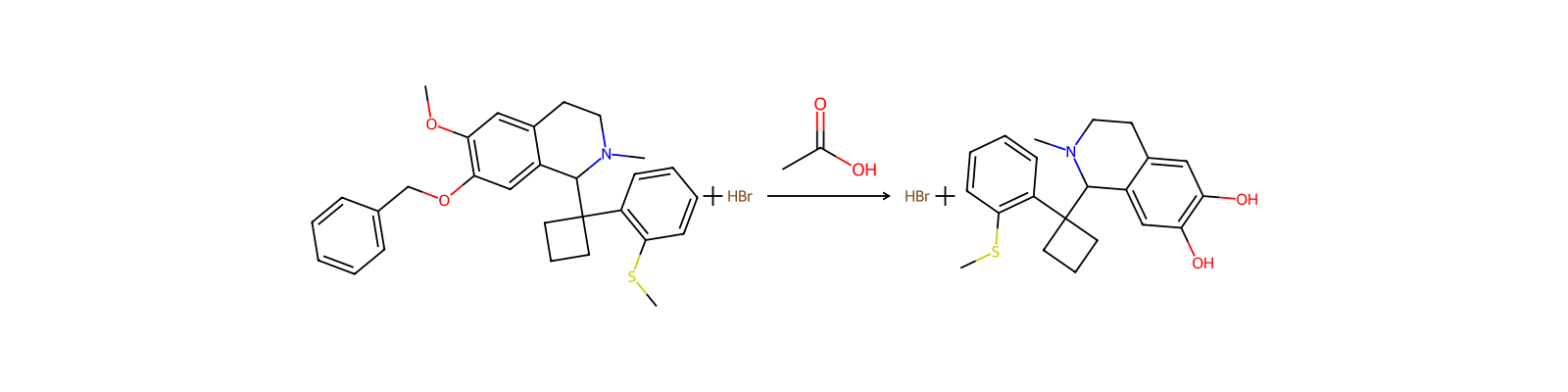
C([O:8][C:9]1[CH:18]=[C:17]2[C:12]([CH2:13][CH2:14][N:15]([CH3:31])[CH:16]2[C:19]2([C:23]3[CH:28]=[CH:27][CH:26]=[CH:25][C:24]=3[S:29][CH3:30])[CH2:22][CH2:21][CH2:20]2)=[CH:11][C:10]=1[O:32]C)C1C=CC=CC=1.[BrH:34]>C(O)(=O)C>[BrH:34].[OH:32][C:10]1[CH:11]=[C:12]2[C:17](=[CH:18][C:9]=1[OH:8])[CH:16]([C:19]1([C:23]3[CH:28]=[CH:27][CH:26]=[CH:25][C:24]=3[S:29][CH3:30])[CH2:20][CH2:21][CH2:22]1)[N:15]([CH3:31])[CH2:14][CH2:13]2Participants
4
Reactant 2


Product 1

Reagents, catalysts & solvents 1

Procedure
7-Benzyloxy-6-methoxy-2-methyl-1-[1-(2-methylthiophenyl) cyclobutyl]-1,2,3,4-tetrahydroisoquinoline (1.7 g) was heated under reflux for 2 hours with 48% aqueous hydrobromic acid (15 ml) and glacial acetic acid (15 ml). The solvents were removed by evaporation in vacuo and the residue dried by azeotropic distillation with propan-2-ol. The residue was then dissolved in propan-2-ol, decolourised with charcoal and the solvent evaporated to yield 6,7-dihydroxy-2-methyl-1-[1-(2-methylthiophenyl )cyclobutyl]-1,2,3,4-tetrahydroisoquinoline hydrobromide (1.1 g).
Workup
- customThe solvents were removed by evaporation in vacuo
- dry with materialthe residue dried by azeotropic distillation with propan-2-ol
- dissolutionThe residue was then dissolved in propan-2-ol
- customthe solvent evaporated
Sources & evidence
- ORD record
- ord-655ead6e8d434206a299c191b5c53084
- Source dataset
- uspto-grants-1996_05
- Patent number
- US05519034
Reaction notes
Loading…