Hydrochloric Acid → p-Hydroxystyrene p-tetrahydropyranyloxystyrene
Reaction equation

[C:1]([O:8][C:9]([O:11][C:12]([CH3:15])([CH3:14])C)=O)(OC(C)(C)C)=O.[CH:16]#[C:17][C:18]1[CH:23]=[CH:22][C:21]([OH:24])=[CH:20][CH:19]=1.Cl.O.N1C=C[CH:30]=[CH:29][CH:28]=1>>[OH:24][C:21]1[CH:22]=[CH:23][C:18]([CH:17]=[CH2:16])=[CH:19][CH:20]=1.[O:8]1[CH2:1][CH2:30][CH2:29][CH2:28][CH:9]1[O:11][C:12]1[CH:14]=[CH:23][C:18]([CH:17]=[CH2:16])=[CH:19][CH:15]=1Participants
6





Procedure
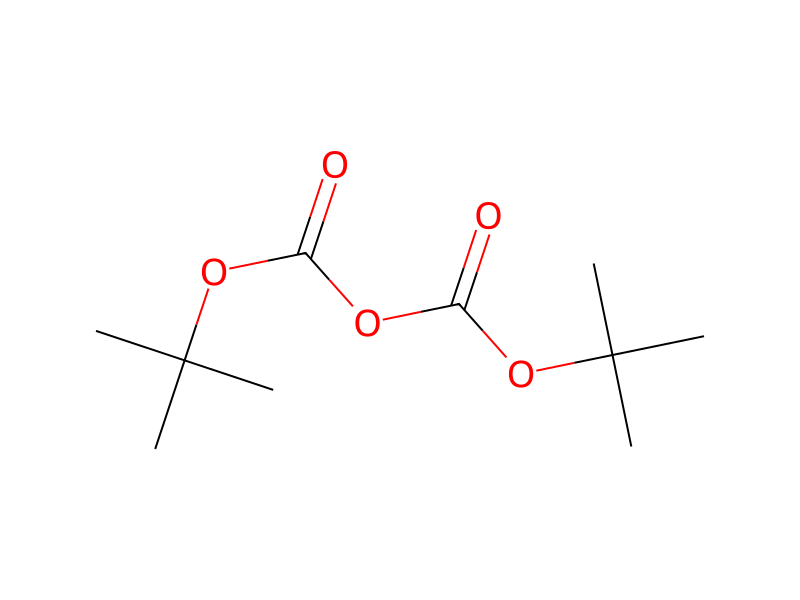
Di-t-butyl dicarbonate in an amount of 1.6 g was added to a solution containing poly(p-hydroxystyrene) [weight-average molecular weight: 11,000] in 40 ml of pyridine while stirring at room temperature. Therein, the reaction was run for 3 hours at room temperature, and the resultant solution was poured into a solution containing 20 g of conc. hydrochloric acid in 1 liter of ion-exchanged water. A powdery matter thus precipitated was filtered off, washed with water, and dried to give a p-hydroxystyrene/p-(t-butyloxycarbonyloxy)styrene (50/50) copolymer.
Workup
- customA powdery matter thus precipitated
- filtrationwas filtered off
- washwashed with water
- customdried
Sources & evidence
- ORD record
- ord-1ae50c228d1a4f6cb6067e5e0037d880
- Source dataset
- uspto-grants-1999_04
- Patent number
- US05891603
Reaction notes
Loading…