Hydrochloric Acid → HCID 23468260, compound
Reaction equation

[CH:1]1[C:10]2[C:5](=[CH:6][CH:7]=[CH:8][CH:9]=2)[CH:4]=[CH:3][C:2]=1[OH:11].N1C=CC=CC=1.[Cl:18][CH2:19][C:20]1[CH:28]=[CH:27][C:23]([C:24](Cl)=[O:25])=[CH:22][CH:21]=1.Cl>C1C=CC=CC=1>[CH:1]1[C:10]2[C:5](=[CH:6][CH:7]=[CH:8][CH:9]=2)[CH:4]=[CH:3][C:2]=1[O:11][C:24](=[O:25])[C:23]1[CH:27]=[CH:28][C:20]([CH2:19][Cl:18])=[CH:21][CH:22]=1Participants
Reactant 4



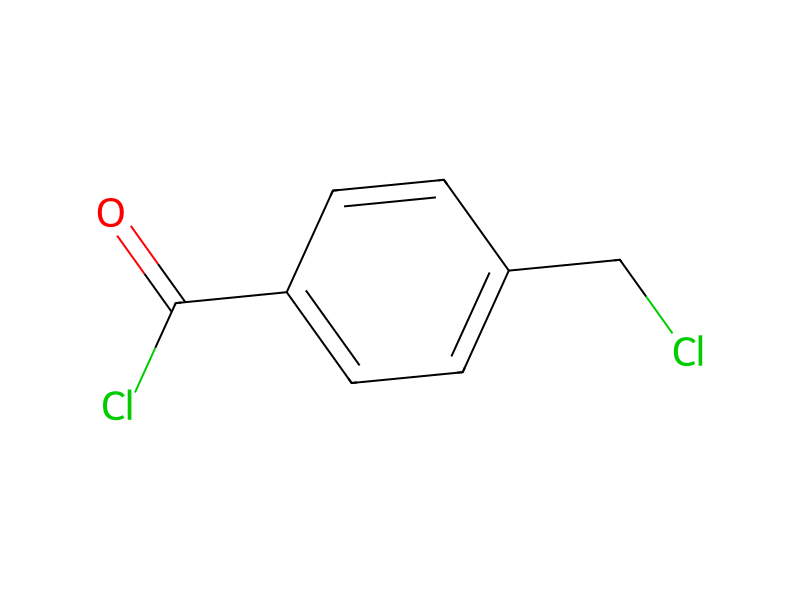
Product 1

Reagents, catalysts & solvents 1

Procedure
This ester was prepared by Method C by placing 72.1 g (0.5 mole) of β-naphthol, suspended in 150 ml of benzene, and 0.5 ml of pyridine in the vessel, adding all at once, at room temperature, a solution of 95 g (0.5 mole) of p-chloromethylbenzoyl chloride in 80 ml of benzene, and refluxing this reaction mixture for 6 hours, while passing a weak current of nitrogen through the apparatus. The HCl cleavage began at about 40° C., and at an internal temperature of 50° C., a clear, homogeneous solution had formed. After the end of the reaction time the benzene was substantially removed by distillation. The residue crystallized to a grayish pink crystal mass, the yield of which was quantitative (147.5 g). The raw ester melted at 90°-96° C. It was recrystallized from 2.5 liters of isopropanol with the addition of decolorizing carbon, yielding colorless, pearly, shiny flakes of a melting point of 102°-103.5° C.
Workup
- custombegan at about 40° C.
- customat an internal temperature of 50° C., a clear, homogeneous solution had formed
- customAfter the end of the reaction time the benzene was substantially removed by distillation
- customThe residue crystallized to a grayish pink crystal mass
- customIt was recrystallized from 2.5 liters of isopropanol with the addition of decolorizing carbon
- customyielding colorless
Sources & evidence
- ORD record
- ord-02564b19fa7e40dea8458cecb0569de8
- Source dataset
- uspto-grants-1981_04
- Patent number
- US04260803
Reaction notes
Loading…