4-Chlorophenol → HCID 23465922, compound
Reaction equation

[Na].[Cl:2][C:3]1[CH:8]=[CH:7][C:6]([OH:9])=[CH:5][CH:4]=1.Br.Br[CH:12]([C:19]1[CH:20]=[N:21][CH:22]=[CH:23][CH:24]=1)[C:13](=[O:18])[C:14]([CH3:17])([CH3:16])[CH3:15]>CO>[Cl:2][C:3]1[CH:8]=[CH:7][C:6]([O:9][CH:12]([C:19]2[CH:20]=[N:21][CH:22]=[CH:23][CH:24]=2)[C:13](=[O:18])[C:14]([CH3:17])([CH3:16])[CH3:15])=[CH:5][CH:4]=1Participants
Reactant 3
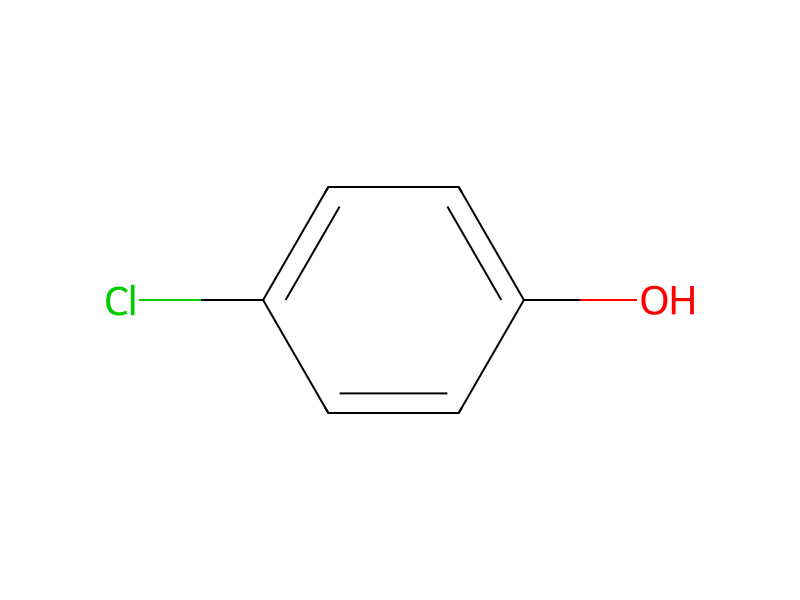


Product 1

Reagents, catalysts & solvents 1

Procedure
6.9 g (0.3 mol) of sodium metal were added to a solution of 38.6 g (0.3 mol) of 4-chlorophenol in 200 ml of absolute methanol. When the sodium had dissolved completely, the solution was heated under reflux and 33.7 g (0.1 mol) of 1-bromo-3,3-dimethyl-1-pyridin-3-yl-butan-2-one hydrobromide were added. The reaction mixture was heated under reflux overnight. It was allowed to cool and was concentrated in vacuo. The residue was taken up in diethyl ether and the ether mixture was washed twice with 2 N sodium hydroxide solution, once with water and once with saturated sodium chloride solution, dried over sodium sulphate and concentrated. The residue was recrystallized from n-hexane. 18.8 g (62% of theory) of 1-(4-chlorophenoxy)-3,3-dimethyl-1-pyridin-3-yl-butan-2-one of melting point 50° C. were obtained.
Workup
- temperaturethe solution was heated
- temperatureunder reflux
- temperatureThe reaction mixture was heated
- temperatureunder reflux overnight
- temperatureto cool
- concentrationwas concentrated in vacuo
- washthe ether mixture was washed twice with 2 N sodium hydroxide solution, once with water and once with saturated sodium chloride solution
- dry with materialdried over sodium sulphate
- concentrationconcentrated
- customThe residue was recrystallized from n-hexane
Sources & evidence
- ORD record
- ord-0cb2248982ca4c24a1c24cc1df211160
- Source dataset
- uspto-grants-1981_04
- Patent number
- US04262000
Reaction notes
Loading…