Dimethylformamide → N,N-diethyl-4-formylbenzamide
Reaction equation

[C:1]([C:4]1[CH:11]=[CH:10][C:7]([CH:8]=[O:9])=[CH:6][CH:5]=1)([OH:3])=O.CN(C)C=O.S(Cl)(Cl)=O.[CH2:21]([NH:23][CH2:24][CH3:25])[CH3:22]>C1(C)C=CC=CC=1>[CH:8]([C:7]1[CH:10]=[CH:11][C:4]([C:1]([N:23]([CH2:24][CH3:25])[CH2:21][CH3:22])=[O:3])=[CH:5][CH:6]=1)=[O:9]Participants
Reactant 4


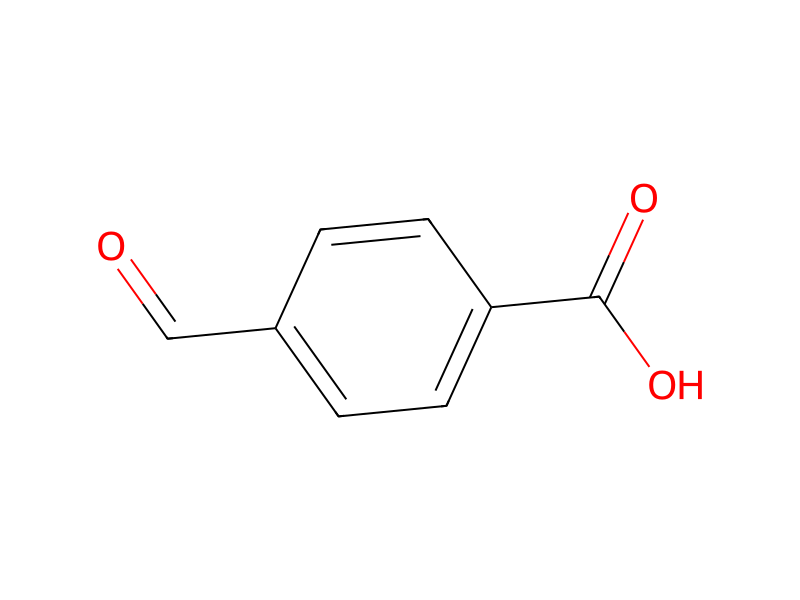

Product 1

Reagents, catalysts & solvents 1

Procedure
4-Carboxybenzaldehyde (100.3 g, 0.67 mol) was dissolved/suspended in toluene (1200 mL, dimethylformamide (0.15 mL) added and the suspension stirred during the dropwise addition of thionyl chloride (53.5 mL, 87.2 g, 0.73 mol). The reaction mixture was heated to reflux under nitrogen and stirred for 2 h, during which time much, but not all of the aldehydo-acid passed into solution. A further quantity of thionyl chloride (20 mL, 32.6 g, 0.27 mol) was added and reflux continued overnight. The clear reaction mixture was evaporated, and the residue dissolved in anhydrous tetrahydrofuran (1500 mL). The solution was cooled in an ice/water bath and diethylamine (173 mL, 122 g, 1.67 mol (2.5 equivalents)) was added dropwise to the stirred solution. The ice-bath was removed and stirring continued for 2.5 h. The reaction mixture was filtered to remove the white crystalline diethylamine hydrochloride by-product. The crystals were washed with ethyl acetate (2×600 mL), and the washings set aside. The tetrahydrofuran filtrate was evaporated, and the residue dissolved in the ethyl acetate washings. The solution was washed sequentially with 1 M-hydrochloric acid (2×600 mL), water 2×300 mL), dilute sodium carbonate solution (saturated:H2O, 1:1, 2×600 mL), water (2×300 mL) and saturated sodium chloride solution (300 mL). The organic layer was separated, dried over anhydrous sodium sulfate and evaporated to yield 4-formyl-N,N-diethylbenzamide as a pale brown oil, which was used without further purification. (Yield 115.7 g, 84%)
Workup
- additionadded
- temperatureThe reaction mixture was heated
- temperatureto reflux under nitrogen
- temperaturereflux
- waitcontinued overnight
- customThe clear reaction mixture was evaporated
- dissolutionthe residue dissolved in anhydrous tetrahydrofuran (1500 mL)
- temperatureThe solution was cooled in an ice/water bath
- customThe ice-bath was removed
- stirringstirring
- waitcontinued for 2.5 h
- filtrationThe reaction mixture was filtered
- customto remove the white crystalline diethylamine hydrochloride by-product
- washThe crystals were washed with ethyl acetate (2×600 mL)
- customThe tetrahydrofuran filtrate was evaporated
- dissolutionthe residue dissolved in the ethyl acetate washings
- washThe solution was washed sequentially with 1 M-hydrochloric acid (2×600 mL), water 2×300 mL), dilute sodium carbonate solution (saturated:H2O, 1:1, 2×600 mL), water (2×300 mL) and saturated sodium chloride solution (300 mL)
- customThe organic layer was separated
- dry with materialdried over anhydrous sodium sulfate
- customevaporated
Sources & evidence
- ORD record
- ord-e76d3c3bd20f47ef81130e41bdc80e83
- Source dataset
- uspto-grants-2013_07
- Patent number
- US08476280B2
Reaction notes
Loading…