4-Bromobenzophenone → (4-(Diphenylamino)phenyl)(phenyl)methanone
Reaction equation

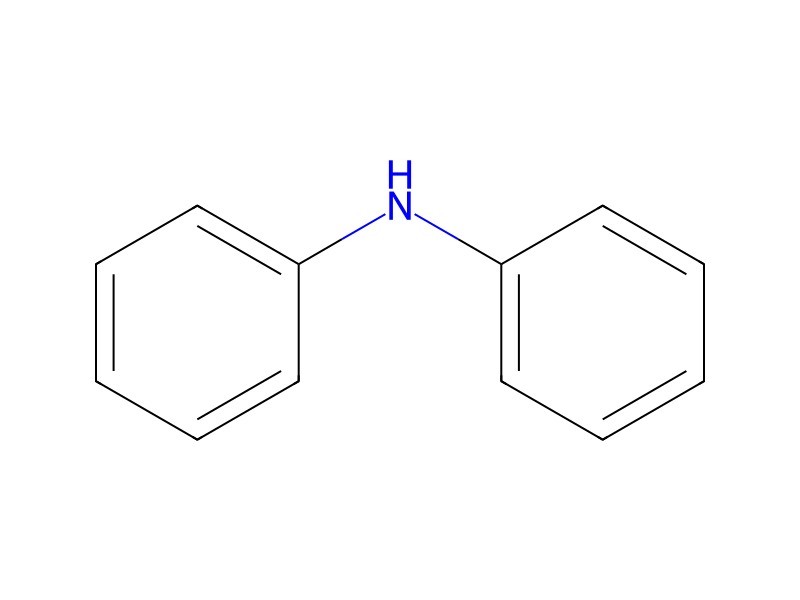
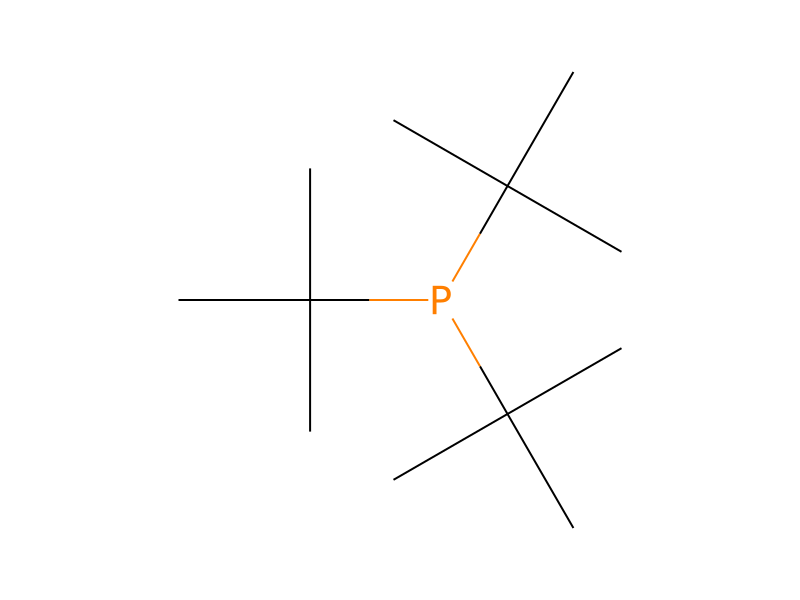
Br[C:2]1[CH:7]=[CH:6][C:5]([C:8]([C:10]2[CH:15]=[CH:14][CH:13]=[CH:12][CH:11]=2)=[O:9])=[CH:4][CH:3]=1.[C:16]1([NH:22][C:23]2[CH:28]=[CH:27][CH:26]=[CH:25][CH:24]=2)[CH:21]=[CH:20][CH:19]=[CH:18][CH:17]=1.P(C(C)(C)C)(C(C)(C)C)C(C)(C)C>C1(C)C=CC=CC=1>[C:23]1([N:22]([C:16]2[CH:17]=[CH:18][CH:19]=[CH:20][CH:21]=2)[C:2]2[CH:7]=[CH:6][C:5]([C:8]([C:10]3[CH:15]=[CH:14][CH:13]=[CH:12][CH:11]=3)=[O:9])=[CH:4][CH:3]=2)[CH:24]=[CH:25][CH:26]=[CH:27][CH:28]=1Participants
Reactant 3

Product 1

Reagents, catalysts & solvents 1

Procedure
(4-bromophenyl)(phenyl)methanone (5.0 g, 19.2 mmol) and diphenylamine (4.2 g, 25.0 mmol) were dissolved in 150 mL of toluene under a nitrogen atmosphere, and then tris(benzylidene acetone dipalladium) (0.4 g, 0.4 mmol) was added thereto under nitrogen. Also, P(t-Bu)3 (0.8 g, 3.8 mmol) was added to the reaction mixture solution, followed by addition of NaOBut (5.5 g, 57.7 mmol). The reaction mixture solution was refluxed and stirred for 24 hours. After the reaction was over, the reaction mixture solution was filtered through a thin silica pad at a high temperature to thereby remove palladium. The filtrate was concentrated, and passed through a silica gel column by using hexane-dichloromethane 7:3 as an eluant. After the solvent was removed, the residue material was dried in vacuum to thereby obtain a white solid (5.6 g, yield: 84%).
Workup
- additionfollowed by addition of NaOBut (5.5 g, 57.7 mmol)
- temperatureThe reaction mixture solution was refluxed
- filtrationwas filtered through a thin silica pad at a high temperature to thereby remove palladium
- concentrationThe filtrate was concentrated
- customAfter the solvent was removed
- customthe residue material was dried in vacuum
Sources & evidence
- ORD record
- ord-29c0f90b8e4241edb834ac69b649a70b
- Source dataset
- uspto-grants-2013_07
- Patent number
- US08476474B2
Reaction notes
Loading…