Diisopropylethylamine → 6-Chloro-N-(5-cyclopropyl-1H-pyrazol-3-yl)-3-nitropyridin-2-amine
Reaction equation

Cl[C:2]1[C:7]([N+:8]([O-:10])=[O:9])=[CH:6][CH:5]=[C:4]([Cl:11])[N:3]=1.[CH:12]1([C:15]2[NH:19][N:18]=[C:17]([NH2:20])[CH:16]=2)[CH2:14][CH2:13]1.C(N(C(C)C)CC)(C)C>C(#N)C>[Cl:11][C:4]1[N:3]=[C:2]([NH:20][C:17]2[CH:16]=[C:15]([CH:12]3[CH2:14][CH2:13]3)[NH:19][N:18]=2)[C:7]([N+:8]([O-:10])=[O:9])=[CH:6][CH:5]=1Participants
5

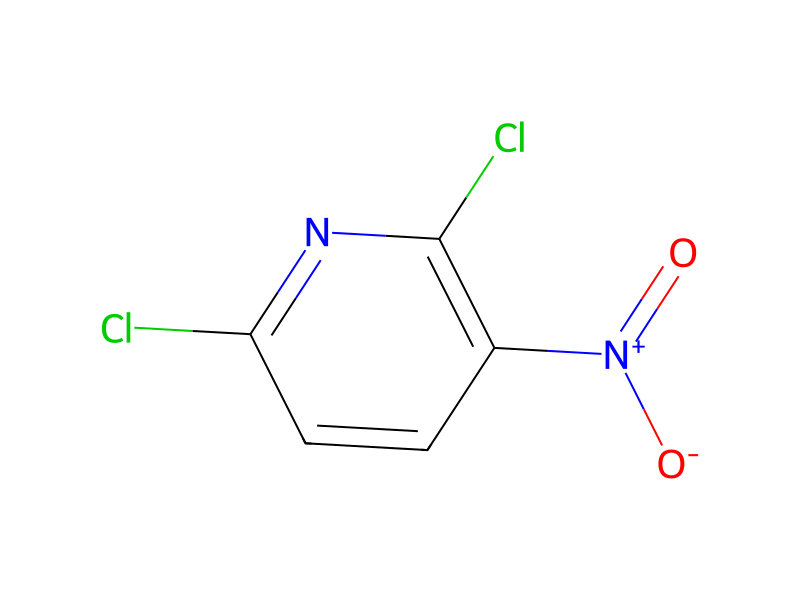



Procedure
A mixture of 2,6-dichloro-3-nitropyridine (5 g) and 5-cyclopropyl-1H-pyrazol-3-amine (5 g) in acetonitrile (40 mL) with diisopropylethylamine (6 mL) was stirred at room temperature for 24 hours, The resulting mixture was concentrated, and the resulting residue was separated by silica gel column (Hexane/Ethyl acetate) to afford 5 g desired product. MS (electrospray): 280 (M+1) for C11H10ClN5O2. 1H NMR (300 MHz, CD3OD) δ ppm 8.5 (d, 1H) 6.9 (d, 1H) 6.5 (s, 1H) 1.9 (m, 1H) 1.0 (m, 2H) 0.70 (m, 2H).
Workup
- concentrationThe resulting mixture was concentrated
- customthe resulting residue was separated by silica gel column (Hexane/Ethyl acetate)
Sources & evidence
- ORD record
- ord-b5ab107d24b34a7a80ff539c0561fa11
- Source dataset
- uspto-grants-2013_07
- Patent number
- US08486966B2
Reaction notes
Loading…