6,8-Dichloro-2-propyl-2,3,3a,4,5,9b-hexahydro-1H-benzo[e]isoindol-7-yl-amine → 2-Propyl-2,3,3a,4,5,9b-hexahydro-1H-benzo[e]isoindol-7-yl-amine
Reaction equation

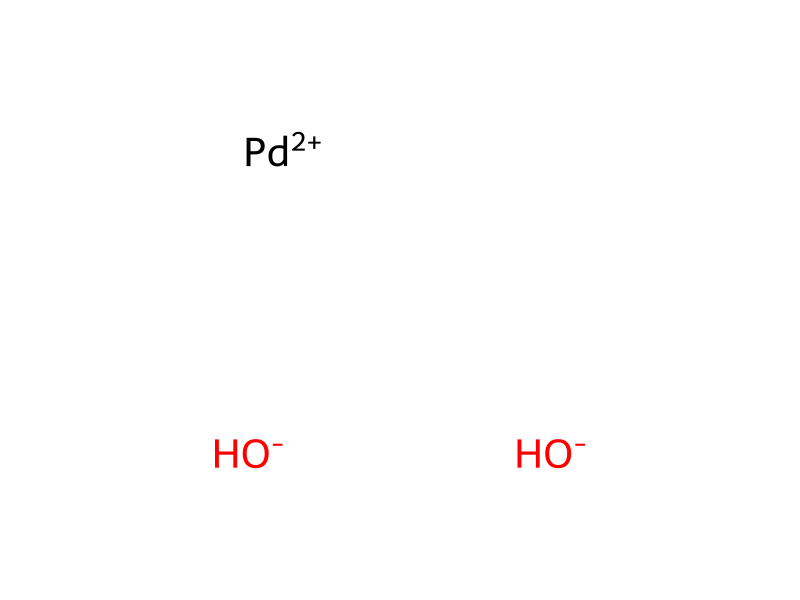
Cl[C:2]1[C:14]2[CH2:13][CH2:12][CH:11]3[CH:7]([CH2:8][N:9]([CH2:15][CH2:16][CH3:17])[CH2:10]3)[C:6]=2[CH:5]=[C:4](Cl)[C:3]=1[NH2:19]>CO.C(OCC)(=O)C.[OH-].[Na+].[OH-].[OH-].[Pd+2]>[CH2:15]([N:9]1[CH2:8][CH:7]2[CH:11]([CH2:12][CH2:13][C:14]3[CH:2]=[C:3]([NH2:19])[CH:4]=[CH:5][C:6]=32)[CH2:10]1)[CH2:16][CH3:17]Participants
6
Reactant 1

Product 1

Reagents, catalysts & solvents 4



Procedure
A mixture of 6,8-dichloro-2-propyl-2,3,3a,4,5,9b-hexahydro-1H-benzo[e]isoindol-7-yl-amine (800 mg, 2.67 mmol) and 20% palladiumhydroxide on carbon in methanol (50 ml) was hydrogenated over night at room temperature. The catalyst was filtered, and the solvent was removed under vacuum to yield the crude product. The residue was dissolved in ethyl acetate and 1 M NaOH solution. The aqueous phase was once more extracted with ethyl acetate. The combined organic layers were dried over magnesium sulfate, filtered, and the solvent evaporated under reduced pressure to give the pure product (530 mg, 86%).
Workup
- waitwas hydrogenated over night at room temperature
- filtrationThe catalyst was filtered
- customthe solvent was removed under vacuum
- customto yield the crude product
- extractionThe aqueous phase was once more extracted with ethyl acetate
- dry with materialThe combined organic layers were dried over magnesium sulfate
- filtrationfiltered
- customthe solvent evaporated under reduced pressure
Sources & evidence
- ORD record
- ord-f40fa3a684ab448a85524738320ee5ab
- Source dataset
- uspto-grants-2013_07
- Patent number
- US08486984B2
Reaction notes
Loading…