Potassium Phosphate, Tribasic → HCID 58508759, compound
Reaction equation

CC1(C)C(C)(C)OB([C:9]2[CH:14]=[CH:13][N:12]=[CH:11][CH:10]=2)O1.P([O-])([O-])([O-])=O.[K+].[K+].[K+].Cl[C:25]1[N:30]=[CH:29][C:28]([C:31]([NH:33][C:34]2[CH:46]=[C:45]([C:47]3[CH:52]=[CH:51][CH:50]=[CH:49][CH:48]=3)[CH:44]=[CH:43][C:35]=2[C:36]([O:38][C:39]([CH3:42])([CH3:41])[CH3:40])=[O:37])=[O:32])=[CH:27][CH:26]=1>C([O-])(=O)C.[Pd+2].C([O-])(=O)C.C1(P(C2CCCCC2)C2C=CC=CC=2C2C(OC)=CC=CC=2OC)CCCCC1.C1(C)C=CC=CC=1>[C:47]1([C:45]2[CH:44]=[CH:43][C:35]([C:36]([O:38][C:39]([CH3:42])([CH3:40])[CH3:41])=[O:37])=[C:34]([NH:33][C:31]([C:28]3[CH:29]=[N:30][C:25]([C:9]4[CH:10]=[CH:11][N:12]=[CH:13][CH:14]=4)=[CH:26][CH:27]=3)=[O:32])[CH:46]=2)[CH:48]=[CH:49][CH:50]=[CH:51][CH:52]=1Participants
Reactant 3



Product 1

Reagents, catalysts & solvents 3


Procedure
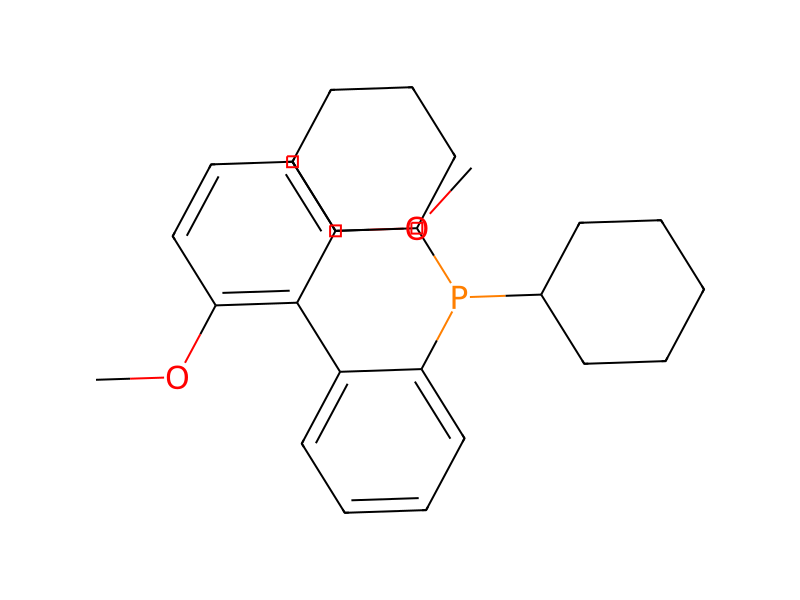
4-(4,4,5,5-Tetramethyl-1,3,2-dioxaborolan-2-yl)-pyridine (48 mg), tripotassium phosphate (91 mg), 2-dicyclohexylphosphino-2′,6′-dimethoxybiphenyl (1.6 mg), and palladium(II) acetate (1.8 mg) were added to a toluene (1.6 mL) suspension of tert-butyl 2-(6-chloropyridine-3-carboxamido)-4-phenylbenzoate (80 mg), followed by heating to reflux under a nitrogen atmosphere for 2 hours and 30 minutes. The reaction mixture was cooled to room temperature, and then 4-(4,4,5,5-tetramethyl-1,3,2-dioxaborolan-2-yl)pyridine (48 mg), tripotassium phosphate (91 mg), 2-dicyclohexylphosphino-2′,6′-dimethoxybiphenyl (1.6 mg), and palladium(II) acetate (1.8 mg) were added thereto, followed by heating to reflux under a nitrogen atmosphere for 3 hours. The reaction mixture was cooled to room temperature, and then 2-dicyclohexylphosphino-2′,6′-dimethoxybiphenyl (1.6 mg) and palladium(II) acetate (1.8 mg) were added thereto, followed by heating to reflux under a nitrogen atmosphere for 2 hours. After cooling the reaction mixture to room temperature, the solvent was evaporated under reduced pressure, and chloroform and water were added to the residue. The insoluble substance was removed by filtration. The organic layer was separated, washed with a saturated aqueous solution of sodium chloride, and dried over anhydrous magnesium sulfate, and the solvent was evaporated under reduced pressure. The obtained residue was purified by silica gel column chromatography [Fuji Silysia Chemical Ltd., PSQ100B (spherical), eluent: 90-15% hexane/ethyl acetate] to obtain 25 mg of tert-butyl 4-phenyl-2-(6-(pyridin-4-yl)pyridine-3-carboxamido)benzoate as a light yellow solid.
Workup
- temperatureby heating
- temperatureto reflux under a nitrogen atmosphere for 2 hours and 30 minutes
- temperatureby heating
- temperatureto reflux under a nitrogen atmosphere for 3 hours
- temperatureThe reaction mixture was cooled to room temperature
- temperatureby heating
- temperatureto reflux under a nitrogen atmosphere for 2 hours
- temperatureAfter cooling the reaction mixture to room temperature
- customthe solvent was evaporated under reduced pressure, and chloroform and water
- additionwere added to the residue
- customThe insoluble substance was removed by filtration
- customThe organic layer was separated
- washwashed with a saturated aqueous solution of sodium chloride
- dry with materialdried over anhydrous magnesium sulfate
- customthe solvent was evaporated under reduced pressure
- customThe obtained residue was purified by silica gel column chromatography [Fuji Silysia Chemical Ltd., PSQ100B (spherical), eluent: 90-15% hexane/ethyl acetate]
Sources & evidence
- ORD record
- ord-dc58f718b4c040598ae6eb0aa330c3d7
- Source dataset
- uspto-grants-2013_07
- Patent number
- US08492582B2
Reaction notes
Loading…