Dichloromethane → Ammonia dichloromethane
Reaktionsgleichung

[N:1]1([C:7]2[CH:12]=[CH:11][C:10]([OH:13])=[C:9]([CH3:14])[CH:8]=2)[CH2:6][CH2:5][CH2:4][CH2:3][CH2:2]1.[CH2:15]([N:17]([CH2:21][CH3:22])[CH2:18][CH2:19]O)[CH3:16].C1(P(C2C=CC=CC=2)C2C=CC=CC=2)C=CC=CC=1.CC(OC(/N=N/C(OC(C)(C)C)=O)=O)(C)C.[CH2:58]([Cl:60])[Cl:59]>>[NH3:1].[CH2:58]([Cl:60])[Cl:59].[CH2:15]([N:17]([CH2:21][CH3:22])[CH2:18][CH2:19][O:13][C:10]1[CH:11]=[CH:12][C:7]([N:1]2[CH2:6][CH2:5][CH2:4][CH2:3][CH2:2]2)=[CH:8][C:9]=1[CH3:14])[CH3:16]Komponenten
7
Edukt 5

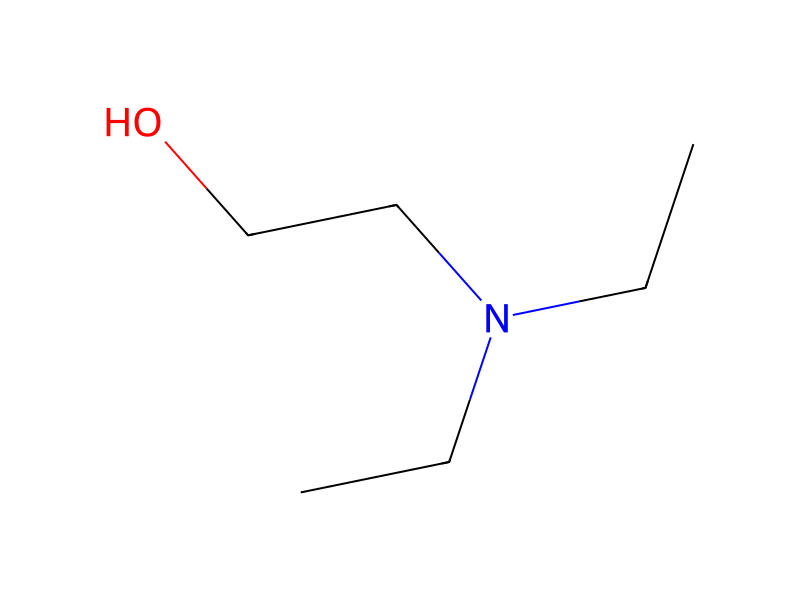



Produkt 2


Versuchsvorschrift
A suspension of the product of Example 17 (176 mg), 2-Diethylamino-ethanol (0.12 mL), and polymer supported triphenylphosphine (613 mg; loading: 3 mmol/g) in DCM (5 mL) was treated with di-tert-butylazodicarboxylate (316 mg). After 2 h, the resulting mixture was filtered, and the filtrate was evaporated. Chromatography of the residue (3% 2 M methanolic ammonia/DCM) gave the title compound as a pale yellow oil (37 mg). 1H NMR (400 MHz, CDCl3): 7.20 (d, J=8.8 Hz, 2H), 6.84 (d, J=8.6 Hz, 2H), 4.03 (t, J=6.5 Hz, 2H), 3.40 (s, 2H), 2.87 (t, J=6.5 Hz, 2H), 2.63 (q, J=7.0 Hz, 4H), 2.35 (br s, 4H), 1.59–1.52 (m, 4H), 1.46–1.37 (m, 2H), 1.07 (t, J=7.1 Hz, 6H).
Aufarbeitung
- filtrationthe resulting mixture was filtered
- customthe filtrate was evaporated
Quellen und Nachweise
- ORD-Eintrag
- ord-f2d6ec256b704a95a2991abf985b0bc9
- Quelldatensatz
- uspto-grants-2007_03
- Patentnummer
- US07186732B2
Notizen zur Reaktion
Wird geladen…