Heptane → HCID 86601560, compound
Reaction equation

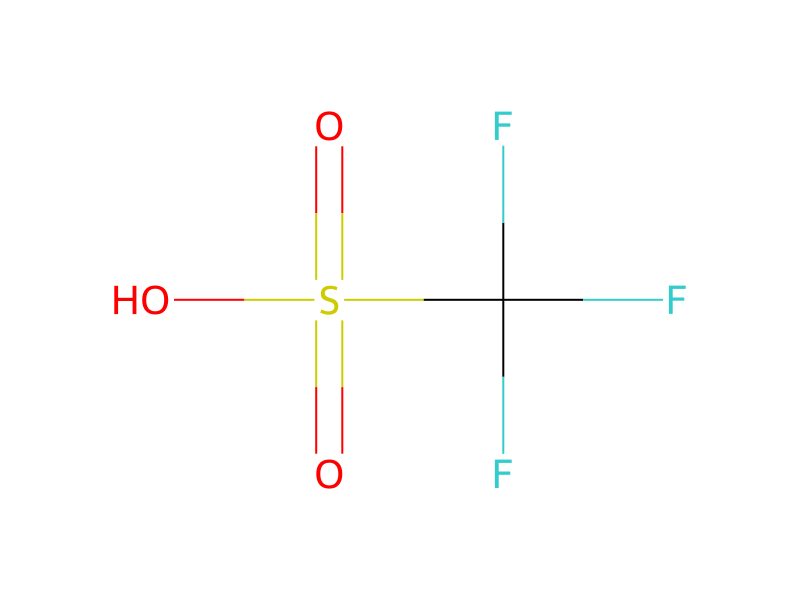
[C:1]1([CH3:42])[C:2]([S:7]([O:10][CH2:11][C@H:12]([CH2:21][O:22][C:23](=[O:41])[CH2:24][CH2:25][CH2:26][CH2:27][CH2:28][CH2:29][CH2:30][CH2:31][CH2:32][CH2:33][CH2:34][CH2:35][CH2:36][CH2:37][CH2:38][CH2:39][CH3:40])[CH2:13][CH:14](OCC)[O:15]CC)(=[O:9])=[O:8])=[CH:3][CH:4]=[CH:5][CH:6]=1.OS(C(F)(F)F)(=O)=O.CCCCCCC>C(#N)C.O>[C:23]([O:22][CH2:21][C@@H:12]([CH2:11][O:10][S:7]([C:2]1[C:1]([CH3:42])=[CH:6][CH:5]=[CH:4][CH:3]=1)(=[O:9])=[O:8])[CH2:13][CH:14]=[O:15])(=[O:41])[CH2:24][CH2:25][CH2:26][CH2:27][CH2:28][CH2:29][CH2:30][CH2:31][CH2:32][CH2:33][CH2:34][CH2:35][CH2:36][CH2:37][CH2:38][CH2:39][CH3:40]Participants
Reactant 3


Product 1

Reagents, catalysts & solvents 2


Conditions
- Temperature
- 37 °C
Procedure
A suspension of the product of Example 61 c) (4573 g, 7.47 mol) in acetonitrile (4 L) was added to a 50 L reactor equipped with a thermocouple and nitrogen inlet. An additional 13 L of acetonitrile was added and the suspension was heated to 37° C. with steam. A solution of triflic acid (1253 mL, 14.16 mol) in water (7.6 L) was added over 20 minutes. Then the mixture was stirred at 39–42° C. for 1 hour. The reaction mixture was quenched by adding it to 20 L of 23% aqueous sodium bicarbonate solution and 35 L of methyl t-butyl ether. The reaction flask was rinsed with 5 L of methyl t-butyl ether and an additional 20 L of 23% aqueous sodium bicarbonate was addded. This mixture was stirred for 10 minutes and the layers were separated. The organic layer was washed with a mixture of 25 L of 23% aqueous sodium bicarbonate solution and 15 L of 7% NaCl solution. Then the organic layer was washed with 25 L of 7% NaCl solution. The solvents were removed on a batch concentrator to provide a thick slurry. Heptane (32 L) was added to the slurry and then evaporated. Additional heptane (12 L) was added and evaporated. A further amount of heptane (40 L) was added and the suspensin was heated to 44° C. in 60 minutes, causing complete dissolution. The reaction flask was cooled to 40° C. in 10 minutes by running cold water over the surface of the flask. The solution was then allowed to slowly cool to 35° C., where cyrstallization occurs. The resulting thick mixture was stirred for 14 hours. The precipitate was filtered and rinsed twice with 4 L of heptane and then dried on the filter funnel for 2 hours and then in a vacuum oven with nitrogen purge for 60 hours at room temperature. The resulting solid (3200 g), heptane (30 L) and methyl t-butyl ether (1.6 L) were combined and heated with stirring to dissolution. The resulting solution was cooled over 1 hour to 42° C. and the resulting suspension was stirred for 20 hours while cooling to room temperature. The precipitate was filtered and dried in a vacuum oven with nitrogen purge for 20 hours at room temperature to give the desired product (2860 g).
Workup
- additionwas added to a 50 L reactor
- customequipped with a thermocouple and nitrogen inlet
- customThe reaction mixture was quenched
- additionby adding it to 20 L of 23% aqueous sodium bicarbonate solution and 35 L of methyl t-butyl ether
- washThe reaction flask was rinsed with 5 L of methyl t-butyl ether
- stirringThis mixture was stirred for 10 minutes
- customthe layers were separated
- washThe organic layer was washed with a mixture of 25 L of 23% aqueous sodium bicarbonate solution and 15 L of 7% NaCl solution
- washThen the organic layer was washed with 25 L of 7% NaCl solution
- customThe solvents were removed on a batch concentrator
- customto provide a thick slurry
- customevaporated
- additionAdditional heptane (12 L) was added
- customevaporated
- additionA further amount of heptane (40 L) was added
- temperaturethe suspensin was heated to 44° C. in 60 minutes
- dissolutiondissolution
- temperatureThe reaction flask was cooled to 40° C. in 10 minutes
- temperatureto slowly cool to 35° C.
- stirringThe resulting thick mixture was stirred for 14 hours
- filtrationThe precipitate was filtered
- washrinsed twice with 4 L of heptane
- customdried on the filter funnel for 2 hours
- customin a vacuum oven with nitrogen purge for 60 hours at room temperature
- temperatureheated
- stirringwith stirring to dissolution
- temperatureThe resulting solution was cooled over 1 hour to 42° C.
- stirringthe resulting suspension was stirred for 20 hours
- temperaturewhile cooling to room temperature
- filtrationThe precipitate was filtered
- customdried in a vacuum oven with nitrogen
- custompurge for 20 hours at room temperature
Sources & evidence
- ORD record
- ord-5f5355deb4cf49b58146a4d7f2342fce
- Source dataset
- uspto-grants-2007_03
- Patent number
- US07189849B2
Reaction notes
Loading…