Sodium Chloride → Ethyl 2-chlorothiazole-4-carboxylate
Reaction equation

Br.[CH2:2]([O:4][C:5]([C:7]1[N:8]=[C:9](N)[S:10][CH:11]=1)=[O:6])[CH3:3].C([O-])(O)=O.[Na+].[Na+].[Cl-:19].N([O-])=O.[Na+]>O.[O-]S([O-])(=O)=O.[Cu+2]>[CH2:2]([O:4][C:5]([C:7]1[N:8]=[C:9]([Cl:19])[S:10][CH:11]=1)=[O:6])[CH3:3]Participants





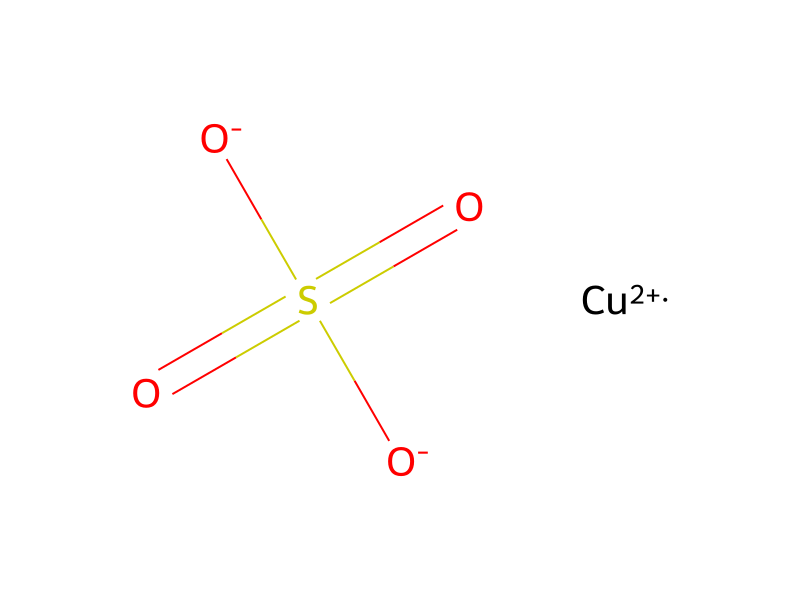

Conditions
- Temperature
- 0 °C
Procedure
2-Amino-thiazole-4-carboxylic acid ethyl ester hydrobromide (34.46 g, 0.137 mol) was basified with a saturated solution of NaHCO3 (aq) (300 mL) and extracted with EtOAc (8×300 mL). The combined organic layers were dried over Na2SO4, filtered and the solvent evaporated in vacuo to liberate the free base. To a well stirred suspension of the free base in 9M H2SO4 (aq) (500 mL) at 0° C. to −5° C., CuSO4 (63.34 g, 0.397 mol) and NaCl (30.39 g, 0.520 mol) were added, followed by the dropwise addition of a solution of NaNO2 (10.39 g, 0.151 mol) in H2O (150 mL), over 45 min. The mixture was maintained at 0° C. for 1 h then warmed to RT. After 1 h at RT the reaction mixture was diluted with H2O (2 L) and extracted with Et2O (3×300 mL). The combined organic layers were dried over Na2SO4, filtered and the solvent was evaporated in vacuo to yield the title compound as a pale yellow amorphous solid (sufficiently pure to be used directly in the next step). MS m/z: 192.0 (M+H). Calc'd. for C6H6ClNO2S-191.64.
Workup
- extractionextracted with EtOAc (8×300 mL)
- dry with materialThe combined organic layers were dried over Na2SO4
- filtrationfiltered
- customthe solvent evaporated in vacuo
- additionsuspension of the free base in 9M H2SO4 (aq) (500 mL) at 0° C. to −5° C.
- temperaturethen warmed to RT
- extractionextracted with Et2O (3×300 mL)
- dry with materialThe combined organic layers were dried over Na2SO4
- filtrationfiltered
- customthe solvent was evaporated in vacuo
Sources & evidence
- ORD record
- ord-1918b8b2faf6429e87c44894c7611f84
- Source dataset
- uspto-grants-2007_03
- Patent number
- US07196104B2
Reaction notes
Loading…