Glycolic Acid → 2-(4-Chloro-2-methylphenoxymethyl)-1,3-dioxolan-4-one
Reaction equation

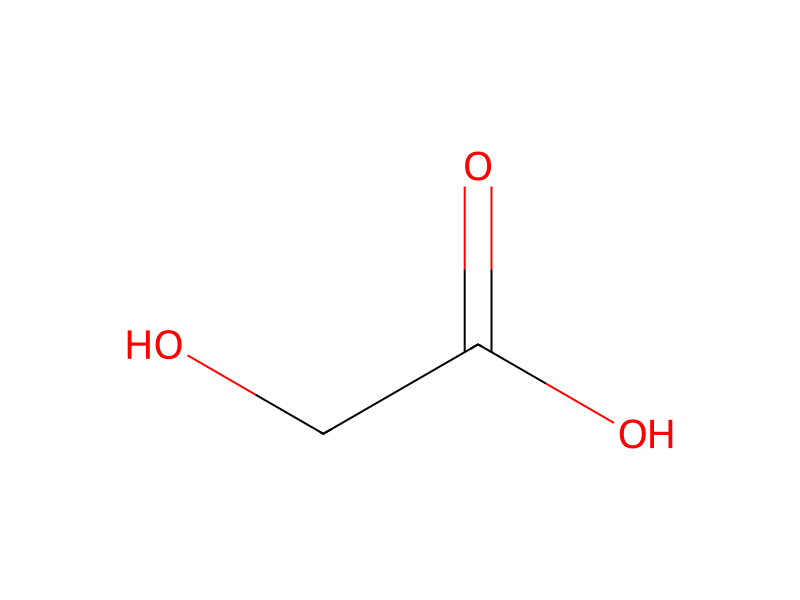
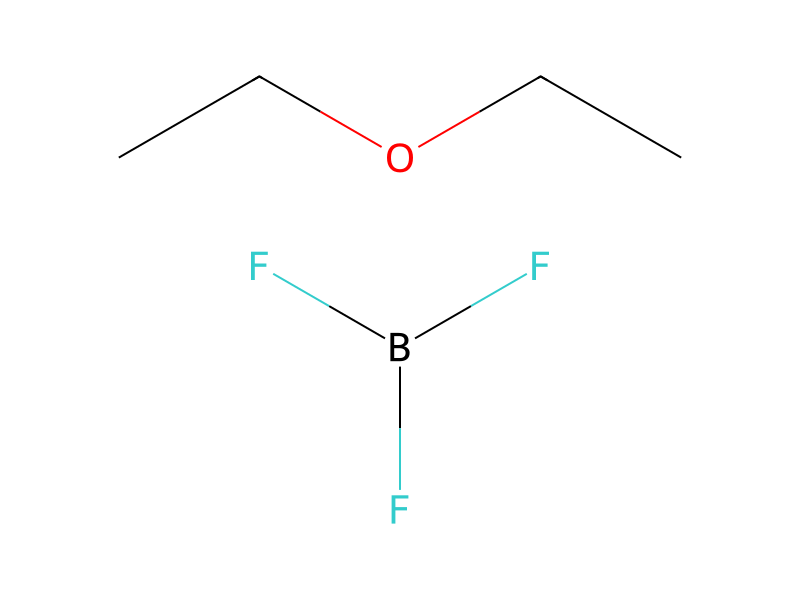
[C:1]([OH:5])(=[O:4])[CH2:2]O.[Cl:6][C:7]1[CH:16]=[CH:15][C:10]([O:11][CH2:12][CH:13]=[O:14])=[C:9]([CH3:17])[CH:8]=1.B(F)(F)F.CCOCC>CCOCC.O1CCCC1>[Cl:6][C:7]1[CH:16]=[CH:15][C:10]([O:11][CH2:12][CH:13]2[O:5][C:1](=[O:4])[CH2:2][O:14]2)=[C:9]([CH3:17])[CH:8]=1Participants
6




Procedure
A solution containing 2.5 g (0.033 mole) of glycolic acid, 4.1 g (0.025 mole) of 4-chloro-2-methylphenoxyacetaldehyde and 10 g (0.07 mole) or boron trifluoride etherate in 50 ml of ether and 30 ml of tetrahydrofuran was allowed to stand at room temperature for 24 hours. The dark solution was washed with aqueous sodium bicarbonate, dried and concentrated to dryness. Recrystallization from ether - hexane gave 3.8 g of 2-(4-chloro-2-methylphenoxymethyl)-1,3-dioxolan-4-one having a melting point of 42°-44°.
Workup
- washThe dark solution was washed with aqueous sodium bicarbonate
- customdried
- concentrationconcentrated to dryness
- customRecrystallization from ether - hexane
Sources & evidence
- ORD record
- ord-f006f8c2887846b0928e29fcbe939c97
- Source dataset
- uspto-grants-1977_12
- Patent number
- US04062670
Reaction notes
Loading…