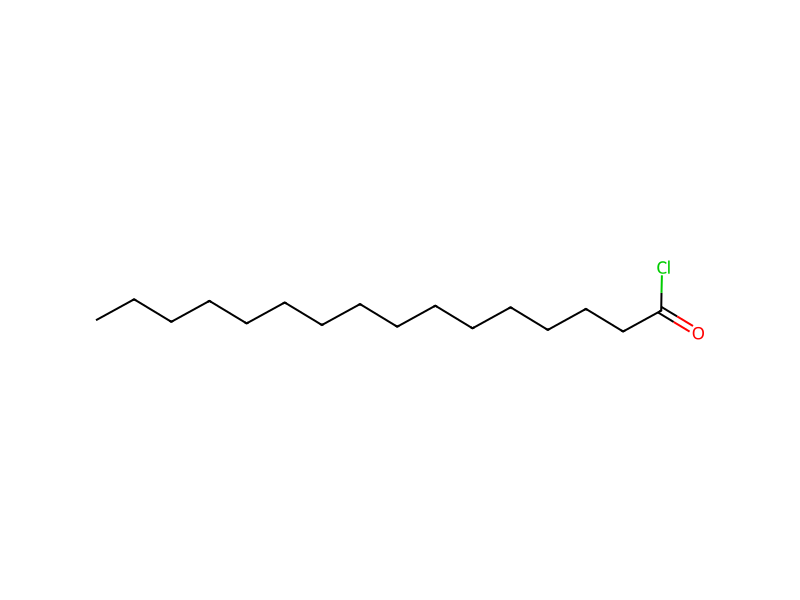
Palmitoyl chloride → HCID 11108028, compound
Reaction equation

[C:1](Cl)(=[O:17])[CH2:2][CH2:3][CH2:4][CH2:5][CH2:6][CH2:7][CH2:8][CH2:9][CH2:10][CH2:11][CH2:12][CH2:13][CH2:14][CH2:15][CH3:16].C1C=CN=CC=1.[FH:25]>>[C:1]([F:25])(=[O:17])[CH2:2][CH2:3][CH2:4][CH2:5][CH2:6][CH2:7][CH2:8][CH2:9][CH2:10][CH2:11][CH2:12][CH2:13][CH2:14][CH2:15][CH3:16]Participants
3


Conditions
- Temperature
- 20 °C
Procedure
Palmitoyl chloride (651 mg, 2.2 mole) was added to pyridinium poly(hydrogen fluoride) (1 ml) in a teflon reaction vial and the mixture stirred at 20° C. for 20 min. After cooling to 0° C., it was quenched with ice-water (5 ml), extracted with ethyl acetate, and the organic layer washed (water, brine), dried over anhydrous magnesium sulfate, concentrated and evaporatively distilled (120° C./0.025 torr) to give palmitoyl fluoride (76%) (contaminated with 5% of the corresponding acid). Since this concentration of contaminant is not harmful to the biological activity of the compound, no further purification is required.
Workup
- temperatureAfter cooling to 0° C.
- customit was quenched with ice-water (5 ml)
- extractionextracted with ethyl acetate
- washthe organic layer washed (water, brine)
- dry with materialdried over anhydrous magnesium sulfate
- concentrationconcentrated
- distillationevaporatively distilled (120° C./0.025 torr)
Sources & evidence
- ORD record
- ord-65295d1451aa4ea089dfab470ceec9da
- Source dataset
- uspto-grants-1985_10
- Patent number
- US04544504
Reaction notes
Loading…