Hydrochloric Acid → [4-(3-Pyridylmethyloxy)phenyl]propan-2-one
Reaction equation

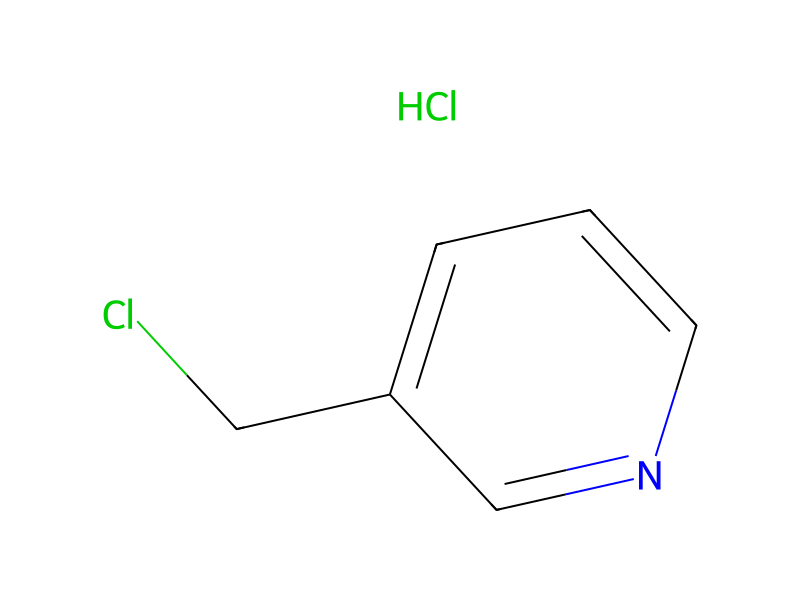
C1[O:14][C:4]([CH3:13])([CH2:5][C:6]2[CH:11]=[CH:10][C:9]([OH:12])=[CH:8][CH:7]=2)OC1.[O-]CC.[Na+].Cl.[N:20]1[CH:25]=[CH:24][CH:23]=[C:22]([CH2:26]Cl)[CH:21]=1.Cl>C(O)C.CO>[N:20]1[CH:25]=[CH:24][CH:23]=[C:22]([CH2:26][O:12][C:9]2[CH:8]=[CH:7][C:6]([CH2:5][C:4](=[O:14])[CH3:13])=[CH:11][CH:10]=2)[CH:21]=1Participants
Reactant 4



Product 1

Reagents, catalysts & solvents 2


Procedure
A solution of (4-hydroxyphenyl)propan-2-one ethylene ketal (5 g) in ethanol (20 ml) was added to a stirred solution of sodium ethoxide in ethanol (1.26 g sodium in 50 ml). A suspension of 3-picolyl chloride hydrochloride (4.5 g) in ethanol (40 ml) was added, the mixture boiled for 41/2 hr, cooled and filtered. After evaporation of the solvent the residue was chromatographed on alumina. Elution with 10% methanol in dichloromethane gave a dark oil which was dissolved in methanol (50 ml) and boiled with 2M hydrochloric acid (40 ml) for 3 hours. Neutralisation with 2M sodium hydroxide solution followed by extraction into dichloromethane yielded an oil which was purified by bulb to bulb distillation at 70° C./0.4 mm to give [4-(3-pyridylmethyloxy)phenyl]propan-2-one.
Workup
- additionwas added
- custom2 hr
- temperaturecooled
- filtrationfiltered
- customAfter evaporation of the solvent the residue
- customwas chromatographed on alumina
- washElution with 10% methanol in dichloromethane
- customgave a dark oil which
- extractionNeutralisation with 2M sodium hydroxide solution followed by extraction into dichloromethane
- customyielded an oil which
- distillationwas purified by bulb to bulb distillation at 70° C./0.4 mm
Sources & evidence
- ORD record
- ord-afc9c8ccd5e24fffa1be0406bbb7c355
- Source dataset
- uspto-grants-1992_10
- Patent number
- US05153210
Reaction notes
Loading…