Triphenylphosphine → 4-[4-(p-Chlorophenylsulfonamido)butyl)-epsilon-caprolactone
Reaction equation

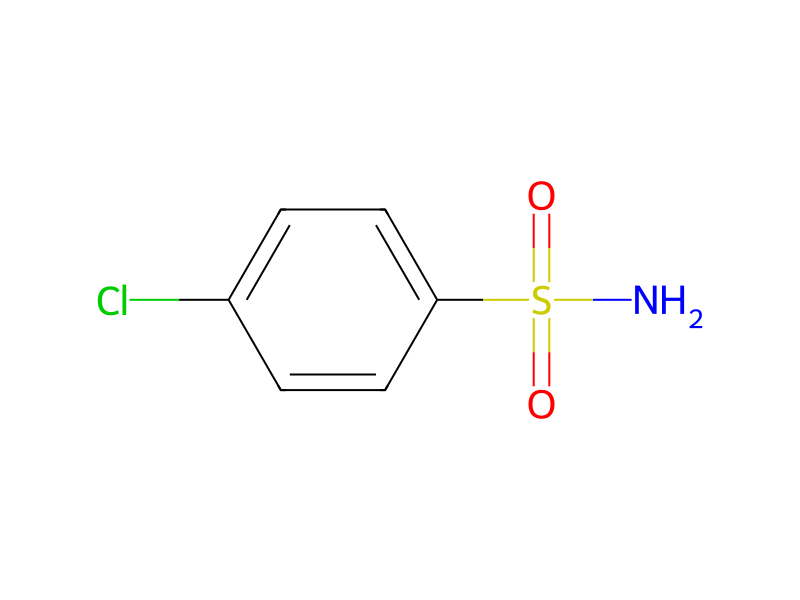
O[CH2:2][CH2:3][CH2:4][CH2:5][CH:6]1[CH2:13][CH2:12][O:11][C:9](=[O:10])[CH2:8][CH2:7]1.[Cl:14][C:15]1[CH:20]=[CH:19][C:18]([S:21]([NH2:24])(=[O:23])=[O:22])=[CH:17][CH:16]=1.C1(P(C2C=CC=CC=2)C2C=CC=CC=2)C=CC=CC=1.N(C(OCC)=O)=NC(OCC)=O>C(Cl)Cl.O1CCCC1>[Cl:14][C:15]1[CH:16]=[CH:17][C:18]([S:21]([NH:24][CH2:2][CH2:3][CH2:4][CH2:5][CH:6]2[CH2:13][CH2:12][O:11][C:9](=[O:10])[CH2:8][CH2:7]2)(=[O:22])=[O:23])=[CH:19][CH:20]=1Participants
7
Reactant 4



Product 1

Reagents, catalysts & solvents 2


Procedure
To a solution of 3.53 g of 4-(4-hydroxybutyl)-epsilon-caprolactone in 14 ml methylene chloride and 14 ml tetrahydrofuran is added 4.24 g p-chlorophenylsulfonamide followed by 7.44 g triphenylphosphine. The reaction mixture is stirred at room temperature for 0.5 h and then 6.1 ml diethyl azodicarboxylate is added slowly with cooling. After the addition, the cooling bath is removed and the solution is stirred at room temperature overnight. The reaction mixture is evaporated to dryness to yield 4-[4-(p-chlorophenylsulfonamido)butyl)-epsilon-caprolactone.
Workup
- temperaturewith cooling
- additionAfter the addition
- customthe cooling bath is removed
- stirringthe solution is stirred at room temperature overnight
- customThe reaction mixture is evaporated to dryness
Sources & evidence
- ORD record
- ord-82aaf2a46a714d7e8ebfb5170c20d777
- Source dataset
- uspto-grants-1992_10
- Patent number
- US05153214
Reaction notes
Loading…