Potassium Carbonate → 2-(2-methoxyethyl)-4-nitro-2H-pyrazole-3-carboxylic acid ethyl ester
Reaction equation

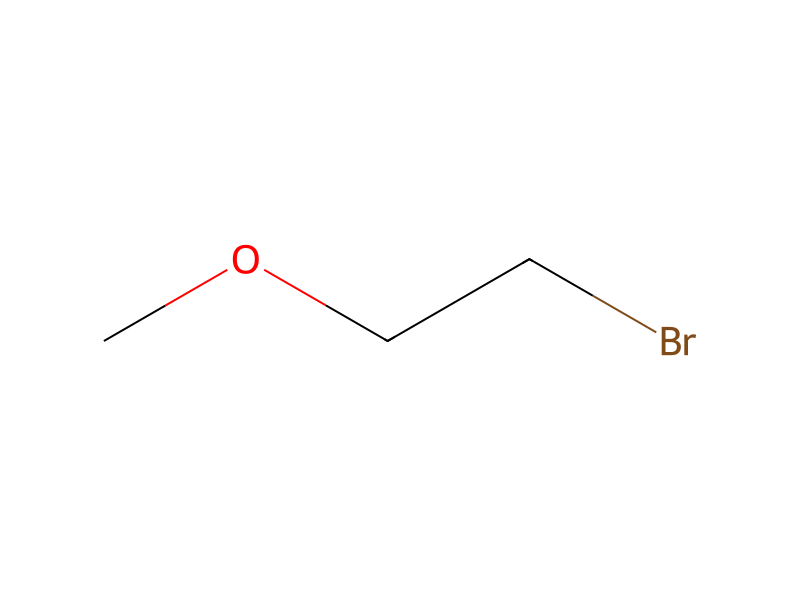
[CH2:1]([O:3][C:4]([C:6]1[C:10]([N+:11]([O-:13])=[O:12])=[CH:9][NH:8][N:7]=1)=[O:5])[CH3:2].C(=O)([O-])[O-].[K+].[K+].Br[CH2:21][CH2:22][O:23][CH3:24]>CS(C)=O>[CH2:1]([O:3][C:4]([C:6]1[N:7]([CH2:21][CH2:22][O:23][CH3:24])[N:8]=[CH:9][C:10]=1[N+:11]([O-:13])=[O:12])=[O:5])[CH3:2]Participants




Procedure
To a solution of 4-nitro-1H-pyrazole-3-carboxylic acid ethyl ester (100 mg, 0.54 mmol) in DMSO (1 mL) was added potassium carbonate (164 mg, 1.19 mmol) and the reaction mixture was stirred for 5 min. 1-Bromo-2-methoxyethane (110 μl, 1.19 mml) was added and the resulting reaction mixture was stirred at ambient temperature overnight. The reaction mixture was partitioned between ethyl acetate and water and the aqueous phase was extracted with ethyl acetate. The combined organic phases were dried and the solvent was evaporated. The product was obtained as a mixture of regioisomers which were separated by silica gel chromatography using a heptane/ethyl acetate gradient to yield 72 mg (55%) of the desired regioisomer and 33 mg (25%) of 2-(2-methoxyethyl)-4-nitro-2H-pyrazole-3-carboxylic acid ethyl ester.
Workup
- customthe resulting reaction mixture
- stirringwas stirred at ambient temperature overnight
- customThe reaction mixture was partitioned between ethyl acetate and water
- extractionthe aqueous phase was extracted with ethyl acetate
- customThe combined organic phases were dried
- customthe solvent was evaporated
- customThe product was obtained as a mixture of regioisomers which
- customwere separated by silica gel chromatography
Sources & evidence
- ORD record
- ord-531a7d7e9b0a452c996dc501ca3d71e3
- Source dataset
- uspto-grants-2014_01
- Patent number
- US08623866B2
Reaction notes
Loading…