Glutaric Acid → HCID 178449943, compound
Reaction equation

[CH3:1][C:2]([N:5]([O:10])[C:6]([CH3:9])([CH3:8])[CH3:7])([CH3:4])[CH3:3].[C:11]([OH:19])(=[O:18])[CH2:12][CH2:13][CH2:14][C:15]([OH:17])=[O:16].C1(C)C=CC(S([O-])(=O)=O)=CC=1.CN(C)C1C=C[NH+]=CC=1.CC(C)N=C=NC(C)C>C(O)(C)C.C(Cl)Cl>[CH3:1][C:2]([N:5]([O:10])[C:6]([CH3:9])([CH3:8])[CH3:7])([CH3:4])[CH3:3].[C:11]([O-:19])(=[O:18])[CH2:12][CH2:13][CH2:14][C:15]([O-:17])=[O:16]Participants
Reactant 5
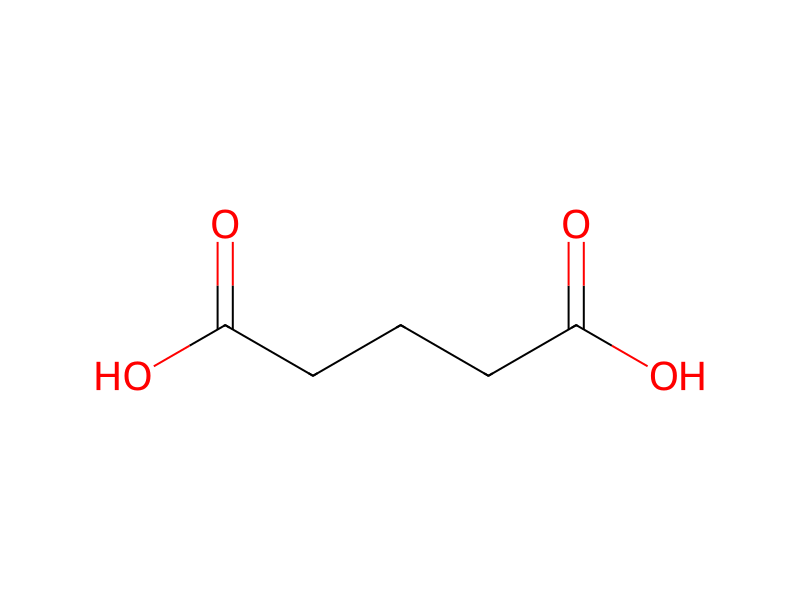


Product 1

Reagents, catalysts & solvents 2


Procedure
DTBn (0.5 mol, 209.66 g), glutaric acid (0.5 mol, 66.06 g), DPTS (0.2 mol, 58.84 g) were placed in a 3 L flask equipped with an overhead stirrer and condenser. Methylene chloride (1.2 L) was added to the flask and the contents stirred until all the solids were dispersed. DIPC (1.5 mol, 189.3 g, 234.2 mL) was added and stirring continued for 20-22 h by which time reaction mixture was viscous. The polymer was isolated by repeated precipitations from methylene chloride and isopropanol (IPA). The solid polymer was transferred to a polypropylene tray and left to dry in the hood overnight, transferred to a vacuum oven at 50° C. and dried to constant weight. The yield of poly(DTBn-glutarate) was 203 g (76%). The polymer had a molecular weight of 100 kDa and a Tg of 66° C.
Workup
- customequipped with an overhead stirrer and condenser
- additionwere dispersed
- stirringstirring
- customcontinued for 20-22 h by which time reaction mixture
- waitleft
- customto dry in the hood overnight
- customtransferred to a vacuum oven at 50° C.
- customdried to constant weight
Sources & evidence
- ORD record
- ord-80f0e29d0b5f403a928d0d8a9ee044b0
- Source dataset
- uspto-grants-2014_01
- Patent number
- US08629233B2
Reaction notes
Loading…