Diethyl Oxalate → Ethyl 1H,4H,5H,6H-cyclopenta[c]pyrazole-3-carboxylate
Reaction equation

[C:1]1(=O)[CH2:5][CH2:4][CH2:3][CH2:2]1.[C:7](OCC)(=O)[C:8]([O:10][CH2:11][CH3:12])=[O:9].CC([O-])(C)C.[K+].Cl.[NH2:24][NH2:25]>CCO.C1COCC1.O>[CH2:11]([O:10][C:8]([C:7]1[C:2]2[CH2:3][CH2:4][CH2:5][C:1]=2[NH:25][N:24]=1)=[O:9])[CH3:12]Participants
8
Reactant 4

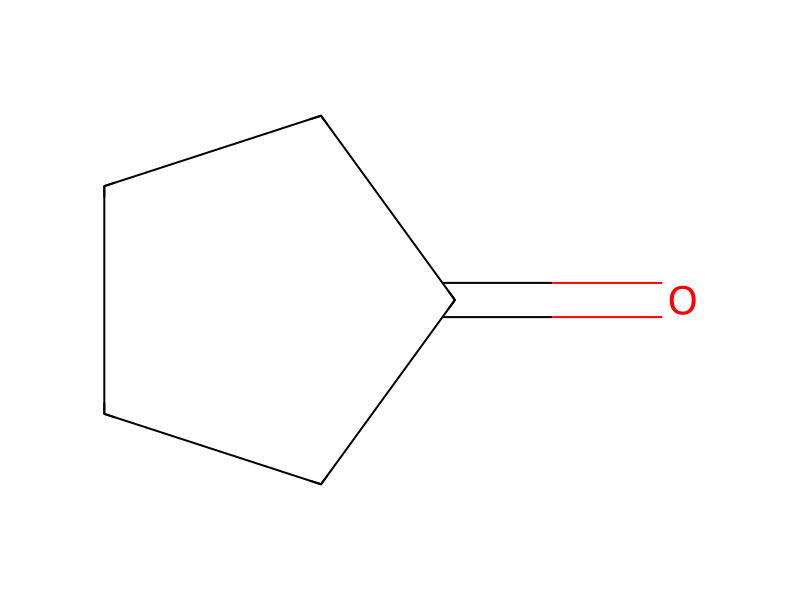


Product 1

Reagents, catalysts & solvents 3



Conditions
- Temperature
- 0 °C
Procedure
To a solution of cyclopentanone (42.0 g, 0.50 mol) and diethyl oxalate (73.1 g, 0.50 mol) in EtOH (2.5 L) at rt under N2 was added a solution of KOt-Bu in THF (500 mL of a 1M solution, 0.50 mol) over 0.5 h via an addition funnel. The reaction was stirred for 3.5 h at which time the flask was cooled to 0° C. Hydrazine hydrochloride (37.6 g, 0.55 mol) in H2O (250 mL) was added via addition funnel over 0.5 h. The reaction was warmed to rt and stirred for 16 h. The volatiles were removed in vacuo and the resulting solid was washed with NaHCO3 (sat. aq., 500 mL) and H2O (500 mL). Further concentration in vacuo gave pure 1,4,5,6-tetrahydro-cyclopentapyrazole-3-carboxylic acid ethyl ester (63.6 g, 0.35 mol, 71% yield) as a yellow solid.
Workup
- temperatureThe reaction was warmed to rt
- stirringstirred for 16 h
- customThe volatiles were removed in vacuo
- washthe resulting solid was washed with NaHCO3 (sat. aq., 500 mL) and H2O (500 mL)
- concentrationFurther concentration in vacuo
Sources & evidence
- ORD record
- ord-5e1cd96642404fb898062fb138e8152f
- Source dataset
- uspto-grants-2014_01
- Patent number
- US08637555B2
Reaction notes
Loading…