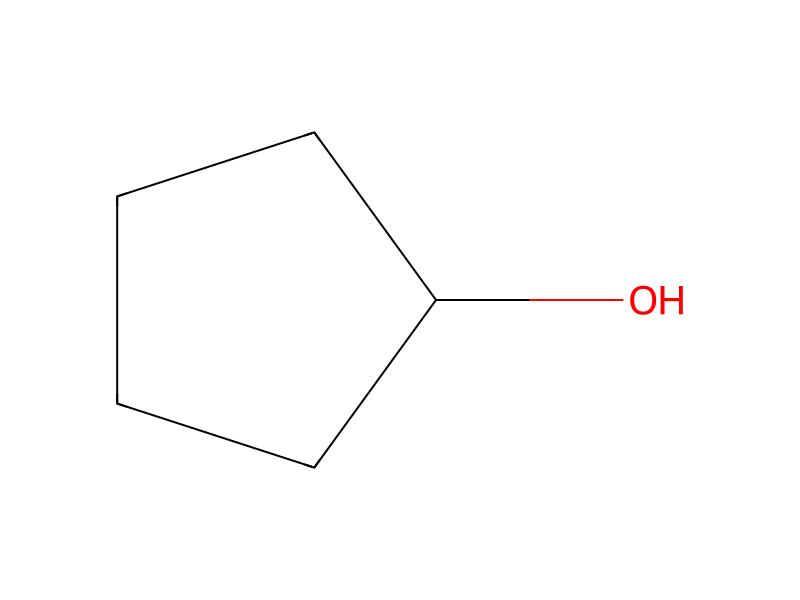
Cyclopentanol → 2,6-dichloro-9-(propan-2-yl)-9H-purine
Reaction equation

[Cl:1][C:2]1[N:10]=[C:9]2[C:5]([NH:6][CH:7]=[N:8]2)=[C:4]([Cl:11])[N:3]=1.[CH:12]1(O)[CH2:16]CC[CH2:13]1>C(O)(C)C>[Cl:1][C:2]1[N:10]=[C:9]2[C:5]([N:6]=[CH:7][N:8]2[CH:12]([CH3:16])[CH3:13])=[C:4]([Cl:11])[N:3]=1Participants
4
Reactant 2

Product 1

Reagents, catalysts & solvents 1

Procedure
2,6-Dichloro-9-(2-propyl)purine is prepared from 2,6-dichloropurine and isopropanol essentially as described in Example 1, Scheme A, step a, but substituting isopropanol for cyclopentanol.
Sources & evidence
- ORD record
- ord-e3d4e5b007bb4904943235cba4a4c5e7
- Source dataset
- uspto-grants-2003_11
- Patent number
- US06642231B2
Reaction notes
Loading…