Ethyl orthoformate → 7-Chloro-3H-quinazolin-4-one
Reaction equation

[NH2:1][C:2]1[CH:10]=[C:9]([Cl:11])[CH:8]=[CH:7][C:3]=1[C:4]([NH2:6])=[O:5].[CH2:12](OC(OCC)OCC)C.O1CCOCC1.C([O-])(O)=O.[Na+]>CN1CCCC1=O.O>[Cl:11][C:9]1[CH:10]=[C:2]2[C:3]([C:4](=[O:5])[NH:6][CH:12]=[N:1]2)=[CH:7][CH:8]=1Participants
7
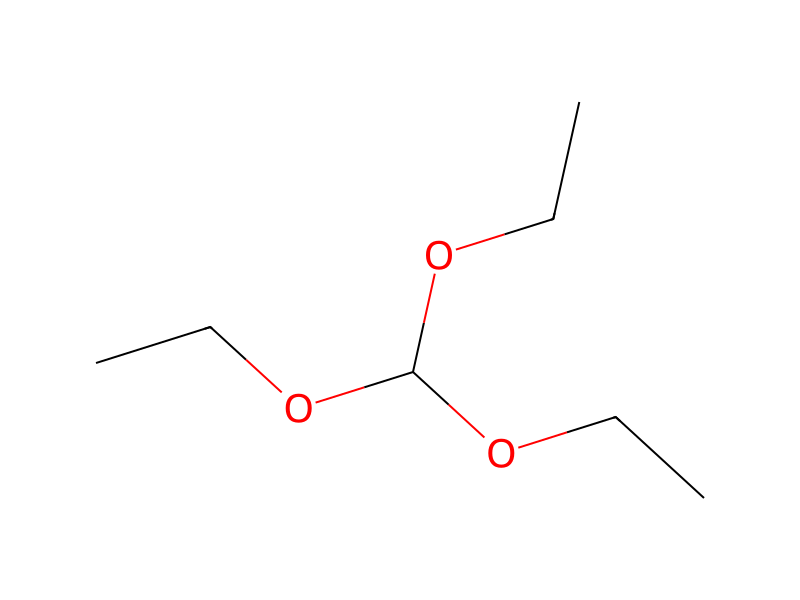






Conditions
- Temperature
- 110 °C
Procedure
To a solution of 2-amino-4-chlorobenzamide (58 g, 0.34 mol) in hot (60° C.) N-methylpyrrolidone (170 mL), triethylorthoformate (151 g, 1.02 mol, 3 equiv) and a 1,4-dioxane 5N HCl solution (ca. 15 mL) were added. The resulting solution was heated at 110° C. for 18 h. Then, the mixture was cooled to room temperature, was poured over cold water and was brought to pH 7 with saturated NaHCO3 solution. The formed precipitate was filtered, washed with water and dried to give the desired product as a slightly beige solid (58 g, 94%).
Workup
- temperatureThen, the mixture was cooled to room temperature
- filtrationThe formed precipitate was filtered
- washwashed with water
- customdried
Sources & evidence
- ORD record
- ord-ff4645a754444b7eb3b86fe3ed7b1d6e
- Source dataset
- uspto-grants-2003_11
- Patent number
- US06653475B2
Reaction notes
Loading…