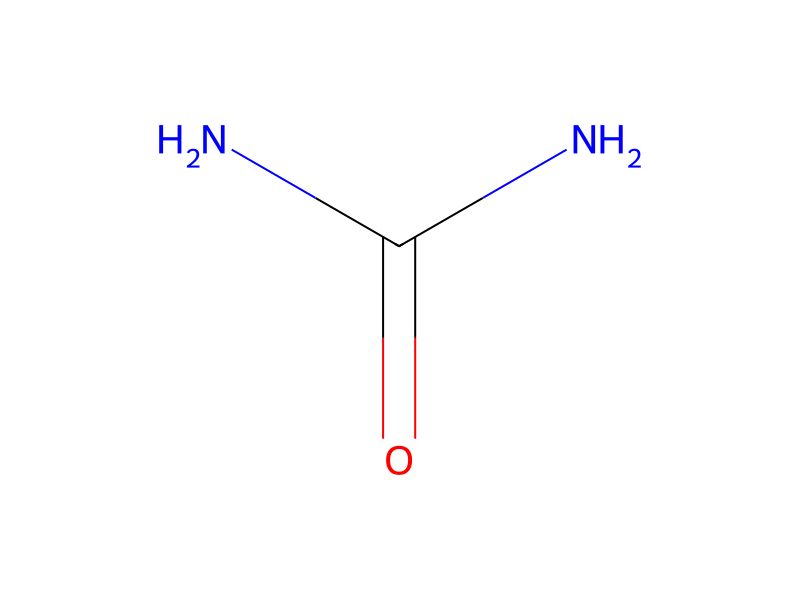
Urea → HCID 22672523, compound
Reaction equation

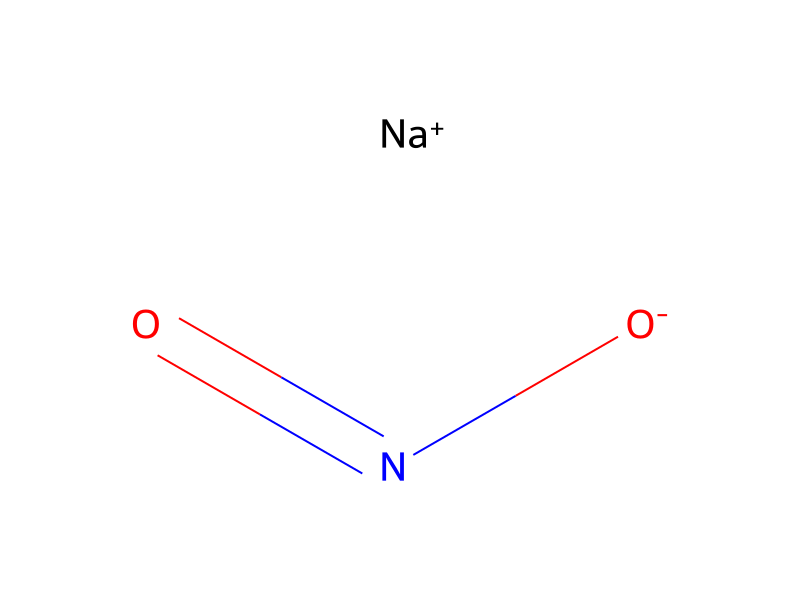
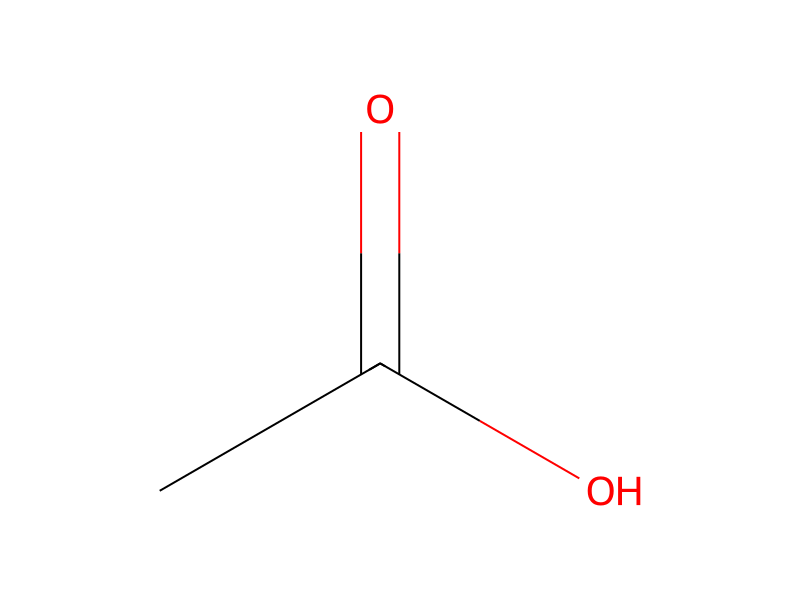
[Cl:1][C:2]1[CH:8]=[C:7]([N+:9]([O-:11])=[O:10])[CH:6]=[CH:5][C:3]=1[NH2:4].Cl[N:13]([N+]([O-])=O)[C:14]1[CH:19]=[CH:18][CH:17]=[CH:16][CH:15]=1.N([O-])=O.[Na+].NC(N)=O.[OH:31][CH2:32][CH2:33][CH2:34][N:35](C1C=CC=CC=1)[CH2:36][CH2:37][CH2:38][C:39]([O:41][CH2:42][CH3:43])=[O:40].C([O-])(=O)C.[Na+]>O.C(O)(=O)C>[Cl:1][C:2]1[CH:8]=[C:7]([N+:9]([O-:11])=[O:10])[CH:6]=[CH:5][C:3]=1[N:4]=[N:13][C:14]1[CH:19]=[CH:18][C:17]([N:35]([CH2:34][CH2:33][CH2:32][OH:31])[CH2:36][CH2:37][CH2:38][C:39]([O:41][CH2:42][CH3:43])=[O:40])=[CH:16][CH:15]=1Participants
Reactant 6




Product 1

Reagents, catalysts & solvents 2
Procedure
2-Chloro-4-nitroaniline 2.5 g (10 mmol) is placed into a 125 mL flask and 6 mL of water is added. Agitation and sonication partially dissolves the yellow chloronitroaniline. Then the stirred solution is cooled with ice in a fume hood and 15.8 mL of concentrated (˜12 M) HCl is added. Most of the yellow material dissolves at this point. The flask is fitted with a dropping funnel, and a solution of 1.51 g (21.9 mmol) sodium nitrite in 3-4 mL of water is added to the dropping funnel and slowly added to the solution in the flask with stirring, over about 20 minutes. When this is complete, 0.6 g (˜21 mmol) of urea is added followed by 2.73 g of ethyl 4-[(3-hydroxypropyl)phenylamino]butanoate as a solution in 8.2 mL acetic acid. After a minute 20 g of sodium acetate in ˜50 mL of water is added. The mixture is allowed to stir for an hour at room temperature. Most of the product is separated as an emulsion. The mixture is partitioned between ethyl acetate and water. The organic layer is washed with NaHCO3 (3×50 ml), brine and dried over anhydrous sodium sulfate. Then the organic solvents are evaporated to a syrup. The crude product is chromatographed on silica gel (1.5×20 inches) eluting with 50% ethyl acetate/hexane. The appropriate fractions are collected, combined, evaporated (30-40 degrees), and dried in a vacuum, The product is a dark oil. The yield is approximately 68-70%. 1H NMR (DMSO-d6) δ8.42 (d, J=2.5 Hz, aromatic proton, 1H), 8.24 (dd, J1=9 Hz, J2=2.5 Hz, aromatic proton, 1H), 7.86 (d, J=9 Hz, 2H), 7.77 (d, J=9 Hz, 1H), 6.92 (d, J=9 Hz, aromatic protons, 2H), 4.67 (t, J=6 Hz, OH, 1H), 4.07 (q, J=7 Hz, CH2O, 2H), 3.5 (m, aliphatic protons, 6H), 2.40 (t, J=7 Hz, aliphatic protons, 2H), 1.84 (m, aliphatic protons, 2H), 1.72 (m, aliphatic protons, 2H), 1.18 (t, J=7 Hz, CH3, 3H).
Workup
- customAgitation and sonication
- temperatureThen the stirred solution is cooled with ice in a fume hood and 15.8 mL
- concentrationof concentrated (˜12 M) HCl
- additionis added
- dissolutionMost of the yellow material dissolves at this point
- customThe flask is fitted with a dropping funnel
- additionslowly added to the solution in the flask
- stirringto stir for an hour at room temperature
- customMost of the product is separated as an emulsion
- customThe mixture is partitioned between ethyl acetate and water
- washThe organic layer is washed with NaHCO3 (3×50 ml), brine
- dry with materialdried over anhydrous sodium sulfate
- customThen the organic solvents are evaporated to a syrup
- customThe crude product is chromatographed on silica gel (1.5×20 inches)
- washeluting with 50% ethyl acetate/hexane
- customThe appropriate fractions are collected
- customevaporated (30-40 degrees)
- customdried in a vacuum
Sources & evidence
- ORD record
- ord-01050edf45cd45b88970349e7deb493f
- Source dataset
- uspto-grants-2003_11
- Patent number
- US06653473B2
Reaction notes
Loading…