Triethylamine → 2-Deoxy-2-trifluoroacetamido-d-glucose
Reaction equation

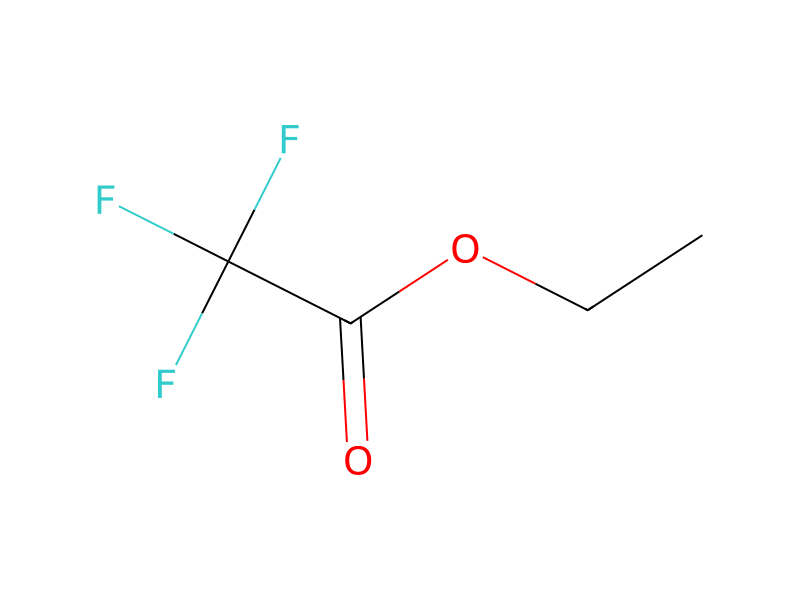
Cl.[OH:2][CH:3]1[O:11][C@H:10]([CH2:12][OH:13])[C@@H:8]([OH:9])[C@H:6]([OH:7])[C@H:4]1[NH2:5].C(N(CC)CC)C.[F:21][C:22]([F:29])([F:28])[C:23](OCC)=[O:24]>CO>[F:21][C:22]([F:29])([F:28])[C:23]([NH:5][C@@H:4]1[C@@H:6]([OH:7])[C@H:8]([OH:9])[C@@H:10]([CH2:12][OH:13])[O:11][CH:3]1[OH:2])=[O:24]Participants




Procedure
160 g (0.742 mole) of D-(+)-glucosamine hydrochloride were dissolved in 2200 ml of methanol (99.6% purity), and 187.9 g (1.86 mole) of triethylamine were added to the resulting solution. 115.9 g of ethyl trifluoroacetate were then added dropwise to the resulting mixture, whilst ice-cooling, after which the mixture was stirred overnight at room temperature. At the end of this time, the mixture was concentrated by evaporation under reduced pressure, and then benzene (250 ml twice) and ethyl acetate (250 ml) were repeatedly added to the residue, which was then concentrated by evaporation under reduced pressure and then finally dried sufficiently in vacuo. The whole of the resulting crude trifluoroacetyl compound was used in the subsequent step (b) without purification.
Workup
- temperaturecooling
- concentrationAt the end of this time, the mixture was concentrated by evaporation under reduced pressure
- additionbenzene (250 ml twice) and ethyl acetate (250 ml) were repeatedly added to the residue, which
- concentrationwas then concentrated by evaporation under reduced pressure
- customfinally dried sufficiently in vacuo
- customThe whole of the resulting crude trifluoroacetyl compound was used in the subsequent step (b) without purification
Sources & evidence
- ORD record
- ord-3a915aac78f24bb3ba0b12eecf7d906b
- Source dataset
- uspto-grants-1998_08
- Patent number
- US05792840
Reaction notes
Loading…