Hydrochloric Acid → 3-Nitro-4-(propylamino)phenol
Reaction equation

Cl[C:2]1[CH:7]=[CH:6][C:5]([OH:8])=[CH:4][C:3]=1[N+:9]([O-:11])=[O:10].C(=O)([O-])[O-].[Na+].[Na+].[CH2:18]([NH2:21])[CH2:19][CH3:20].Cl>O>[N+:9]([C:3]1[CH:4]=[C:5]([OH:8])[CH:6]=[CH:7][C:2]=1[NH:21][CH2:18][CH2:19][CH3:20])([O-:11])=[O:10]Participants
6
Reactant 4

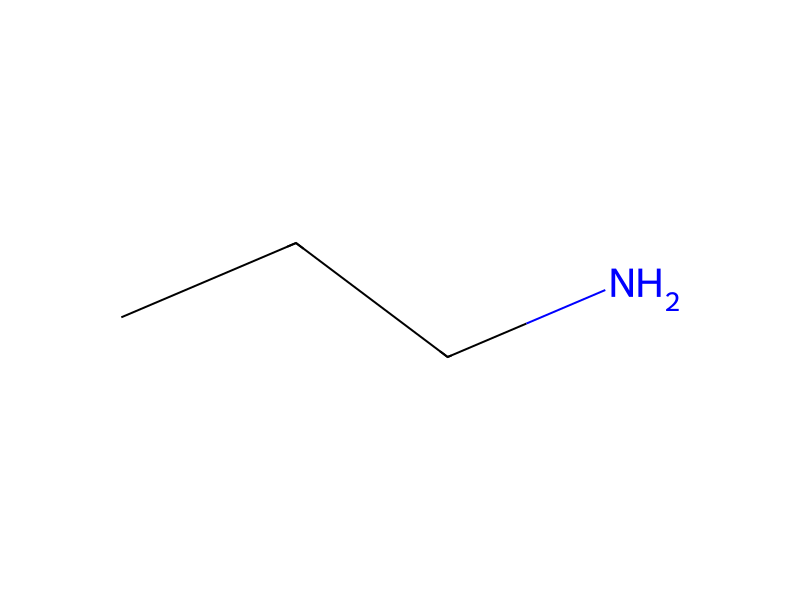


Product 1

Reagents, catalysts & solvents 1

Procedure
34.7 g (0.2 mole) of 4-chloro-3-nitrophenol, 21 g of sodium carbonate, 0.1 g of copper-I chloride and 20 g of n-propylamine are heated in a bath from room temperature up to a bath temperature of 120° C. After 5 hours, the reaction mixture is taken up in water, acidified (pH 2) with hydrochloric acid and extracted 3 times with ethyl acetate in order to remove unreacted starting material. After neutralisation, the aqueous phase is again extracted 3 times with ethyl acetate. After drying and concentration, these extracts give the desired product in the form of a red oil.
Workup
- extractionextracted 3 times with ethyl acetate in order
- customto remove unreacted
- extractionAfter neutralisation, the aqueous phase is again extracted 3 times with ethyl acetate
- customAfter drying
- concentrationconcentration
Sources & evidence
- ORD record
- ord-5d4dd16642a8410c801a82e4f2654724
- Source dataset
- uspto-grants-1986_03
- Patent number
- US04575378
Reaction notes
Loading…