2-Chlorobenzaldehyde → HCID 2818274, compound
Reaction equation

[CH2:1]([C:8]#[N:9])[C:2]1[CH:7]=[CH:6][CH:5]=[CH:4][CH:3]=1.[Cl:10][C:11]1[CH:18]=[CH:17][CH:16]=[CH:15][C:12]=1[CH:13]=O.[OH-:19].[NH4+]>O>[Cl:10][C:11]1[CH:18]=[CH:17][CH:16]=[CH:15][C:12]=1[CH:13]1[C:7]2[C:2](=[CH:3][CH:4]=[CH:5][CH:6]=2)[CH2:1][C:8](=[O:19])[NH:9]1Participants
Reactant 3
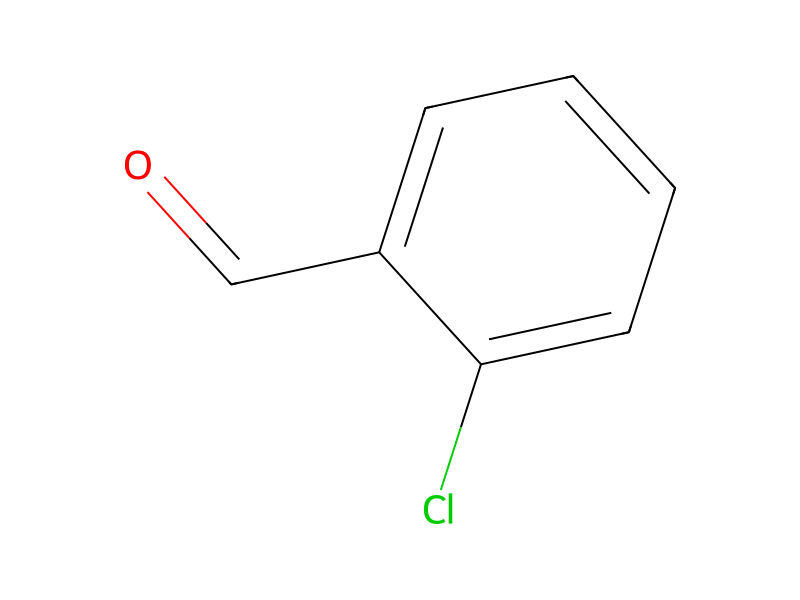


Product 1

Reagents, catalysts & solvents 1

Conditions
- Temperature
- 80 °C
Procedure
This material was prepared in a similar manner to that described in Acta Chimica Academiae Scientiarum Hungaricae 1969, 60(1-2), 177. Thus a mixture of benzyl cyanide (40 g, 342 mmol) and polyphosphoric acid (200 g) was heated and stirred at 80° C. for 45 minutes. 2-Chlorobenzaldehyde (24 g, 171 mmol) was added with very vigorous stirring over 25 minutes. The mixture was heated to 135° C. for 31/2 h, cooled to 100° C. and poured into water (450 ml). 0.88 Ammonium hydroxide (600 ml) was added and the mixture left overnight. The precipitate was filtered off and refluxed in 5% sodium hydroxide (500 ml). The mixture was filtered hot after 2 h and the solid (30 g) chromatographed (SiO2, 200 g) using chloroform as eluent. This gave a solid that was crystallised (ethanol) to give 1-(2-chlorophenyl)-1,4-dihyroisoquinol-3-one (20.5 g, 47%) m.p. 180°-2° C.
Workup
- customThis material was prepared in a similar manner to that
- temperaturewas heated
- stirringwith very vigorous stirring over 25 minutes
- temperatureThe mixture was heated to 135° C. for 31/2 h
- temperaturecooled to 100° C.
- waitthe mixture left overnight
- filtrationThe precipitate was filtered off
- temperaturerefluxed in 5% sodium hydroxide (500 ml)
- filtrationThe mixture was filtered hot after 2 h
- customthe solid (30 g) chromatographed (SiO2, 200 g)
- customThis gave a solid
- customthat was crystallised (ethanol)
Sources & evidence
- ORD record
- ord-9742508572d84750804fe68183acd65a
- Source dataset
- uspto-grants-1986_03
- Patent number
- US04578393
Reaction notes
Loading…