p-Fluoronitrobenzene → 1,6-Bis(4-nitrophenoxy)naphthalene
Reaction equation

[C:1]1([OH:12])[C:10]2[C:5](=[CH:6][C:7](O)=[CH:8][CH:9]=2)[CH:4]=[CH:3][CH:2]=1.F[C:14]1[CH:19]=[CH:18][C:17]([N+:20]([O-:22])=[O:21])=[CH:16][CH:15]=1.[C:23](=[O:26])([O-])[O-].[K+].[K+]>CC(N(C)C)=O>[N+:20]([C:17]1[CH:18]=[CH:19][C:14]([O:12][C:1]2[C:10]3[C:5](=[CH:6][C:7]([O:26][C:23]4[CH:19]=[CH:18][C:17]([N+:20]([O-:22])=[O:21])=[CH:16][CH:15]=4)=[CH:8][CH:9]=3)[CH:4]=[CH:3][CH:2]=2)=[CH:15][CH:16]=1)([O-:22])=[O:21]Participants
5
Reactant 3
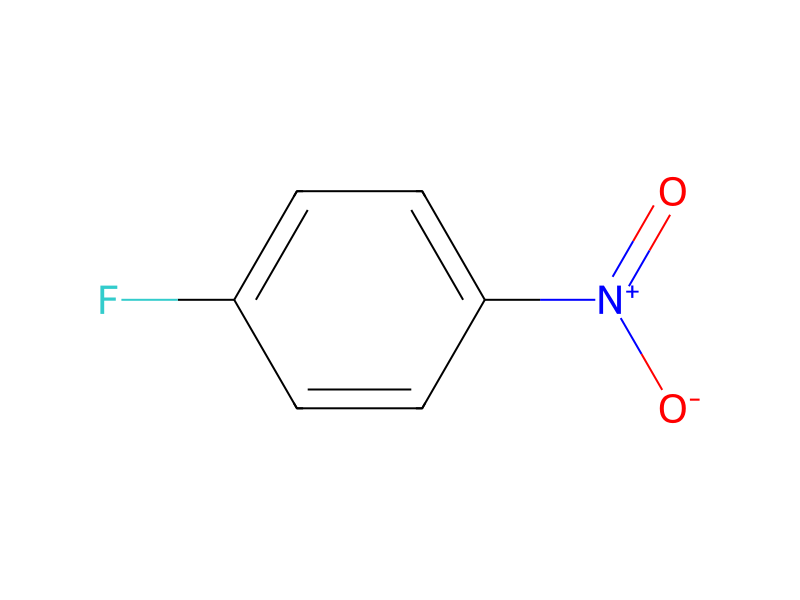


Product 1

Reagents, catalysts & solvents 1

Procedure
232.7 g of 1,6-naphthalene diol, 409.5 g of 4-fluoronitrobenzene and 402.1 g potassium carbonate were combined with 1 1. of dimethylacetamide (DMAc) and heated to reflux for 1 hour to form 1,6-bis-(4-nitrophenoxy) naphthalene. The mixture was concentrated by distilling off 500 ml of DMAc. The mixture was cooled to room temperature and the product precipitated by pouring into 1 1. of water. A light tan solid was collected and washed with three 500 ml portions of methanol to facilitate drying.
Workup
- temperatureto reflux for 1 hour
Sources & evidence
- ORD record
- ord-646830b2f3904076b46ab6737927ce89
- Source dataset
- uspto-grants-1993_07
- Patent number
- US05225517
Reaction notes
Loading…