4-Hydroxybenzoic Acid → 2-(Octyloxy)benzoic acid
Reaction equation

O[C:2]1[CH:10]=[CH:9][C:5]([C:6]([OH:8])=[O:7])=[CH:4][CH:3]=1.[OH-:11].[Na+].[CH2:13](Br)[CH2:14][CH2:15][CH2:16][CH2:17][CH2:18][CH2:19][CH3:20].Cl>CS(C)=O>[CH2:13]([O:11][C:9]1[CH:10]=[CH:2][CH:3]=[CH:4][C:5]=1[C:6]([OH:8])=[O:7])[CH2:14][CH2:15][CH2:16][CH2:17][CH2:18][CH2:19][CH3:20]Participants
Reactant 4
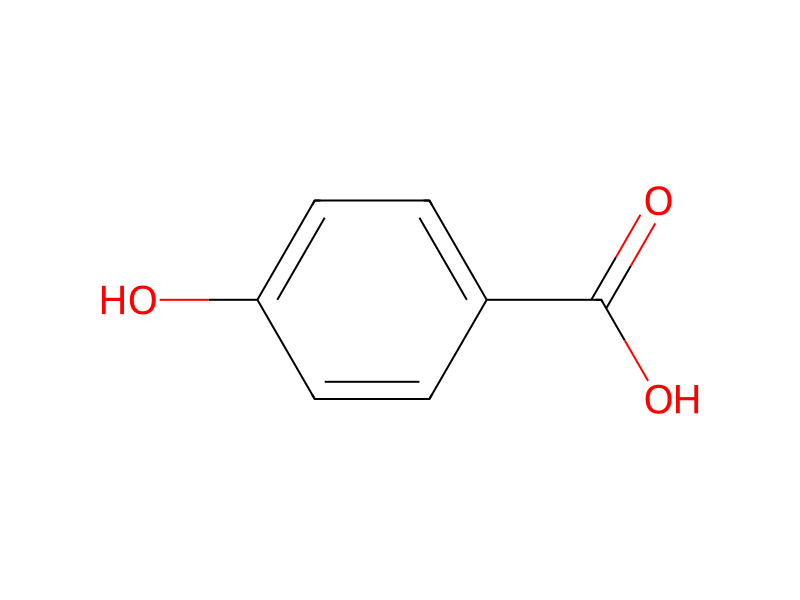

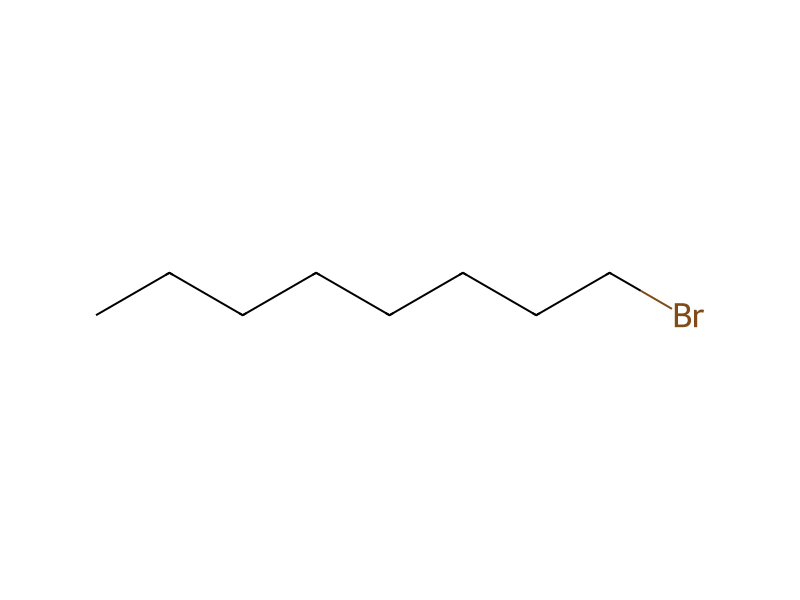

Product 1

Reagents, catalysts & solvents 1

Conditions
- Temperature
- 80 °C
Procedure
19.20 grams (150 mmol) of 4-hydroxybenzoic acid was added to an aqueous solution of sodium hydroxide (12.00 grams in 120 milliliters of water) and the mixture stirred until all the solid had dissolved. The solution was added in a portionwise manner over a period of about 5 minutes so that the temperature of the reaction mixture did not exceed 85° C. to 480 milliliters of dimethylsulfoxide which had previously been warmed to 80° C. To the resulting solution was added dropwise 28.95 grams (150 mmol) of n-octylbromide over about five to ten minutes. The mixture was then allowed to cool to room temperature over a period of about four hours; then it was poured into 1200 milliliters of ice water. Concentrated hydrochloric acid (30 mL) then was added to precipitate the desired octyloxybenzoic acid. The precipitate was recovered by filtration, washed with water and thereafter recrystallized from isopropanol to obtain octyloxybenzoic acid, m.p. 97°-102° C.
Workup
- dissolutionhad dissolved
- additionThe solution was added in a portionwise manner over a period of about 5 minutes so that the temperature of the reaction mixture
- temperatureto cool to room temperature over a period of about four hours
- customto precipitate the desired octyloxybenzoic acid
- filtrationThe precipitate was recovered by filtration
- washwashed with water
- customrecrystallized from isopropanol
Sources & evidence
- ORD record
- ord-3f161db2f9f4493cb9db1e70ab1a3f13
- Source dataset
- uspto-grants-1993_07
- Patent number
- US05229363
Reaction notes
Loading…