Hydrochloric Acid → HCID 13151845, compound
Reaction equation

Br[C:2]1[CH:7]=[CH:6][CH:5]=[C:4]([Br:8])[CH:3]=1.[C:9]([OH:18])(=[O:17])[C:10]1[C:11](=[CH:13][CH:14]=[CH:15][CH:16]=1)[SH:12].N1C2C(=CC=CC=2)C=CC=1.Cl>N1C=CC=CC=1>[Br:8][C:4]1[CH:3]=[C:2]([S:12][C:11]2[CH:13]=[CH:14][CH:15]=[CH:16][C:10]=2[C:9]([OH:18])=[O:17])[CH:7]=[CH:6][CH:5]=1Participants
Reactant 4


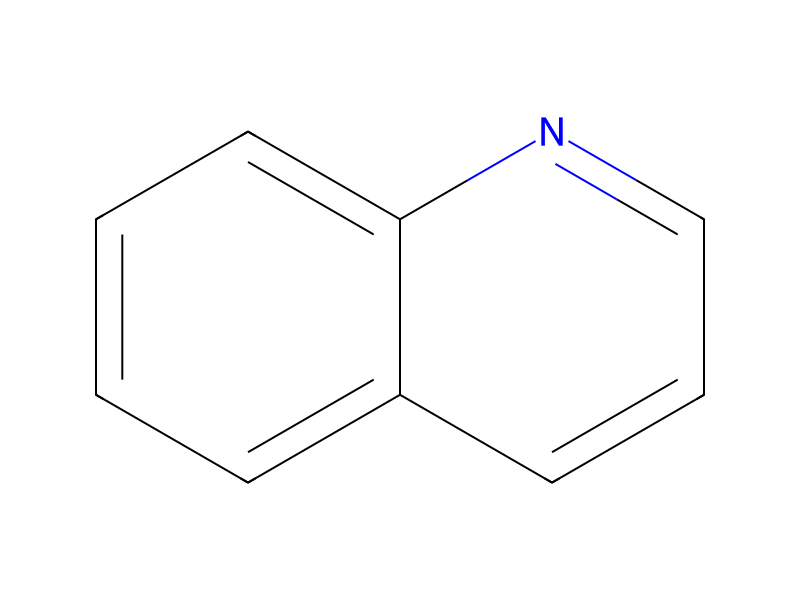

Product 1

Reagents, catalysts & solvents 1

Procedure
A mixture consisting of 179 g. m-dibromobenzene (0.758 mole); 46.6 g. thiosalicyclic acid (0.303 mole); 25.9 g cuprous oxide (0.181 mole); 212 cc. quinoline; and 24 cc. pyridine is mechanically stirred and heated in an oil bath at 200° C. to 210° C. for three hours. The internal temperature remains constant at 145° C. The reaction mixture is then poured into 1500 cc. of 5N aqueous HCl. The oily solid is filtered, then dissolved in 750 cc. 1N aqueous NaOH solution; this solution is filtered through celite, then extracted three times with ether. The aqueous fraction is acidified with concentrated HCl and the resulting grayish solid filtered, washed well with water and dried. The crude yield obtained is 65 g. (69.4%). It is used as such in the next step.
Workup
- temperatureheated in an oil bath at 200° C. to 210° C. for three hours
- customremains constant at 145° C
- additionThe reaction mixture is then poured into 1500 cc
- filtrationThe oily solid is filtered
- dissolutiondissolved in 750 cc
- filtrationthis solution is filtered through celite
- extractionextracted three times with ether
- filtrationthe resulting grayish solid filtered
- washwashed well with water
- customdried
- customThe crude yield
- customobtained
Sources & evidence
- ORD record
- ord-b01ca5702dc34bb2a08ef513f4716e29
- Source dataset
- uspto-grants-1985_08
- Patent number
- US04536507
Reaction notes
Loading…