Guanidine Hydrochloride → N-carbamimidoyl-4-chloro-3-sulfamoylbenzamide;hydrochloride
Reaction equation

Cl.[NH2:2][C:3]([NH2:5])=[NH:4].[Cl:6][C:7]1[CH:16]=[CH:15][C:10]([C:11](OC)=[O:12])=[CH:9][C:8]=1[S:17](=[O:20])(=[O:19])[NH2:18].C[O-].[Na+].[Na]>CO>[ClH:6].[Cl:6][C:7]1[CH:16]=[CH:15][C:10]([C:11]([NH:4][C:3]([NH2:5])=[NH:2])=[O:12])=[CH:9][C:8]=1[S:17](=[O:19])(=[O:20])[NH2:18]Participants
6
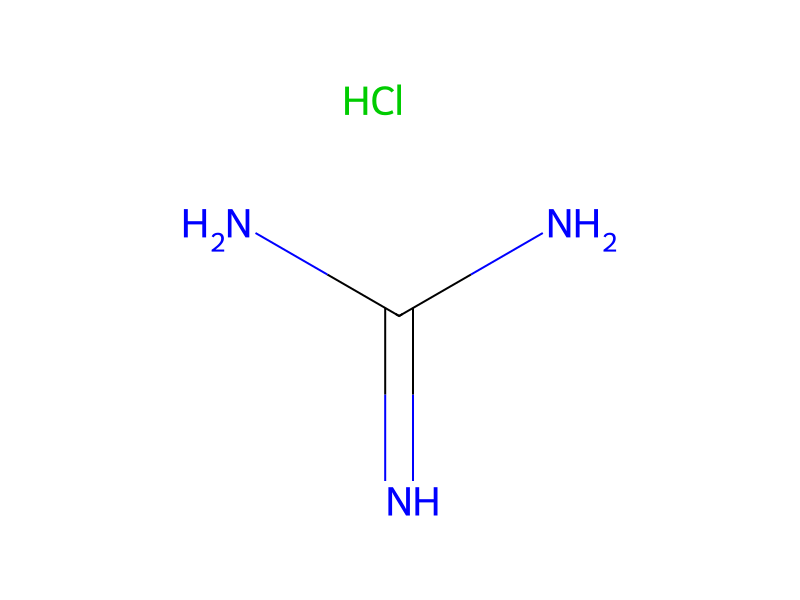





Procedure
8.5 g of guanidine hydrochloride and then 5 g of methyl 4-chloro-3-sulfamoylbenzoate are added to a methanolic sodium methoxide solution, prepared from 1.9 g of sodium in 90 ml of methanol. After heating this mixture to 50°-60° C. under inert gas (nitrogen or argon) over the course of 30 hours, the solvent is removed by distillation, the solution is adjusted to pH 6 after taking up the residue with 2N acetic acid and is extracted with ethyl acetate. After acidifying the dried extract (drying over magnesium sulfate) using ethereal hydrochloric acid, the title compound is filtered off.
Workup
- temperatureAfter heating this mixture to 50°-60° C. under inert gas (nitrogen or argon) over the course of 30 hours
- customthe solvent is removed by distillation
- extractionis extracted with ethyl acetate
- extractionextract
- dry with material(drying over magnesium sulfate)
- filtrationthe title compound is filtered off
Sources & evidence
- ORD record
- ord-07160572845d4c3cb6efc05bda6be417
- Source dataset
- uspto-grants-1994_03
- Patent number
- US05292755
Reaction notes
Loading…