Bromine → HCID 19001639, compound
Reaction equation

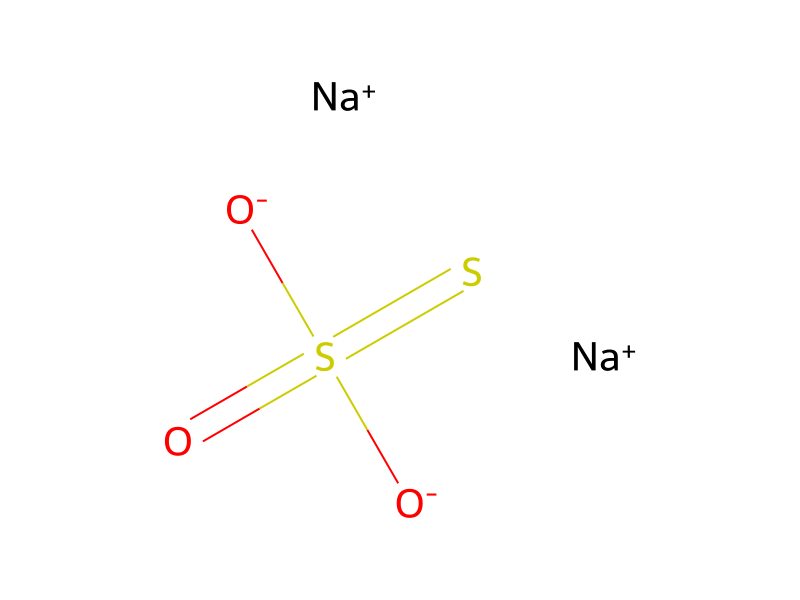
[CH:1]([C:4]1[CH:12]=[CH:11][C:7]2[O:8][CH2:9][O:10][C:6]=2[CH:5]=1)([CH3:3])[CH3:2].[Br:13]Br.C(=O)([O-])O.[Na+].S([O-])([O-])(=O)=S.[Na+].[Na+]>C(Cl)(Cl)(Cl)Cl>[Br:13][C:12]1[C:4]([CH:1]([CH3:3])[CH3:2])=[CH:5][C:6]2[O:10][CH2:9][O:8][C:7]=2[CH:11]=1Participants
Reactant 4



Product 1

Reagents, catalysts & solvents 1

Conditions
- Temperature
- 10 °C
Procedure
2.94 g of 5-isopropyl-1,3-benzodioxole was dissolved in 30 ml of carbon tetrachloride to obtain a solution. A solution of 3.15 g of bromine in 5 ml of carbon tetrachloride was dropwise added to the solution at a temperature of -5° to 5° C. The obtained mixture was stirred at 10° C. for 8.5 hours. Nitrogen gas was passed through the resulting mixture, followed by the addition of a saturated aqueous solution of sodium hydrogencarbonate and an aqueous solution of sodium thiosulfate. The obtained mixture was extracted with chloroform and the organic layer was washed with a saturated aqueous solution of common salt, dried over anhydrous sodium sulfate and filtered. The filtrate was concentrated to obtain 4.38 g of the title compound as a crude oil. 1H-NMR (90 MHz, CDCl3) δ; 1.18(d, J=7.2 Hz, 6H), 3.31(sept, J=7.2 Hz, 1H), 5.88(s, 2H), 6.70(s, 1H), 6.91(s, 1H).
Workup
- customto obtain a solution
- extractionThe obtained mixture was extracted with chloroform
- washthe organic layer was washed with a saturated aqueous solution of common salt
- dry with materialdried over anhydrous sodium sulfate
- filtrationfiltered
- concentrationThe filtrate was concentrated
Sources & evidence
- ORD record
- ord-88b19c9f7e834f599d50521e262ad82f
- Source dataset
- uspto-grants-1994_03
- Patent number
- US05292901
Reaction notes
Loading…