Cyclopropylacetylene → 2-cyclopropyl-1H-indole
Reaction equation

I[C:2]1[CH:7]=[CH:6][CH:5]=[CH:4][C:3]=1[NH:8][C:9](=O)[CH3:10].[CH:12]1(C#C)[CH2:14][CH2:13]1>O1CCOCC1.CN(C)C(N(C)C)=N.Cl[Pd](Cl)([P](C1C=CC=CC=1)(C1C=CC=CC=1)C1C=CC=CC=1)[P](C1C=CC=CC=1)(C1C=CC=CC=1)C1C=CC=CC=1.[Cu]I>[CH:12]1([C:9]2[NH:8][C:3]3[C:4]([CH:10]=2)=[CH:5][CH:6]=[CH:7][CH:2]=3)[CH2:14][CH2:13]1Participants
Reactant 2


Product 1

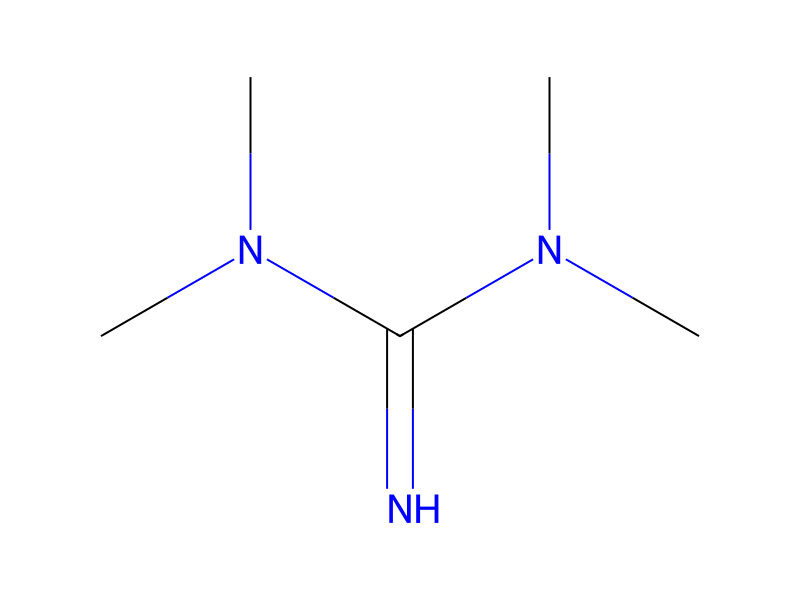
Reagents, catalysts & solvents 4



Conditions
- Temperature
- 80 °C
Procedure
To a solution of N-(2-iodophenyl)acetamide (100 mg, 0.38 mmol) in dioxane (750 mL) and 1,1,3,3-tetramethylguanidine (750 mL) was added cyclopropylacetylene (41 mL, 0.49 mmol), bis(triphenylphosphine)palladium(II) chloride (35 mg, 0.05 mmol), and copper(I) iodide (10 mg, 0.05 mmol). The reaction was stirred overnight at 80° C. The solution was cooled and partitioned between water and methylene chloride. The organic layer was dried (MgSO4) and concentrated to give the uncyclized Sonagashira coupling product. Dioxane (750 mL) and 1,1,3,3-tetramethylguanidine (750 mL) were added and the reaction was stirred overnight at 90° C. The solution was again partitioned between water and methylene chloride. The organic layer was dried (MgSO4) and concentrated to give the desired indole, which was used without further purification.
Workup
- temperatureThe solution was cooled
- custompartitioned between water and methylene chloride
- dry with materialThe organic layer was dried (MgSO4)
- concentrationconcentrated
- customto give the uncyclized Sonagashira coupling product
- stirringthe reaction was stirred overnight at 90° C
- customThe solution was again partitioned between water and methylene chloride
- dry with materialThe organic layer was dried (MgSO4)
- concentrationconcentrated
Sources & evidence
- ORD record
- ord-da5ab6b258164f2dbe0297179072e959
- Source dataset
- uspto-grants-2009_05
- Patent number
- US07528262B2
Reaction notes
Loading…