Water → N-[1-(4-nitrophenyl)pyrrolidin-3-yl]acetamide
Reaction equation

F[C:2]1[CH:7]=[CH:6][C:5]([N+:8]([O-:10])=[O:9])=[CH:4][CH:3]=1.[C:11]([NH:14][CH:15]1[CH2:19][CH2:18][NH:17][CH2:16]1)(=[O:13])[CH3:12].C(=O)([O-])[O-].[K+].[K+].O>CN1C(=O)CCC1>[N+:8]([C:5]1[CH:6]=[CH:7][C:2]([N:17]2[CH2:18][CH2:19][CH:15]([NH:14][C:11](=[O:13])[CH3:12])[CH2:16]2)=[CH:3][CH:4]=1)([O-:10])=[O:9]Participants
6

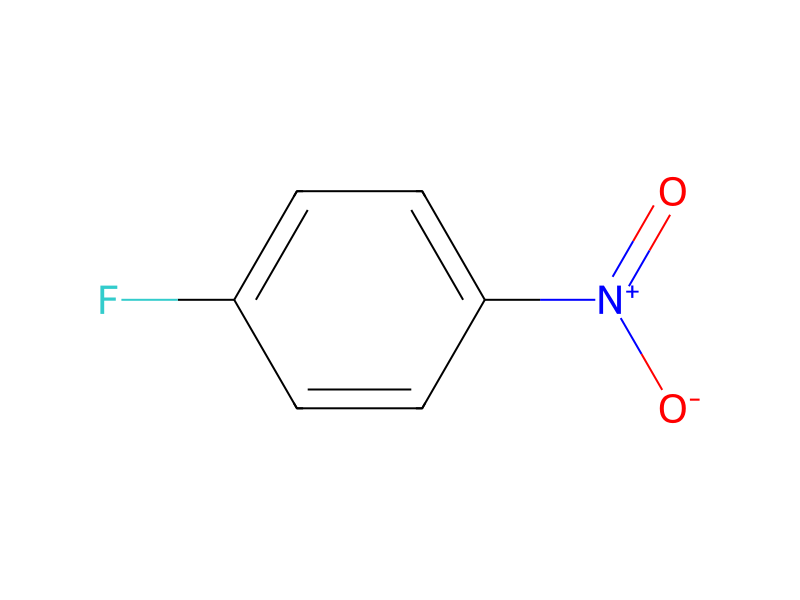




Conditions
- Temperature
- 100 °C
Procedure
After dissolving 56.4 g of 1-fluoro-4-nitrobenzene (0.4 mol) and 51.2 g of 3-acetamidopyrrolidine (0.4 mol) in 400 ml of NMP, 66.4 g of potassium carbonate (0.48 mol) were added under a nitrogen atmosphere and the mixture was heated at 100° C. for 18 hours. The reaction medium was allowed to cool and was then poured into 2 l of water. The yellow precipitate formed was filtered off, washed with water and then dried in a vacuum oven over P2O5. 100 g (100%) of N-[1-(4-nitrophenyl)pyrrolidin-3-yl]acetamide (1) was thus obtained in the form of a yellow solid.
Workup
- additionwere added under a nitrogen atmosphere
- temperatureto cool
- customThe yellow precipitate formed
- filtrationwas filtered off
- washwashed with water
- dry with materialdried in a vacuum oven over P2O5
Sources & evidence
- ORD record
- ord-e9a6ab607d4f45fba5960f7caf07a9aa
- Source dataset
- uspto-grants-2005_09
- Patent number
- US06946005B2
Reaction notes
Loading…