2-Aminophenol → 3-(2-Chlorophenyl)-5-(2-benzoxazolyl)-1-phenyl-1,2-dihydropyridin-2-one
Reaction equation

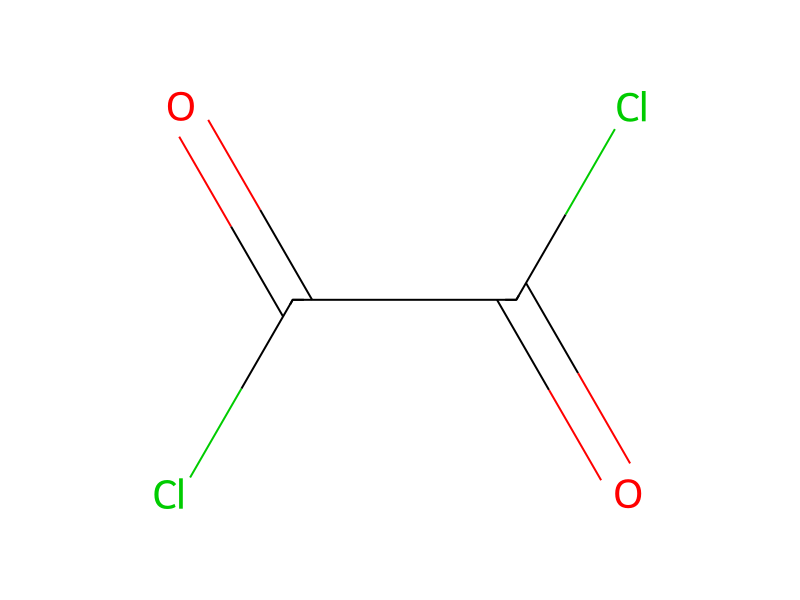
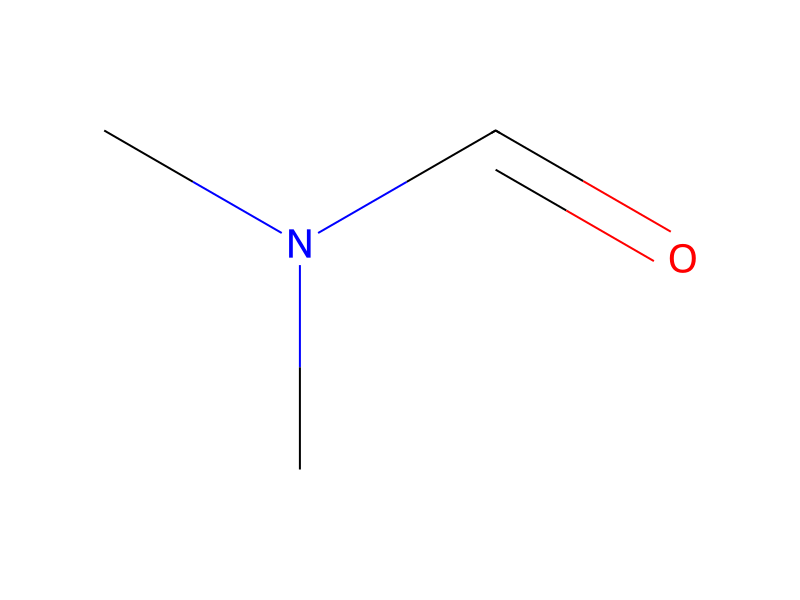
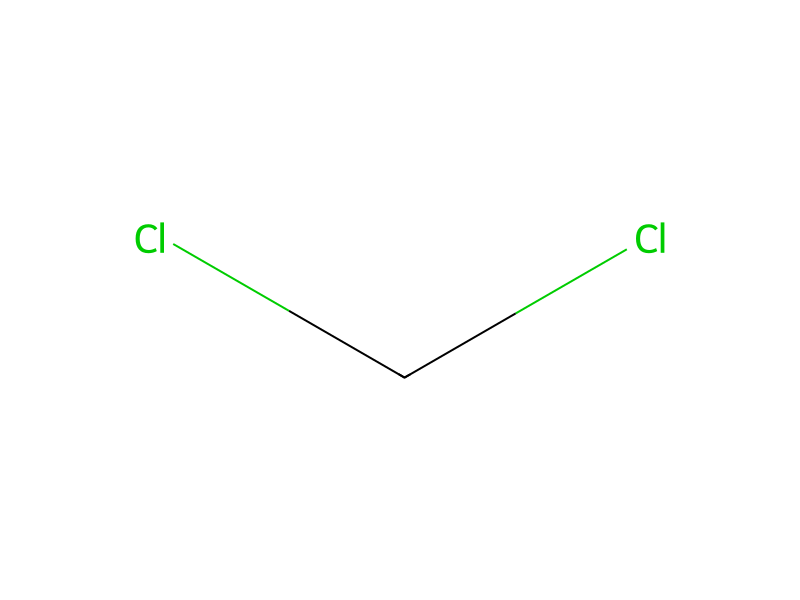
[Cl:1][C:2]1[CH:7]=[CH:6][CH:5]=[CH:4][C:3]=1[C:8]1[C:9](=[O:24])[N:10]([C:18]2[CH:23]=[CH:22][CH:21]=[CH:20][CH:19]=2)[CH:11]=[C:12]([C:14]([O:16][CH3:17])=O)[CH:13]=1.Br[C:26]1[C:27](=O)[N:28](C2C=CC=CC=2)[CH:29]=[C:30](C(OC)=O)[CH:31]=1.ClC1C=CC=CC=1B(O)O.C(Cl)(=O)C(Cl)=O.NC1C=CC=CC=1O>ClCCl.CN(C)C=O>[Cl:1][C:2]1[CH:7]=[CH:6][CH:5]=[CH:4][C:3]=1[C:8]1[C:9](=[O:24])[N:10]([C:18]2[CH:19]=[CH:20][CH:21]=[CH:22][CH:23]=2)[CH:11]=[C:12]([C:14]2[O:16][C:17]3[CH:29]=[CH:30][CH:31]=[CH:26][C:27]=3[N:28]=2)[CH:13]=1Participants
Reactant 5



Product 1

Reagents, catalysts & solvents 2
Procedure
19 mg of carboxylate obtained by hydrolyzing the ester group of 3-(2-chlorophenyl)-5-(methoxycarbonyl)-1-phenyl-1,2-dihydropyridin-2-one (synthesized from 3-bromo-5-(methoxycarbonyl)-1-phenyl-1,2-dihydropyridin-2-one and 2-chlorophenylboronic acid in accordance with the method of Referential Example 3) was dissolved in 20 ml of dichloromethane. Under ice-cooling, a solution of 11 mg of oxalyl chloride in dichloromethane was added dropwise thereinto and a catalytic amount of dimethylformamide was added thereto, followed by stirring at room temperature in nitrogen atmosphere for 1 hour. The reaction solution was evaporeted, and the residue was dissolved in dichloromethane. The solution was added dropwise into a solution of 19 mg of 2-aminophenol in dichloromethane under ice-cooling. After heating to room temperature, dichlotomethane was evaporated. To the residue was added 1 ml of polyphosphoric acid, followed by stirring at 180° C. overnight. After cooling to room temperature, the reaction mixture was neutralized with 1N aqueous solution of sodium hydroxide and saturated aqueous solution of sodium hydrogen carbonate under ice-cooling. The mixture was extracted with ethyl acetate, and the resulting organic layer was washed with brine and dried over anhydrous magnesium sulfate. The solvent was evaporated, and the residue was purified by silica gel chromatography (hexane/ethyl acetate system), to give 3 mg of the title compound as white crystals.
Workup
- temperatureUnder ice-cooling
- temperaturecooling
- temperatureAfter heating to room temperature
- customdichlotomethane was evaporated
- additionTo the residue was added 1 ml of polyphosphoric acid
- stirringby stirring at 180° C. overnight
- temperatureAfter cooling to room temperature
- temperaturecooling
- extractionThe mixture was extracted with ethyl acetate
- washthe resulting organic layer was washed with brine
- dry with materialdried over anhydrous magnesium sulfate
- customThe solvent was evaporated
- customthe residue was purified by silica gel chromatography (hexane/ethyl acetate system)
Sources & evidence
- ORD record
- ord-d0c6345a24d34d52b117cb36e11137e1
- Source dataset
- uspto-grants-2005_09
- Patent number
- US06949571B2
Reaction notes
Loading…