Sodium Iodide → 7-Methoxy-6-methyl-1,2,3,4-tetrahydronaphthalenecarbonitrile
Reaction equation

[CH3:1][O:2][C:3]1[CH:11]=[C:10]2[C:6]([CH2:7][CH2:8][C:9]2=O)=[CH:5][C:4]=1[CH3:13].C[Si]([C:18]#[N:19])(C)C.[Cl-].[Al+3].[Cl-].[Cl-].[I-].[Na+].[CH3:26][Si](Cl)(C)C>C1(C)C=CC=CC=1.CCCCCC.C(#N)C.O>[CH3:1][O:2][C:3]1[CH:11]=[C:10]2[C:6]([CH2:26][CH2:7][CH2:8][CH:9]2[C:18]#[N:19])=[CH:5][C:4]=1[CH3:13]Participants
Reactant 5



Product 1

Reagents, catalysts & solvents 4
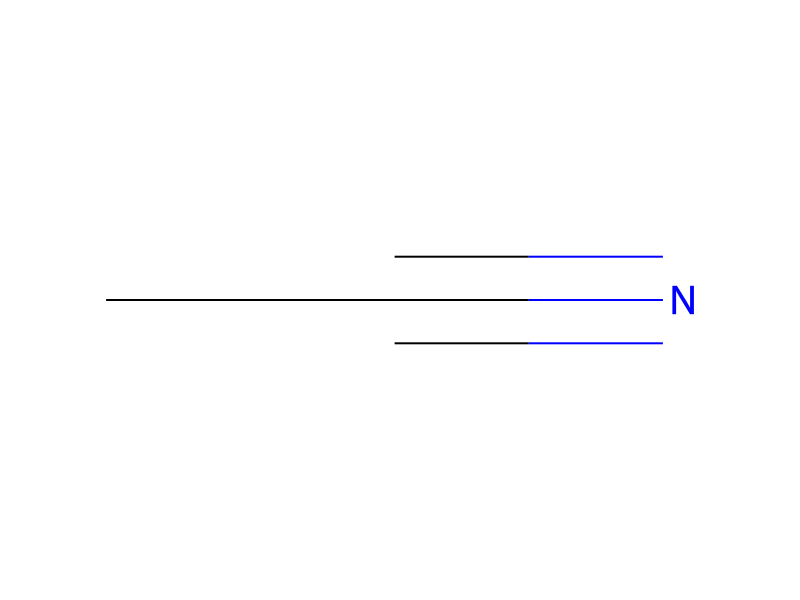
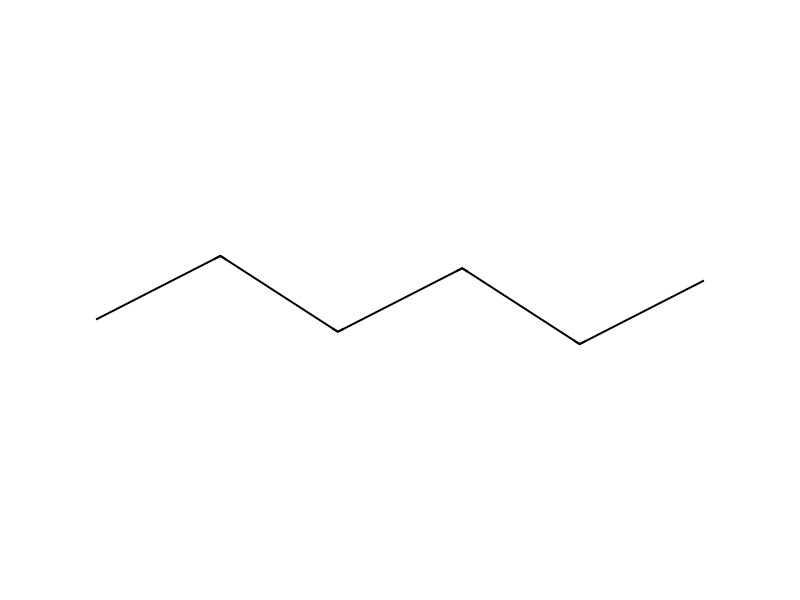
Procedure
A stirred solution of 0.6 gram (0.0032 mole) of 7-methoxy-6-methyl-2,3,4-trihydronaphthalen-1-one (ii), 2.2 mL (0.0170 mole) of trimethylsilyl cyanide, and a catalytic amount of aluminum chloride in 20 mL of toluene was warmed to 70° C. where it was maintained for about 18 hours. After this time, the reaction mixture was cooled and taken up in 100 mL of hexane and filtered through diatomaceous earth. The filtrate was concentrated under reduced pressure to a residual oil, which was an intermediate product; namely: 7-methoxy-6-methyl-1-(1,1-dimethyl-1-silaethoxy)-1,2,3,4-tetrahydronaphthalenecarbonitrile (cyano-silyl intermediate). The so-prepared 1-silaethoxy intermediate was then taken up in 100 mL of acetonitrile, along with 2.0 grams (0.013 mole) of sodium iodide, 1.8 mL (0.014 mole) of trimethylsilyl chloride, and 0.1 mL of water, and stirred at ambient temperature for about 72 hours. After this time, the reaction mixture was poured into water and extracted with ethyl acetate. The extract was washed in turn with an aqueous dilute solution of sodium metabisulfite and with water, and then it was dried with sodium sulfate. The mixture was concentrated under reduced pressure to a residue, which was a mixture of subject compound and an intermediate product, namely: 7-methoxy-6-methyl-3,4-dihydronaphthalenecarbonitrile (Intermediate (iii)). In a manner analogous to that of Step E of Example 1, the mixture of subject compound and the 3,4-dihydronaphthalenecarbonitrile intermediate was subjected to hydrogenation using a Parr hydrogenator, in the presence of 0.1 gram (catalyst) of 10% platinum on carbon and 0.1 gram (catalyst) of 10% palladium on carbon in 100 mL of ethyl acetate. Following a 90 minute hydrogenation period, the reaction mixture was filtered through diatomaceous earth. The filter cake was washed with methylene chloride and the combined wash and filtrate were concentrated under reduced pressure to a residue. NMR analyses of the residue indicated that it was still a mixture of subject compound and the 3,4-dihydronaphthalenecarbonitrile intermediate. The hydrogenation of the mixture of subject compound and the 3,4-dihydronaphthalenecarbonitrile intermediate was repeated during a period of seven hours of reaction time. The reaction mixture was then worked-up in the manner set forth above, yielding about 0.25 gram of subject compound. The NMR spectrum was consistent with the proposed structure.
Workup
- temperaturewas maintained for about 18 hours
- temperatureAfter this time, the reaction mixture was cooled
- filtrationfiltered through diatomaceous earth
- concentrationThe filtrate was concentrated under reduced pressure to a residual oil, which
- extractionextracted with ethyl acetate
- washThe extract was washed in turn with an aqueous dilute solution of sodium metabisulfite and with water
- dry with materialit was dried with sodium sulfate
- concentrationThe mixture was concentrated under reduced pressure to a residue, which
- additiona mixture of subject compound
- additionIn a manner analogous to that of Step E of Example 1, the mixture of subject compound
- waitFollowing a 90 minute
- filtrationhydrogenation period, the reaction mixture was filtered through diatomaceous earth
- washThe filter cake was washed with methylene chloride
- washthe combined wash
- concentrationfiltrate were concentrated under reduced pressure to a residue
- additiona mixture of subject compound
- additionThe hydrogenation of the mixture of subject compound
- customthe 3,4-dihydronaphthalenecarbonitrile intermediate was repeated during a period of seven hours of reaction time
Sources & evidence
- ORD record
- ord-b00ddc59c0df447eab95e56a4951ebba
- Source dataset
- uspto-grants-2010_08
- Patent number
- US07767667B2
Reaction notes
Loading…