Ethylene Glycol → 2-(4-Bromo-2-Fluorophenyl)-1,3-Dioxolane
Reaction equation

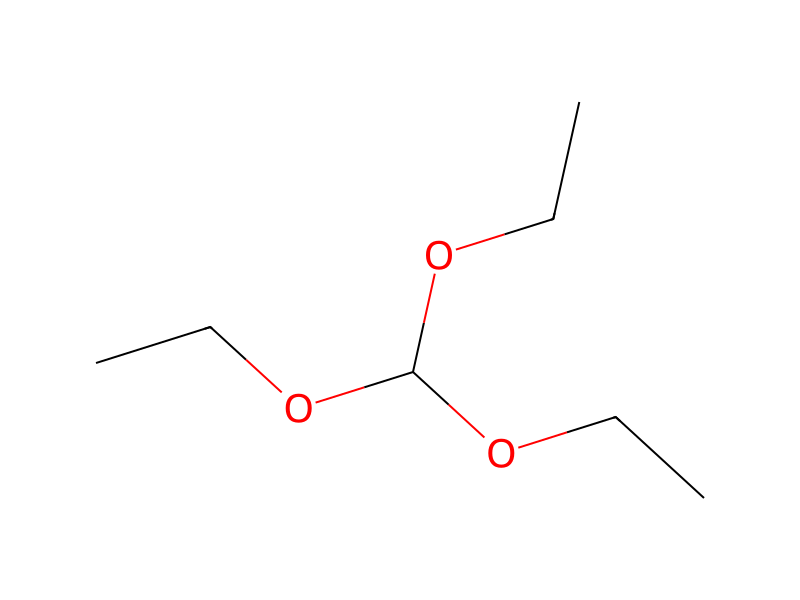
[Br:1][C:2]1[CH:9]=[CH:8][C:5]([CH:6]=[O:7])=[C:4]([F:10])[CH:3]=1.[CH2:11](O)[CH2:12][OH:13].C(OCC)(OCC)OCC.C1(C)C=CC(S(O)(=O)=O)=CC=1>ClCCCl>[Br:1][C:2]1[CH:9]=[CH:8][C:5]([CH:6]2[O:13][CH2:12][CH2:11][O:7]2)=[C:4]([F:10])[CH:3]=1Participants
6





Procedure
4-bromo-2-fluorobenzaldehyde (9.4 g, 46.3 mmol), ethylene glycol (13.2 mL), triethyl orthoformate (6.6 mL) and p-toluenesulfonic acid (0.09 g, 0.473 mmol) were stirred in DCE (50 mL) at 80° C. for 2.5 hours. Room temperature was attained and the solution was washed successively with saturated NaHCO3, H2O and brine, dried over MgSO4 and concentrated in vacuo to give 11.4 g of product (pale yellow oil, 100%). 1H NMR (CDCl3) δ 7.41 (t, J=8.1 Hz, 1H), 7.30 (dd, J=8.1, 1.8 Hz, 1H), 7.25 (dd, J=9.6, 1.8 Hz, 1H), 6.02 (s, 1H), 4.13 (m, 2H), 4.04 (m, 2H).
Workup
- customRoom temperature
- washthe solution was washed successively with saturated NaHCO3, H2O and brine
- dry with materialdried over MgSO4
- concentrationconcentrated in vacuo
Sources & evidence
- ORD record
- ord-350c8e57b3b2425fafcc57f28e853afa
- Source dataset
- uspto-grants-2010_08
- Patent number
- US07772238B2
Reaction notes
Loading…